
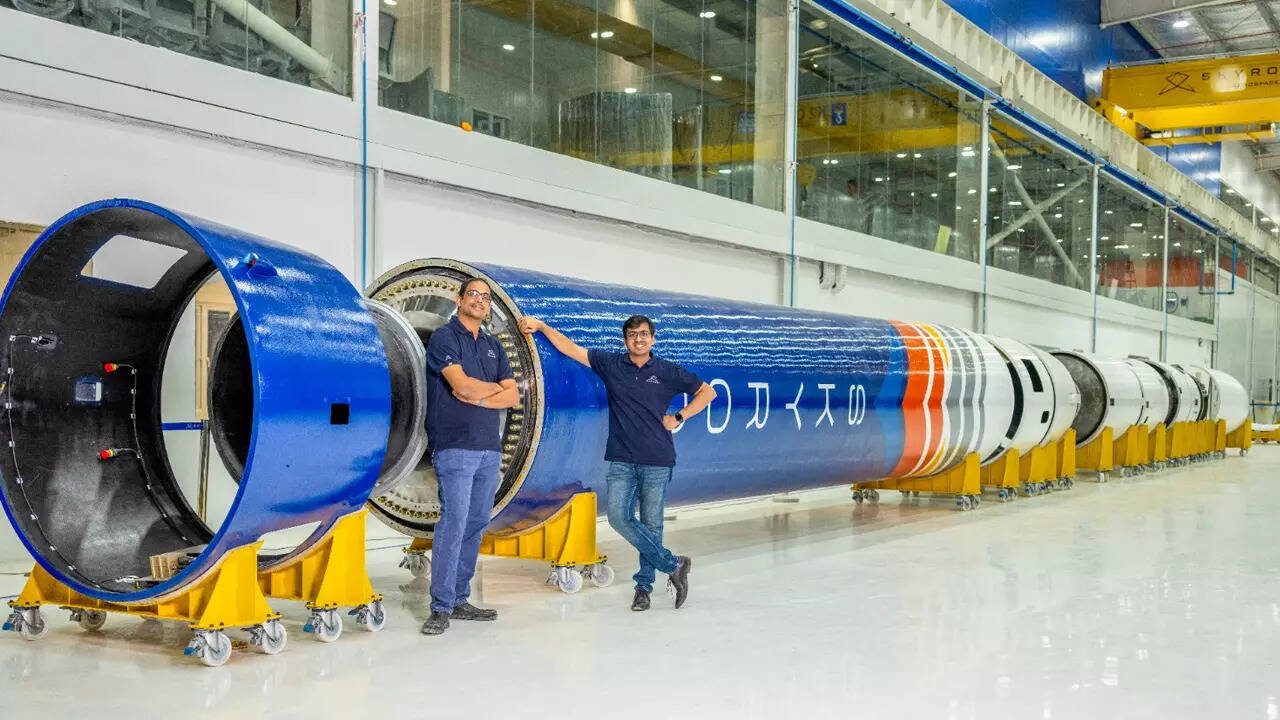
India’s private space sector has quietly become one of the country’s most compelling investment stories, with cumulative investments in space start-ups crossing $618.5 million by March 2026, reflecting a rapid shift towards growth-stage funding and stronger global investor confidence, according to figures confirmed in Parliament. The government has verified that 440 space technology start-ups are now registered, supported by extensive ISRO technology transfers and new funding mechanisms, with around 440 companies registered on the DPIIT Start-up India Portal, following reforms that threw open a sector once entirely controlled by the state. Of that cumulative pool, $187 million was invested in 2026 alone, & officials point out that capital is increasingly flowing into larger, later-stage rounds rather than seed-level bets, a signal that the ecosystem is maturing past its early hype cycle. That maturity has been backed by real money from Delhi too, with the Centre rolling out a rs. 1,000 crore Venture Capital Fund to support space startups by helping them scale innovative technologies and business models, alongside a rs. 500 crore Technology Adoption Fund announced by Union Minister Dr Jitendra Singh in the Rajya Sabha. Sector-specific tracking tells a similarly upbeat story: between January and July 2026, investors injected $100.7 million into space and satellite firms alone, part of a broader high-tech investment wave that is pulling Indian venture capital away from software and toward hardware. The marquee names are already commanding serious valuations — Skyroot Aerospace achieved a $1.1 billion valuation following a $50 million funding round in May 2026, while satellite firm Digantara reached a valuation of $200 million after its December 2025 round. Widening the lens to the full run since the sector opened up, India’s private space sector has maintained a steady flow of capital in 2026, with startups securing $113 million in equity funding, continuing a growth trend that has seen cumulative investments in the nation’s space technology startups reach $871 million since 2021. But the money is not landing evenly. The top 10 most-funded startups, including Skyroot Aerospace, Pixxel, and AgniKul Cosmos, have collectively raised over $548 million, accounting for nearly two-thirds of the total equity funding within the sector, & only about 25% of the 285 registered startups have successfully attracted external equity investment, leaving the remaining three-quarters still hunting for their first cheque. Geography is just as concentrated as capital: Bengaluru remains the primary hub for this activity, capturing 57% of total funding, followed by Hyderabad and Chennai, a reflection of the deep engineering talent pools built around those cities. Analysts frame 2026 as a hinge year for the industry, with India’s spacetech market projected to cross $77 billion by 2030 & low-earth-orbit technologies expected to stay central to investor interest thanks to their lower costs and faster deployment cycles across broadband, defence, climate monitoring and IoT applications. Taken together, the numbers describe a sector that has moved past proving it can raise money and is now being asked to prove it can deliver — launches, satellites & revenue — making India’s space-startup story arguably the most consequential deep-tech narrative playing out in the country’s markets right now.
India’s Space Startups Just Crossed the $600-Million Mark — & the Smart Money Is Finally Chasing Proof Over Promise
Aug 16, 2026

Related Post
Breaking News
Education
Education Times
Environment
Exclusive Interview
Interviews
IT Times
Make In Odisha
Odisha
Odisha Times
Social Work
Special Story
The Leading Story
Beyond Education: Mr. Pratap Kishore Patra’s Vision of Building Careers, Character and Social Responsibility
Nov 1, 2026
Aishwarya Kanungo