
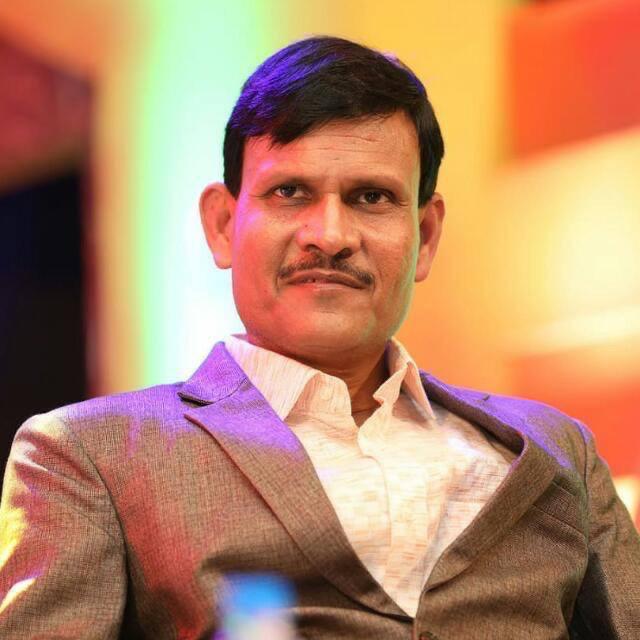
For Susanta Kumar Panda, the story of Bharat Masala is not simply the story of a spice brand. It is a story of transformation—of a modest enterprise born in Odisha evolving into a diversified food-processing business with ambitions that extend well beyond the state and the country.
Panda is the Managing Director of Jay Bharat Spices Private Limited, the company behind Bharat Masala. An MBA and the son of founder and chairman Surendra Nath Panda, he has been closely associated with the company’s growth for more than two decades. In an earlier interview, Panda described his childhood as one spent watching his father navigate agriculture and business, experiences that shaped his own approach to entrepreneurship.
The origins of Bharat Masala go back to 1999, when Surendra Nath Panda started the business with a small spice-grinding unit and very limited capital. What began as a modest operation near Cuttack gradually developed into Jay Bharat Spices, with Susanta Kumar Panda eventually taking a central role in its day-to-day management and expansion.
What makes Panda’s journey particularly significant is the way the business has attempted to move beyond being simply a regional spice manufacturer. The company has progressively invested in processing infrastructure, food products and technology, reflecting a broader understanding of how India’s FMCG and food-processing sector is changing.
At its Ramdaspur facility in Cuttack, Bharat Masala says it operates advanced cryogenic spice-grinding technology with a stated capacity of 300 metric tonnes per day in a single shift. Its manufacturing capabilities have also expanded into Italian pasta production, food products, and tomato ketchup and sauce, with stated capacities of 70 MT, 90 MT and 40 MT per day respectively.
For Panda, technology is therefore not merely about increasing production. It is closely linked to the company’s emphasis on preserving quality and consistency. Bharat Masala’s own account of his leadership highlights his focus on innovation, research and modern production systems, including the cryogenic grinding facility and Italian pasta plants.
That evolution has also changed the scale of the organisation. A 2024 CARE Ratings assessment noted that Jay Bharat Spices had around 1,200 employees and a distribution network of more than 2,000 distributors across India, while also pointing to the promoters’ long experience in procurement, spice processing and food manufacturing.
The company’s expansion has been accompanied by a distinctly outward-looking approach. Bharat Masala’s products are marketed not only across India but also in international markets including the UAE, Oman, Malaysia, Kuwait, Nepal, Bangladesh, Sri Lanka and Singapore, according to the company’s own profile.
And in September 2026, that international ambition received a fresh push. Jay Bharat Spices exported two containers of Indian spices from Paradip Port to Jebel Ali in the UAE. Speaking at the flag-off, Panda said the company was concentrating on strengthening its export operations and expanding its international footprint, while pointing to growing global demand for Indian spices as an opportunity for Indian manufacturers.
The development is particularly relevant because it represents more than another shipment. For an Odisha-based food manufacturer, strengthening exports creates a bridge between the state’s agricultural economy, food-processing capabilities and international markets. Panda has indicated that Bharat Masala wants to build on its export legacy—the company has received the Best Exporter Company award from the state government four times, according to his recent remarks.
His thinking about the business has also consistently extended beyond machinery and markets. In a 2021 conversation with Interview Times, Panda emphasised the contribution of the company’s workers, describing Bharat Masala’s success as the result of the collective effort of hundreds of employees and the dedication of its leadership. He also identified raw-material availability, price fluctuations and intense competition as persistent challenges for the spice industry.
That perspective offers an important insight into his leadership style. Panda’s public positioning around Bharat Masala combines entrepreneurial ambition with an emphasis on people, quality and long-term relationships. The company’s official leadership profile describes his approach as being grounded in integrity, innovation and customer satisfaction, while portraying Bharat Masala as a family-oriented organisation rather than simply an industrial enterprise.
The company’s journey also illustrates the changing character of Odisha’s business landscape. Traditionally associated with agriculture and commodity production, the state is increasingly seeing home-grown enterprises build sophisticated manufacturing capabilities and pursue national and international markets. Bharat Masala’s trajectory—from a small spice unit established in 1999 to a diversified food-processing operation—is one example of that transition.
Panda’s role in that transition is particularly important because he represents the second-generation leadership responsible for taking an established family enterprise into a new phase. His challenge is no longer simply to build a recognised brand; it is to make that brand competitive in markets where food safety, technology, supply-chain efficiency, product innovation and global standards increasingly determine success.
The company’s stated vision is to become a global leader in authentic, premium-quality spices and food products while carrying what it calls “The Taste of New India” to consumers around the world.
For Susanta Kumar Panda, the road ahead therefore appears to be about scale—but not scale for its own sake. It is about transforming an Odisha-born enterprise into a modern food company without losing the values that built its foundation.
As Bharat Masala looks outward from Cuttack toward international markets, Panda’s leadership sits at the intersection of three powerful forces: traditional Indian food heritage, modern manufacturing technology and a new generation of export ambition.
And that may ultimately be the most compelling part of his story: the journey from making spices for Indian kitchens to building an Odisha brand capable of competing for space on global shelves.
