
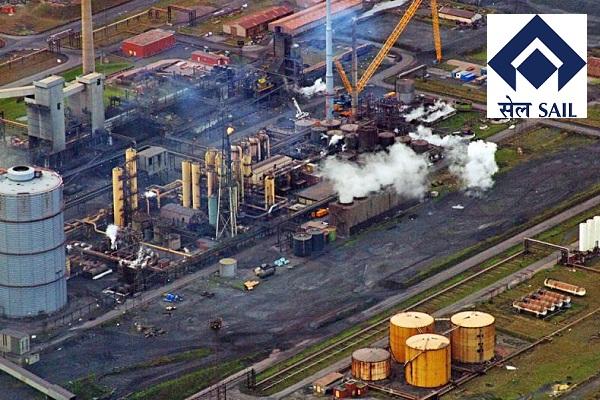
One-tonne trial could open a new sourcing option as India seeks to diversify a critical raw material for its expanding steel industry
By – Snigdha Mishra
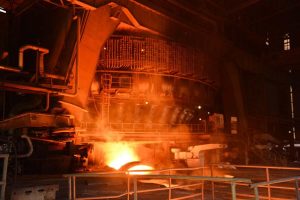
New Delhi: In a small shipment carrying potentially large strategic implications, state-owned Steel Authority of India Limited (SAIL) has airlifted a one-metric-tonne sample of coking coal from Mongolia for the first time, opening a new chapter in India’s effort to diversify the raw-material supply chain supporting its steel industry.
The trial sample was flown into India in September and will be assessed by SAIL to determine whether the Mongolian coal meets its technical requirements for steelmaking. If the tests prove successful, Mongolia could emerge as an additional source of the high-grade metallurgical coal required by Indian steel producers. Reuters
While one tonne is insignificant compared with the millions of tonnes consumed by India’s steel industry, the significance of the development lies elsewhere: supply security, diversification and cost competitiveness.
Why One Tonne of Coal Matters
India is the world’s second-largest crude steel producer, but its steel industry remains heavily dependent on imported coking coal.
The country imports around 95% of its coking-coal requirement, with Australia supplying at least half. Coking coal itself represents nearly 40% of steel-production costs, making reliable access to the commodity critical for the competitiveness of Indian steelmakers. Reuters
That dependence becomes increasingly important as India expands steelmaking capacity to support infrastructure, construction, manufacturing, railways, automobiles and other industries.
SAIL’s Mongolian experiment therefore represents more than an alternative procurement exercise. It is part of a broader attempt to widen India’s sourcing options for one of steelmaking’s most strategically important inputs.
Beyond Australia: Diversifying India’s Supply Basket
Australia is expected to remain India’s largest coking-coal supplier. However, Indian steelmakers have increasingly explored supplies from countries including Russia, Mozambique and the United States.
Mongolia now enters that diversification conversation.
India and Mongolia had already agreed to work towards securing supplies of coking coal and copper for Indian companies. The latest SAIL trial moves that conversation from strategic intent towards physical testing. Reuters
The quality of Mongolian coal could be attractive, but commercial viability will ultimately depend on far more than metallurgical performance.
The Biggest Challenge: Getting Mongolian Coal to India
Geography presents the central obstacle.
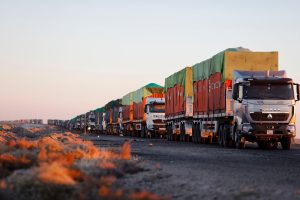
Mongolia is a landlocked country positioned between Russia and China. Any large-scale movement of coal to India would therefore require a complicated international logistics chain.
A route through Russia is among the possibilities under consideration, but it would be substantially longer and could make Mongolian coal more expensive than competing supplies. Reuters reported that Indian authorities have previously favoured the Russian route because of strategic concerns associated with transit through China. Reuters
SAIL will consequently have to answer two separate questions.
First: Is the coal technically suitable for Indian steelmaking?
Second: Can it be transported to India at a commercially viable cost?
Only if both conditions are satisfied could the experiment develop into a meaningful long-term supply relationship.
India’s Coking-Coal Requirement Is Set to Grow
The timing of the trial is significant.
India’s coking-coal imports are expected to rise by around 3% to 5% in FY2026-27 from approximately 64 million tonnes in the previous year, according to commodities consultancy BigMint, as domestic coal cannot fully meet the quality requirements of the expanding steel industry. Reuters
As India adds steelmaking capacity, demand for metallurgical coal is expected to increase further.
This creates a strategic challenge: expanding domestic steel capacity without allowing dependence on a concentrated group of overseas suppliers to become an increasingly significant vulnerability.
Finding additional suppliers could give Indian steelmakers greater flexibility in procurement and potentially strengthen their negotiating position during periods of price volatility or supply disruption.
SAIL’s Broader Push for Efficiency and Growth
The Mongolian coal experiment also comes as SAIL enters FY27 after a strong FY26.
The PSU reported its best-ever production and sales volumes and highest-ever revenue from operations in FY2025-26. Crude steel production reached 19.43 million tonnes, while sales volume rose 11.4% to 19.93 million tonnes. Profit after tax increased about 50.5% to ₹3,233 crore, while the company reduced debt by ₹8,148 crore. Sail
SAIL has subsequently identified cost optimisation, expansion of value-added and special steels, market diversification and improved operational efficiency among its strategic priorities for FY27. Sail
Raw-material security fits directly into that strategy because coking coal remains one of the largest cost components in conventional steelmaking.
An Odisha Connection to SAIL’s Raw-Material Strength
The story also carries relevance for Odisha.
SAIL operates iron-ore mines across Odisha, Jharkhand and Chhattisgarh, with its mining network supplying the iron-ore requirements of its steel plants. The PSU’s Central Coal Supply Organisation also coordinates coal movement from several Coal India subsidiaries, including Odisha-headquartered Mahanadi Coalfields Limited. Sail
Odisha’s importance to India’s steel ecosystem—through iron ore, coal, steelmaking and associated infrastructure—means developments affecting the raw-material strategy of a major producer such as SAIL have relevance beyond the company’s individual plants.
A Small Trial With Strategic Stakes
The immediate development should not be overstated. SAIL has not announced a long-term commercial contract for Mongolian coking coal. The one-tonne shipment is a test, and any future procurement will depend on quality, transportation costs and logistical feasibility. Reuters
But that is precisely what makes the experiment significant.
India’s steel ambitions will require not only new furnaces and additional production capacity, but also resilient access to the raw materials that keep those furnaces operating.
If Mongolia proves technically and commercially viable, it could become another piece in India’s increasingly diversified coking-coal supply network.
One tonne will not change India’s steel industry. But what SAIL learns from that tonne could influence where a portion of India’s future steelmaking coal comes from.
