
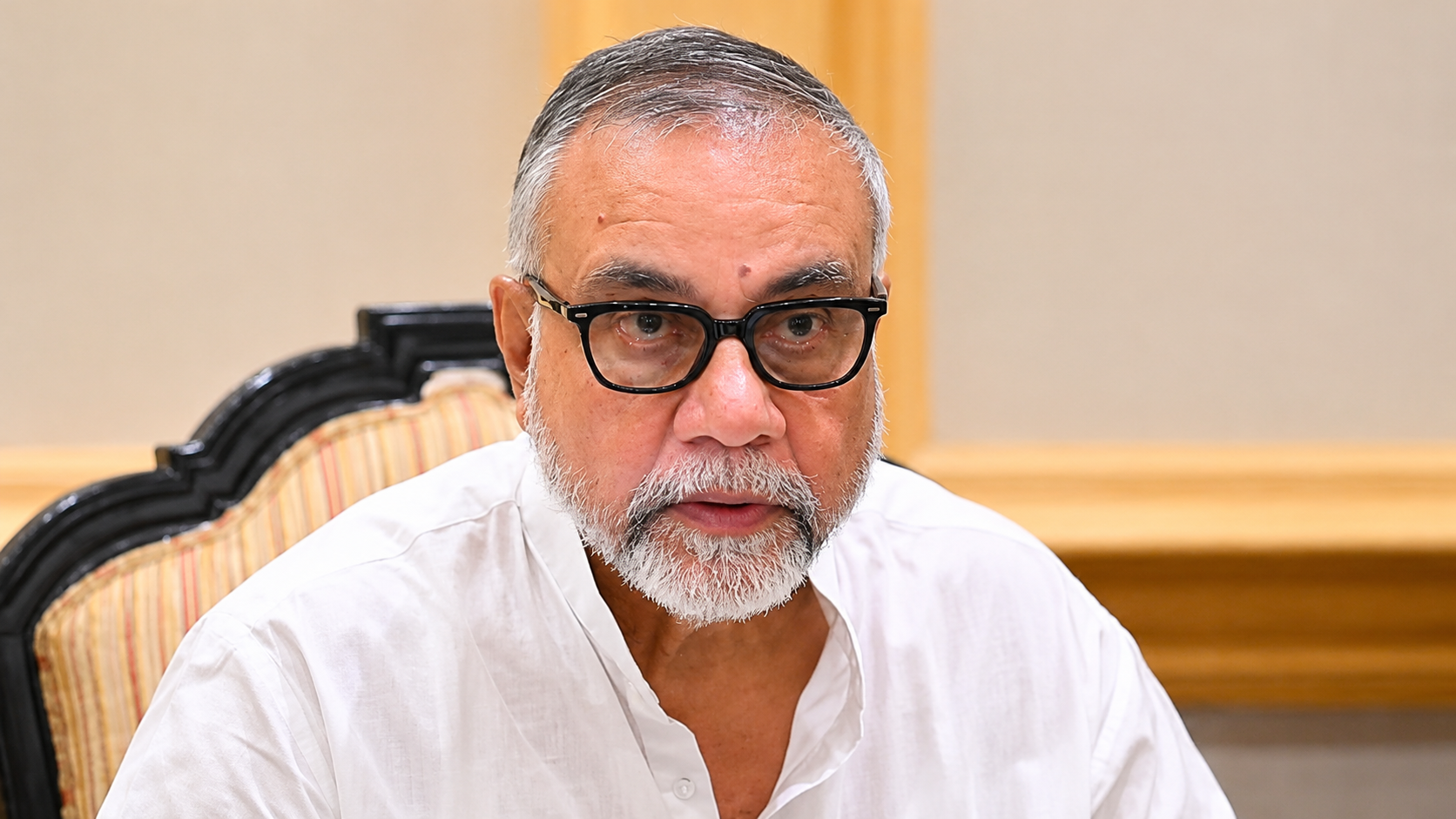
From three decades in legislative politics to a new role in industrial governance, Tapas Roy enters a defining chapter of public leadership.
An Exclusive Leadership Profile | The Interview Times
West Bengal has long occupied a distinctive place in India’s political and industrial history. Its legacy includes major manufacturing centres, commercial institutions and influential political movements. Today, the state faces a new set of economic expectations.
At the centre of this changing landscape stands Tapas Roy, a veteran politician whose career has spanned several decades, multiple constituencies and significant political transitions.
Now serving as West Bengal’s Industries Minister, Roy faces a different kind of leadership challenge. His responsibilities extend beyond electoral politics to the larger questions of investment, industrial development and economic opportunity.
His journey reflects both continuity and change. It also raises an important question: How can decades of political experience translate into effective industrial governance?
A Political Career Built Over Three Decades
Tapas Roy entered the West Bengal Legislative Assembly in 1996 after winning the Vidyasagar constituency on an Indian National Congress ticket.
The victory marked the beginning of a long legislative career. At the time, West Bengal remained under Left Front rule, and opposition politics required sustained organisational effort.
In 2001, Roy won the Bara Bazar Assembly seat as a Trinamool Congress candidate.
His association with the TMC subsequently became an important part of his political identity. Over the years, he gained experience in legislative affairs, party organisation and public administration.
A major milestone arrived in 2011, when he was elected from Baranagar.
He retained the constituency in 2016 and 2021. These successive victories established his long-standing electoral presence in North 24 Parganas.
The period also coincided with a historic political transition. In 2011, the Trinamool Congress ended the Left Front’s 34-year rule in West Bengal.
For Roy, it opened a new chapter of legislative and administrative responsibility.
From Legislative Experience to Government Administration
Roy’s political career has involved more than constituency representation.
During his association with the Trinamool Congress government, he served as Minister of State for Statistics, Planning and Programme Implementation.
The position exposed him to the administrative processes behind government planning and policy execution.
He also served as Deputy Chief Government Whip in the West Bengal Legislative Assembly.
These roles required coordination, institutional understanding and engagement with legislative procedures.
Such experience provides a foundation for public administration. However, industrial governance presents its own challenges.
It requires coordination between government departments, investors, businesses and local communities. It also demands long-term planning and measurable results.
The Political Turning Point of 2024
March 2024 marked a significant change in Tapas Roy’s political career.
After years as a senior Trinamool Congress leader, he resigned from the party and his legislative position.
His departure followed public disagreements over aspects of the party’s functioning and its response to political controversies.
On March 6, 2024, Roy joined the Bharatiya Janata Party.
The decision attracted considerable attention because of his long association with the TMC.
Political transitions often involve uncertainty. For an established legislator, changing parties can also reshape relationships with voters, colleagues and political organisations.
Roy’s move therefore represented more than a change in party membership. It was a major turning point in his public career.
Maniktala 2026: A New Electoral Mandate
The 2026 West Bengal Assembly election brought another important milestone.
Contesting from Maniktala as a BJP candidate, Tapas Roy secured 76,370 votes. He defeated Trinamool Congress candidate Shrreya Pande by a margin of 15,644 votes.
The result marked his return to the Assembly under a new political banner.
It also reinforced his position within the BJP’s legislative leadership.
For Roy, the victory opened the door to a new phase of public responsibility.
Following the formation of the BJP-led government under Chief Minister Suvendu Adhikari, Roy entered the state cabinet.
In June 2026, he received responsibility for the Industries portfolio.
The appointment placed him within one of the state’s most consequential areas of economic administration.
West Bengal’s Industrial Future: Opportunity and Responsibility
West Bengal’s industrial history is closely linked to India’s economic development.
Kolkata emerged as a major commercial centre, while the state’s industrial regions developed strengths in engineering, steel, chemicals and manufacturing.
Its geographical position remains an advantage.
The state offers access to eastern and northeastern markets, important transport networks and maritime trade routes.
Yet industrial growth depends on more than historical strengths.
Modern investors assess infrastructure, logistics, regulatory clarity and workforce capabilities before committing resources.
Consequently, West Bengal must compete with other Indian states seeking new manufacturing projects and business investment.
For Roy, this creates a demanding administrative environment.
His role involves helping shape the conditions in which industrial enterprises can establish, operate and expand.
The challenge is not simply to attract investment announcements. It is to support projects that translate into economic activity and employment.
Investment, Manufacturing and the Business Environment
A competitive industrial economy requires consistent policy implementation.
Businesses need reliable infrastructure, efficient administrative processes and confidence in long-term operating conditions.
Manufacturing investment can strengthen supply chains and generate demand for supporting services.
It can also create opportunities for smaller enterprises.
West Bengal’s established industrial base offers a platform for such development. However, sustaining growth requires attention to both existing businesses and emerging sectors.
Industrial policy must therefore balance expansion with practical implementation.
For the Industries Minister, progress will depend on how effectively administrative priorities translate into outcomes.
Renewable Energy and the Next Phase of Industrial Growth
India’s industrial economy is changing as businesses respond to new energy and sustainability requirements.
Manufacturers increasingly consider energy efficiency, cleaner production and reliable power supply when planning long-term investments.
These developments create opportunities for states with established industrial capabilities.
West Bengal can potentially benefit from demand for engineering services, electrical equipment and energy-related manufacturing.
However, realising such opportunities requires coordinated planning.
Industrial infrastructure, technology adoption and workforce development must evolve together.
The state’s ability to respond to these changes will influence its future competitiveness.
Employment and Skills: The Human Side of Industrial Development
Industrial progress is ultimately measured by its effect on people.
Factories and manufacturing enterprises create direct employment. They also support jobs in transport, maintenance, logistics and technical services.
For young professionals, industrial expansion can create opportunities across engineering, management and skilled occupations.
However, investment alone cannot guarantee employment growth.
Workers need access to relevant training, while educational institutions must respond to changing industry requirements.
This makes skill development an important part of the wider industrial agenda.
For West Bengal, the connection between investment and employment will remain a key measure of economic progress.
Leadership Beyond Political Experience
Tapas Roy’s career demonstrates the value of political experience and adaptability.
His journey has included legislative service, ministerial responsibility, a major party transition and renewed electoral success.
Yet his current position requires a different measure of achievement.
Industrial governance is judged through implementation, investment outcomes and the opportunities created for businesses and communities.
Political experience may provide institutional knowledge. Effective administration must turn that knowledge into practical decisions.
For Roy, the coming years will test how successfully these two dimensions of leadership come together.
The Road Ahead
From his first Assembly victory in 1996 to his ministerial appointment in 2026, Tapas Roy has witnessed major changes in West Bengal’s political landscape.
His present responsibility places him at the intersection of public policy and economic development.
West Bengal’s industrial future will depend on sustained investment, stronger infrastructure, workforce readiness and effective governance.
The outcomes of these efforts will be shaped by institutions, businesses and public policy decisions across the state.
For Tapas Roy, the next chapter of leadership will be defined by how effectively his experience contributes to those collective efforts.
Ultimately, the measure of industrial leadership lies not in political milestones alone, but in the economic opportunities and lasting progress it helps create.
The Interview Times | Exclusive Editorial Leadership Profile
