
Penned By – Prisita Das
How one man’s commitment to education, tribal empowerment and inclusive development evolved into a remarkable institutional ecosystem, placing Odisha on the national and international map.
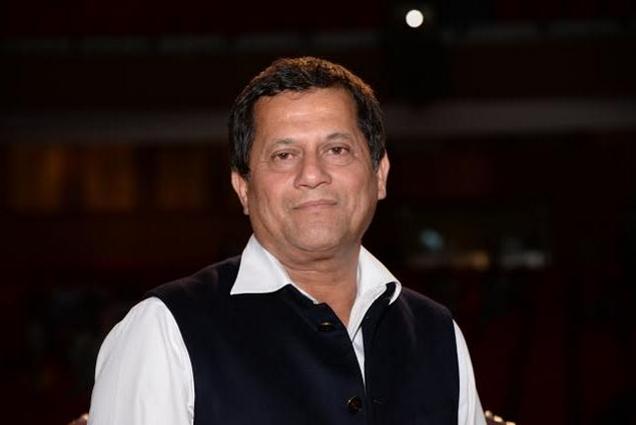
Development is often measured through infrastructure, economic growth and institutional expansion. But its most enduring impact is visible in the opportunities it creates for people who have historically remained outside the mainstream. In Odisha, few institutional journeys illustrate this philosophy as distinctly as that of Dr. Achyuta Samanta, an educationist, social entrepreneur and humanitarian whose vision has extended far beyond the conventional boundaries of education.

What began in 1992 with approximately ₹5,000 and an ambitious belief in the transformative power of education has evolved into a multifaceted institutional ecosystem encompassing higher education, tribal development, healthcare, sports, rural transformation and social empowerment. At the centre of this journey are two landmark institutions: the Kalinga Institute of Industrial Technology (KIIT) and the Kalinga Institute of Social Sciences (KISS).
Building Institutions Where Opportunities Were Limited
Dr. Samanta’s development philosophy is deeply rooted in his personal experiences. Having grown up in financial hardship in Kalarabanka, a village in Odisha, he witnessed how poverty could restrict access to education and fundamental opportunities. Rather than allowing these circumstances to define his future, he channelled his experiences into a larger social mission.
In 1992, while working as a Chemistry lecturer, he established the foundation of KIIT. What began as a modest educational initiative gradually developed into a multidisciplinary university offering programmes across engineering, management, law, medicine, biotechnology and several other professional disciplines.
Today, KIIT has approximately 40,000 students and an international presence spanning more than 70 countries. Its institutional development, research infrastructure, industry engagement and global academic collaborations have contributed to positioning Bhubaneswar as an increasingly important destination for higher education.
However, the more distinctive dimension of his vision emerged through KISS.
KISS: Making Education an Instrument of Social Transformation
Established in 1993, KISS began with 125 tribal students and a mission to make quality education accessible to communities facing geographical, economic and social disadvantages.
Its development represents a significant model of inclusive education. The institution provides residential education, accommodation, food, healthcare, vocational training and sports opportunities without financial burden on its students. Today, its Bhubaneswar campus serves more than 30,000 students, while satellite centres extend educational access to another 10,000 students.
Importantly, KISS’s approach goes beyond classroom education. By integrating academic learning with healthcare, nutrition, cultural identity, life skills and sports, it seeks to address several interconnected barriers to social development.
Its recognition with the UNESCO King Sejong Literacy Prize in 2022 and Special Consultative Status with the United Nations Economic and Social Council reflects the international recognition of its educational and social initiatives.

Expanding the Developmental Footprint
Dr. Samanta’s institutional vision has progressively expanded into healthcare through the Kalinga Institute of Medical Sciences (KIMS), which includes medical education, specialised healthcare services and a large multi-speciality hospital. This has strengthened Bhubaneswar’s healthcare ecosystem while expanding access to medical services in eastern India.
Sports development is another important dimension. Through KIIT and KISS, he has promoted professional training, sports infrastructure and opportunities for young athletes. The institutions have supported the development of more than 20 Olympians, demonstrating how education and sporting excellence can complement each other.
His commitment to grassroots development is also reflected in the transformation of his native Kalarabanka into a model smart village, with initiatives in renewable energy, sanitation, connectivity and community infrastructure.
Beyond institutional development, initiatives such as Art of Giving, Kanya Kiran and other social campaigns have extended his work into humanitarian assistance, women’s empowerment and community awareness.
A Development Model Rooted in Inclusion
Dr. Samanta’s journey demonstrates how educational institutions can become catalysts for broader socioeconomic development. His model connects education with employability, healthcare with human dignity, sports with opportunity and rural development with community participation.
His contributions have also received international recognition. In April 2026, Karnataka University, Dharwad, conferred an honorary doctorate upon him, marking his 71st honorary doctorate. In September 2026, he received the CEEMAN 2026 Leader of the Year honour and FIDE’s Education Philanthropic Award, recognising his contributions to education and social transformation.
Ultimately, the significance of Dr. Achyuta Samanta’s journey lies not merely in the scale of the institutions he has established, but in the developmental possibilities they represent. From a small educational initiative to an ecosystem reaching thousands of students and communities, his work reflects a larger proposition: sustainable development begins when access to opportunity becomes a priority.
For Odisha, this journey is also a reminder that meaningful progress is not measured only by how much infrastructure a state builds, but by how many lives it enables to move forward.
