
Gopalpur, Odisha: Odisha’s industrial growth story is steadily moving beyond its traditional strengths in mining and metals. On the state’s southern coast, Gopalpur Industrial Park (GIP) is emerging as a major new growth engine, backed by an investment pipeline of more than ₹65,400 crore across green energy, renewable equipment, speciality chemicals, tyres, mineral processing and food processing.
Developed by Tata Steel Special Economic Zone Limited (TSSEZL), a wholly owned subsidiary of Tata Steel, the industrial park is located in Odisha’s Ganjam district and is increasingly attracting companies looking to build large-scale, future-oriented manufacturing operations.
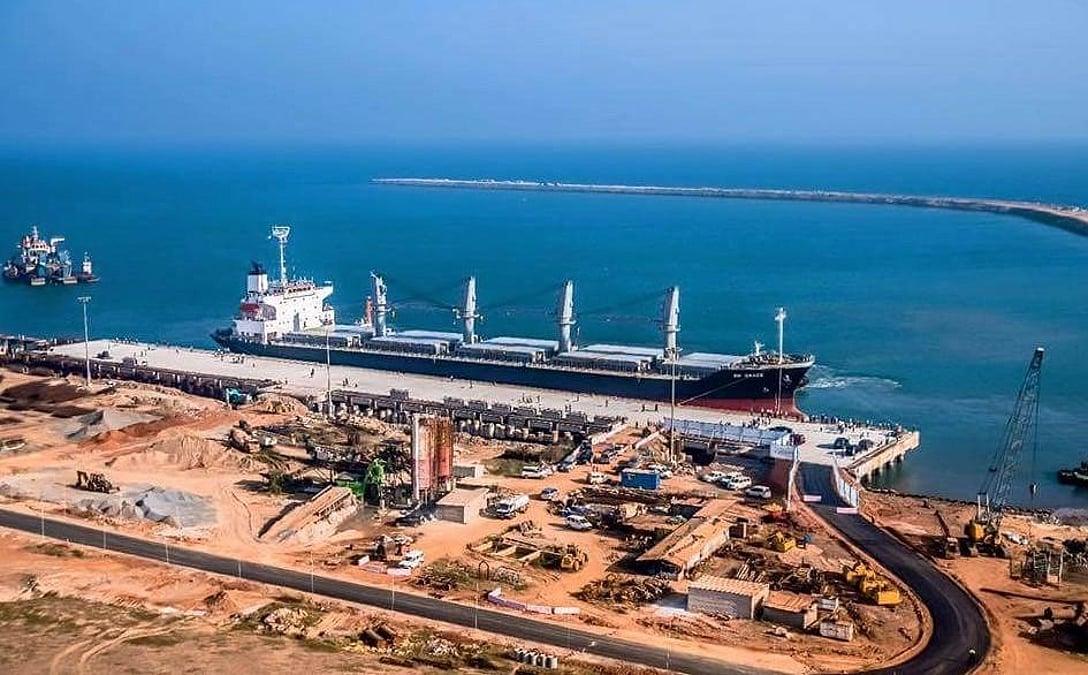
Spread across nearly 2,970 acres, Gopalpur Industrial Park has been designed as an integrated, plug-and-play industrial ecosystem. The park offers industrial infrastructure including internal roads, power and water supply, drainage systems, environmental clearances and multimodal connectivity, along with access to Gopalpur Port through a dedicated utility corridor.
A ₹65,400 Crore Industrial Pipeline
The scale of investment being lined up at Gopalpur reflects the growing confidence of companies in Odisha as a manufacturing destination.
According to recent disclosures, the park has attracted a cumulative pipeline of over ₹65,400 crore, with projects spanning several sunrise sectors. Companies associated with existing or announced investments include Avaada GreenH2, Ocior Energy, Hygenco, Saatvik Solar Industries, World Green Energy, SRF, ATC Tires, Tata Steel and Tata Consumer Products, among others.
The diversity of these investments is particularly significant. Unlike conventional industrial clusters dominated by a single sector, Gopalpur is developing a broader ecosystem that combines clean energy, advanced manufacturing and value-added industries.
Green Ammonia Gives Gopalpur a Global Edge
One of the biggest developments strengthening Gopalpur’s clean-energy ambitions is the proposed 0.4 million tonne per annum green ammonia plant.
The project follows a Memorandum of Cooperation involving the Government of Odisha, Japan-based IHI Corporation, ACME Group and TSSEZL. The proposal also includes a jetty-less floating terminal, highlighting the role of innovative port-linked infrastructure in supporting the project.
Green ammonia is increasingly seen as an important component of the global energy transition, with potential applications in clean fuel and international energy trade. Odisha’s port infrastructure is expected to provide an advantage for companies developing export-oriented green energy projects.
The Odisha Economic Survey has also identified the Gopalpur and Paradip regions as key centres for green hydrogen and green ammonia projects, supported by port-based industrial infrastructure and export connectivity.
Tata Power’s ₹10,000 Crore Solar Manufacturing Bet
Another major boost has come from Tata Power Renewable Energy Limited (TPREL), which has executed a binding land transfer agreement for a proposed ₹10,000 crore investment at Gopalpur.
The proposed facility is expected to manufacture solar ingots and wafers—critical components in the solar photovoltaic supply chain. The project could strengthen India’s domestic renewable-energy manufacturing ecosystem while positioning Gopalpur as an important hub for green energy equipment.
For Odisha, this is significant because it represents a shift towards manufacturing deeper into the clean-energy value chain rather than simply hosting renewable power projects.
Chemicals, Tyres and Advanced Manufacturing Add Depth
The industrial momentum at Gopalpur is not limited to renewable energy.
Major investments have also been proposed in speciality chemicals and advanced manufacturing. Earlier reports indicated that SRF is planning a ₹10,000 crore chemicals project at Gopalpur, covering products including refrigerants, solvents, chloromethane, fluoropolymers and intermediates for agricultural and pharmaceutical applications.
The Odisha Economic Survey said the proposed project could generate substantial employment and represents the state’s wider push towards diversified, value-added and employment-intensive industries.
Investments in tyres, solar equipment, mineral processing and food processing further add to the industrial mix, potentially creating an interconnected manufacturing ecosystem rather than a standalone industrial estate.
Why Gopalpur Is Emerging as a Strategic Location
Gopalpur’s biggest advantage lies in its location and infrastructure.
Situated on India’s east coast, the industrial park offers proximity to Gopalpur Port, along with rail and highway connectivity. This makes it particularly attractive for companies that depend on large-scale movement of raw materials or export-oriented production.
The availability of ready industrial infrastructure is another key factor. For investors, faster access to land, utilities and clearances can significantly reduce project implementation timelines.
TSSEZL has also structured the park to accommodate businesses in both the Special Economic Zone (SEZ) and the Domestic Tariff Area (DTA), allowing companies from different sectors to choose operating structures suited to their markets.
A Shift in Odisha’s Industrial Story
The rise of Gopalpur reflects a broader transformation underway in Odisha.
For decades, the state’s industrial identity has been closely associated with minerals, metals and heavy industry. While those sectors remain crucial, policymakers are increasingly focusing on sectors such as green hydrogen, renewable energy equipment, chemicals, electronics and advanced manufacturing.
The Odisha Economic Survey describes this as a structural shift towards a more diversified and value-added industrial ecosystem, aimed at broadening the employment base and strengthening the state’s long-term economic resilience.
Gopalpur could become one of the strongest examples of this transition.
Employment and Regional Development
Beyond investment numbers, the real impact of the industrial park will be measured by its ability to generate employment and create a wider economic ecosystem in southern Odisha.
Large industrial projects can create opportunities not only within manufacturing plants but also across logistics, construction, engineering, maintenance, hospitality, transportation and ancillary businesses.
The proposed green ammonia project alone has been reported as having the potential to generate thousands of employment opportunities. More broadly, the expanding industrial ecosystem is expected to create both direct and indirect jobs.
This could give a significant boost to industrial development in the Ganjam region and strengthen southern Odisha’s role in the state’s economic landscape.
The Road Ahead
The ₹65,400 crore figure represents an investment pipeline, meaning projects are at different stages—from operational facilities and construction to planning and approvals. The ultimate economic impact will therefore depend on timely execution, infrastructure readiness and the ability to build a skilled workforce around the emerging industrial cluster.
But the direction is clear.
With green ammonia, solar manufacturing, speciality chemicals and other advanced industries converging at one location, Gopalpur Industrial Park is rapidly moving beyond its identity as a conventional industrial zone.
It is positioning itself as a potential gateway for Odisha’s next phase of industrialisation—one that is cleaner, more technology-driven, export-oriented and diversified.
If the projects in its ₹65,400 crore pipeline translate into successful operations, Gopalpur may well become one of eastern India’s most important industrial and green manufacturing destinations in the years ahead.
