
NCRTC’s Double Triumph at UMI 2026: How Namo Bharat Is Redefining India’s Regional Mobility
Recognised for passenger satisfaction and exhibition excellence at the Urban Mobility India Conference in Bhubaneswar, NCRTC’s achievements reflect a larger transformation in how India connects its cities, commuters and economic opportunities.
By – Snigdha Mishra
Bhubaneswar, October 28, 2026 | The Interview Times
India’s infrastructure story is increasingly being measured not merely by the scale of its projects, but by the difference they make to everyday lives. A railway corridor becomes truly transformative when it shortens the distance between opportunity and aspiration, makes daily travel more dependable and allows cities to grow beyond their traditional boundaries.
At the 19th Urban Mobility India (UMI) Conference and Expo 2026, held in Bhubaneswar, the National Capital Region Transport Corporation (NCRTC) emerged with two significant recognitions, underscoring the growing importance of passenger-centric infrastructure in India’s urban development journey.
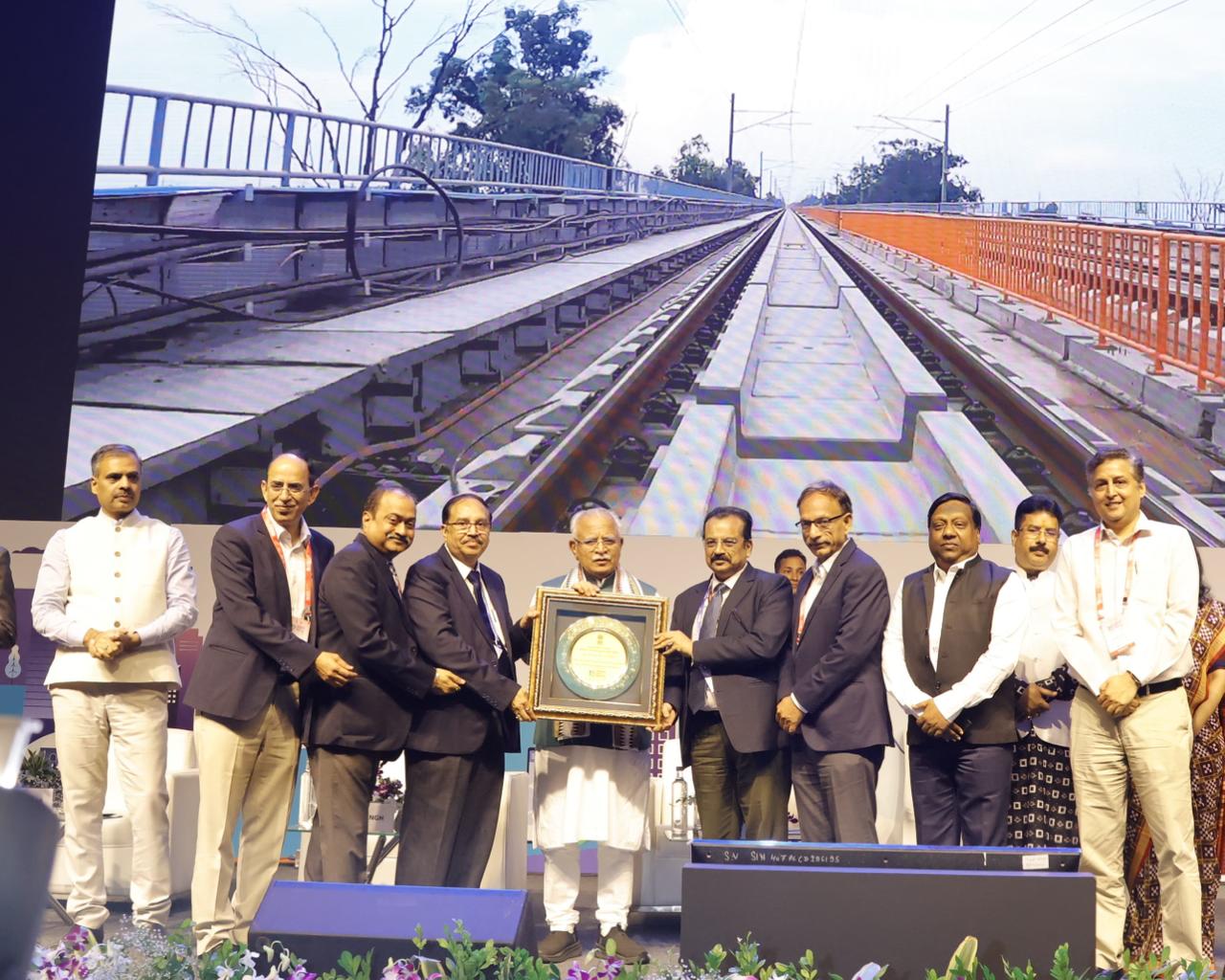
NCRTC received the award for Best Passenger Services and Satisfaction for the Delhi–Meerut Namo Bharat corridor, while also securing the Best Exhibitor Award for the second consecutive year.
The passenger service recognition was presented by Shri Manohar Lal, Union Minister of Housing and Urban Affairs and Power, to Shri Shalabh Goel, Managing Director, NCRTC, under the category Metro Rail with the Best Passenger Service and Satisfaction.
Together, these honours highlight an important shift in the country’s mobility narrative: infrastructure excellence is no longer defined by construction alone, but equally by reliability, accessibility, passenger experience and long-term economic impact.
From Infrastructure Ambition to Everyday Dependability
The Delhi–Meerut Namo Bharat corridor represents a significant advancement in India’s regional transportation landscape. Conceived to connect major urban centres through faster, more reliable rail services, the corridor has steadily evolved into an important commuting option for people travelling between Delhi, Ghaziabad and Meerut.
Since the phased commencement of operations in October 2023, Namo Bharat has recorded more than 4.8 crore passenger journeys, according to NCRTC’s latest press release.
The corridor now serves over 1.1 lakh commuters daily, while its highest recorded single-day ridership has exceeded 1.68 lakh passengers.
These numbers carry significance beyond passenger volume. They suggest that regional rail is increasingly becoming part of people’s regular decisions about employment, education, residence and business travel.
For a working professional, dependable connectivity can mean more time with family. For a student, it can expand access to educational institutions. For businesses, it can improve access to talent and markets across multiple urban centres.
The broader achievement of Namo Bharat lies in making these possibilities more practical.
Reliability as a Measure of Public Trust
One of the corridor’s most notable operational achievements is its reported 99.9 per cent punctuality, a figure highlighted in the press release alongside its 160 kmph operational speed.
While speed is a defining characteristic of modern regional rail, punctuality may ultimately have a greater influence on passenger confidence.
A fast train that operates inconsistently cannot fully support the needs of daily commuters. A service that combines speed with predictable schedules, however, becomes a dependable part of people’s lives.
The Prime Minister has also cited the corridor as an example of positive governance, commending its adherence to project timelines and operational performance, according to NCRTC.
For public infrastructure organisations, such performance creates a valuable benchmark: engineering capability must be supported by operational discipline and an understanding of passenger expectations.
Shri Shalabh Goel and the Leadership Behind Passenger-Centric Mobility
The recognition received by Shri Shalabh Goel, Managing Director of NCRTC, brings attention to the leadership and institutional coordination required to translate a major infrastructure vision into a functioning public service.
Large transportation projects demand far more than technical execution. They require coordination across agencies, effective integration with existing networks, attention to safety and consistent service delivery.
Under NCRTC’s institutional leadership, Namo Bharat’s development reflects the importance of aligning infrastructure planning with the actual requirements of commuters.
The award for passenger services and satisfaction is particularly meaningful because it recognises the experience of the people for whom the system has been created.
Comfortable air-conditioned coaches, modern stations, dependable operations and convenient interchange facilities are all part of a broader approach to making regional journeys more accessible.
The achievement also reinforces an important management principle: the true measure of infrastructure leadership is not simply delivering an asset, but ensuring that the asset consistently delivers public value.
Connecting Transport Networks, Not Just Destinations
An important dimension of Namo Bharat is its integration with other modes of public transportation.
The corridor has been designed to facilitate connections with Metro networks, Indian Railways, interstate bus terminals and city bus services, supporting a more coordinated mobility ecosystem.
This approach recognises that commuters rarely travel from one station directly to another without additional connections.
The effectiveness of a regional railway therefore depends on how seamlessly it fits into the wider transportation network.
The integration of Meerut Metro services on the same infrastructure adds another dimension to this model, demonstrating how different urban and regional transportation requirements can be accommodated within a coordinated system.
Such integration has implications for future infrastructure planning across India, particularly as rapidly expanding cities seek solutions to congestion, fragmented transport services and increasing commuter demand.
A Second Consecutive Honour for Exhibition Excellence
Beyond the passenger service award, NCRTC secured first prize for its exhibition at UMI 2026, marking its second consecutive Best Exhibitor recognition.
Its exhibition presented the evolution of the Delhi–Meerut Namo Bharat corridor, highlighting the technologies, infrastructure systems and planning principles supporting regional connectivity.
Among the central themes were advanced transportation technology, multimodal integration and Transit-Oriented Development (TOD).
The recognition is significant because infrastructure exhibitions serve an important purpose beyond showcasing completed projects.
They provide opportunities for policymakers, transport authorities, industry professionals and urban planners to exchange ideas about the future of mobility.
NCRTC’s repeated recognition reflects the strength of its presentation of the Namo Bharat model and its relevance to wider discussions about India’s urban transport transformation.
How Regional Rail Can Reshape Economic Geography
Perhaps the most consequential aspect of Namo Bharat’s development extends beyond the railway itself.
By reducing travel barriers between major urban centres, regional rail has the potential to influence where people choose to live, work, study and invest.
NCRTC’s release points to an emerging pattern in which some professionals working in Delhi are relocating to their hometowns within the National Capital Region, supported by improved connectivity.
This development illustrates a broader economic possibility.
When travel becomes faster and more predictable, employment opportunities need not remain concentrated around a limited number of residential locations.
Smaller urban centres can become more attractive places to live, while businesses may benefit from access to a geographically wider workforce.
Areas surrounding transport stations can also attract residential, commercial and service-sector activity, creating opportunities for more distributed urban growth.
These outcomes will depend on sustained service quality, coordinated urban planning and supporting infrastructure. Nevertheless, the Namo Bharat experience offers an important case study in how transport investment can influence regional development.
Bhubaneswar Hosts a National Conversation on the Future of Mobility
The recognition of NCRTC at UMI 2026 also placed Bhubaneswar at the centre of an important national discussion on transportation and urban transformation.
As Indian cities expand and economic activity becomes increasingly interconnected, the need for reliable, integrated and sustainable mobility systems is becoming more urgent.
The experience of the Delhi–Meerut corridor provides useful lessons for policymakers and infrastructure planners exploring how better connectivity can support productivity, accessibility and regional growth.
For Odisha, hosting a major urban mobility conference creates an opportunity to engage with infrastructure models, emerging technologies and planning approaches that may inform future transportation development.
The relevance of such exchanges lies not in replicating every project, but in understanding the principles that make large mobility systems effective.
Beyond the Awards: A Benchmark for India’s Mobility Future
NCRTC’s double recognition at UMI 2026 is a celebration of institutional achievement, but its larger importance lies in what the Delhi–Meerut Namo Bharat corridor represents.
More than 4.8 crore passenger journeys, over 1.1 lakh daily commuters, a reported 99.9 per cent punctuality record and growing multimodal integration together tell a story of infrastructure moving beyond ambition into measurable public use.
The awards recognise both the passenger experience delivered today and the broader vision being communicated for tomorrow.
As India continues to invest in modern transportation networks, the challenge will be to build systems that are not only technologically advanced but also accessible, dependable and responsive to changing urban needs.
For NCRTC, the recognition in Bhubaneswar marks another milestone in that journey.
For India’s infrastructure sector, it reinforces a larger message: the most successful transportation projects do more than connect places. They expand possibilities for the people who depend on them.
The Interview Times | Leadership • Infrastructure • Nation Building
