
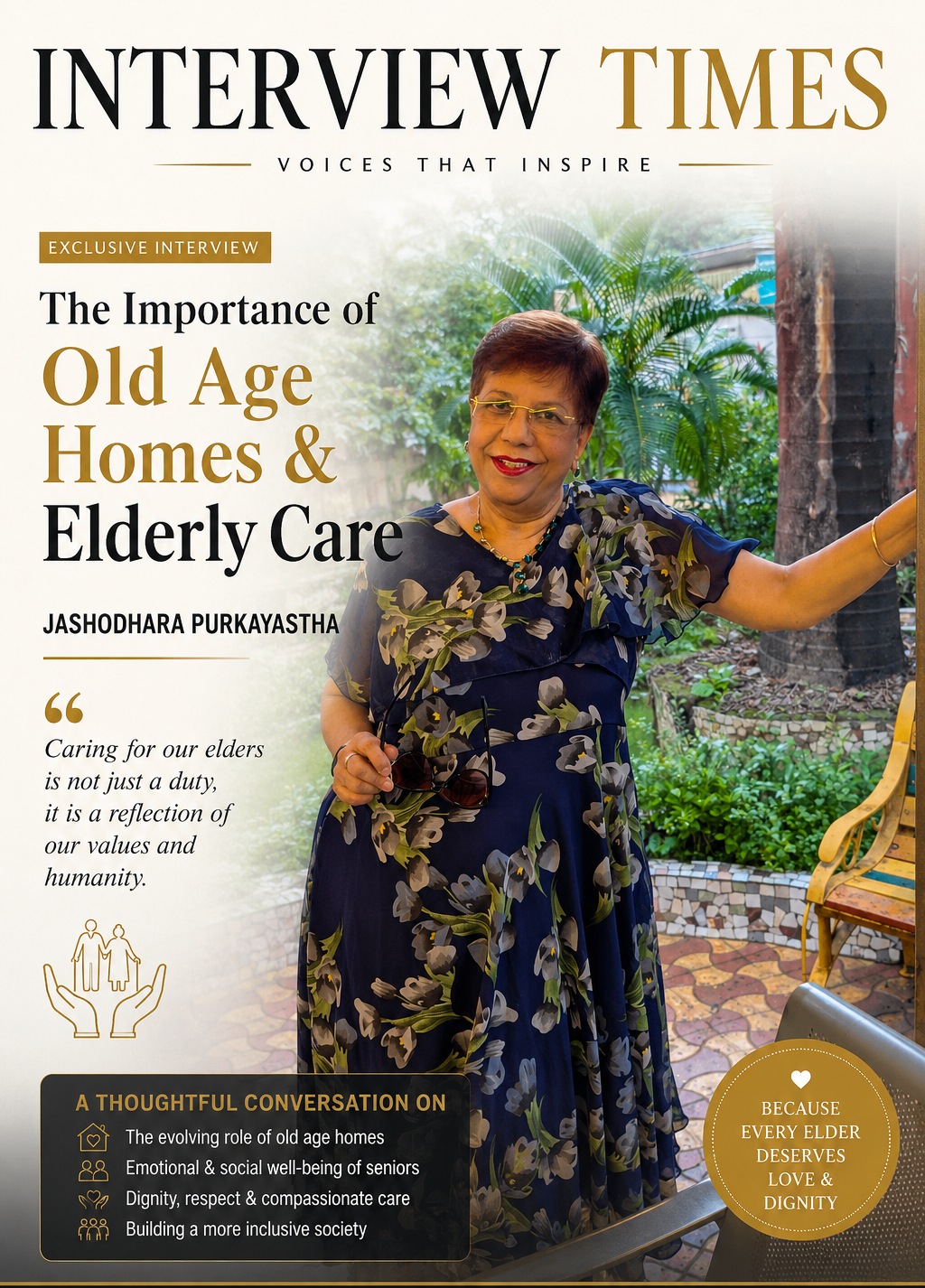
1. What do you believe are the biggest challenges faced by elderly people in today’s society, especially those who are living alone or without adequate family support?
Answer: Human beings are social, cultural, and intelligent animals. They love to live together. They live in society, follow their culture, and communicate in languages with which they feel comfortable.
After passing through the three stages of life, when people grow elderly, they face many challenges—physical, mental, and, above all, emotional. When one partner dies or the couple separates, the elderly person may feel neglected and isolated. After spending many years depending on each other for companionship and support, they suddenly have to face loneliness. They may experience depression, fear, and, above all, a profound feeling of emptiness.
There may be situations where elderly people do not have adequate family support. Their children may be living in another city or even in another country, making regular physical and emotional support difficult. In such circumstances, the elderly person may find themselves living alone and managing their daily life without the companionship they once had.
So, what do elderly people do at this stage of life? How do they cope with loneliness, fear, insecurity, and the feeling of being unwanted? Some may try to remain occupied with household activities, religious or spiritual practices, reading, gardening, or social activities. Others may seek companionship through friends, neighbours, community groups, or senior citizens’ organisations. However, these alternatives cannot always replace the emotional security and sense of belonging that comes from close relationships. Loneliness is like a punishment. This stress could lead to discomfort and disease.
2. In your opinion, how can old age homes provide dignity, companionship, safety, and emotional support to senior citizens?
Answer:I had visited an old-age home a few years ago, where I observed that most of the elderly residents were living happily. They spent their time playing carrom and cards, while some enjoyed singing Antakshari and participating in other activities. I also came to know that after moving into the old-age home, some residents had chosen partners and started new relationships.
The old-age home had regular visits from a doctor, a prayer hall for the elderly, a game room, a large dining hall, and a well-equipped library. It was one of the more luxurious old-age homes.
On the other hand, I also visited another old-age home where mostly middle-income and poor elderly people lived. The conditions there were not as good as those in the more luxurious home. Some individuals and organizations donate according to their capacity, but the support is still limited.
Therefore, I feel that the government should take more initiative and responsibility for the welfare and care of elderly people living in old-age homes. Every elderly person deserves to live with dignity, safety, and proper care, regardless of their financial background.
3. What role do you think families and society should play in ensuring that elderly people receive proper care, respect, healthcare, and emotional support?
Answer: Families play an important role in shaping a good future generation. Many families together form a society, and every society has certain ethics, values, and regulations.
Families are responsible for instilling strong ethical values in their members, including the responsibility to care for and look after elderly people living with them. Everyone living in a society should know how to respect and support the elderly people around them.
If a family moves to another place or abroad, they should inform the society office so that the society can keep track of and provide necessary support to elderly people who may be left living alone at home.
4. Do you feel that old age homes should be viewed not as a place of abandonment, but as a supportive environment for elderly people who need care and companionship? Why?
Answer: I believe old age homes should not always be viewed as places of abandonment. They can provide a supportive environment for elderly people who need care, companionship, and medical support.
One of the singers sings a song about an old age home as a place of abandonment. I do not like the song because it gives the impression that elderly people are neglected and that old age homes are only places where people are left behind.
Nowadays, because of close-knit families and the modern flat-living system, it is not always possible for everyone to live together. Some children also go abroad for better career opportunities and earnings, leaving their parents at home. If only one parent is alive, the family may choose to place him or her in an old age home so that the parent can receive proper care and have companionship.
Some old age homes charge a significant amount of money, but they also provide excellent facilities and care. They may have separate rooms, regular visits from doctors, healthy food, and various entertainment activities. In such cases, an old age home can provide elderly people with a comfortable and supportive life rather than making them feel abandoned.
However, I would request the government to keep a close eye on old age homes and inspect them regularly to ensure that elderly people are receiving proper care, respect, and safety.
5. As an author, how do you think literature, storytelling, and writing can help create greater sensitivity and awareness about the needs and struggles of senior citizens?
Answer:
Being an author for the past 30 years, I believe that writing, literature, and storytelling can create emotional connection and a deeper sense of empathy and understanding. Through stories based on real-life experiences, we can bring out emotions and make people aware of the feelings, struggles, and experiences of others.
My own memoir describes the life story of my Bidai (बिदाई). When I connected my personal story with the topic “Forgetting,” the entire class became emotional, and there was pin-drop silence. That experience made me realise how deeply a personal story can touch people and help them understand emotions that are sometimes difficult to express.
Senior citizens have many experiences and stories stored in their minds, but storytelling is not always easy for them. Some may find it difficult to express their feelings or experiences. However, when they read or listen to stories that reflect similar experiences, they immediately relate to them and often become emotional.
This is why I always encourage senior citizens to maintain a diary and write down whatever comes to their minds—memories, experiences, feelings, or even small incidents from everyday life. Writing gives them a voice and also preserves their stories for future generations. Nowadays, even recording their thoughts and memories on a mobile phone can be an easy and accessible way to express themselves.
6. Do you feel being an author and raising awareness is important on this topic? How would you like to use your voice and writing to encourage better elderly care?
Answer: Yes, I strongly believe that being an author gives me an opportunity and a responsibility to raise awareness about elderly care. However, awareness alone is not enough. The values of respecting and caring for senior citizens should be introduced in school programmes and, more importantly, taught at home. Parents of the new generation must teach their children how to behave with and care for elderly people.
In today’s nuclear families, many children do not get the opportunity to live with their grandparents or see them dealing with the challenges of everyday life. If parents do not teach children about empathy, patience, and elderly care, they may never fully understand the needs of senior citizens.
Through my voice and writing, I would like to encourage elderly people to live with purpose and dignity. My message is:
“Live fully and leave no room for regrets.”
Every outfit we wear reflects our personality, experiences, and the courage to keep evolving. If we want to participate in life, we must be willing to step forward and try new things. For example, I entered pageantry at the age of 70. That experience taught me that style is not about simply following trends; it is about expressing individuality with confidence and inspiring others to embrace their authentic selves.
Even when physical health becomes a challenge, I believe we should continue to connect with our inner self, talk to our soul, and find ways to overcome our physical limitations with a positive spirit.
My ultimate message is about learning by seniors. It should be learnt from the day a child is born.
A child has come through you, but the child is not yours to possess. Treat your child as guest in your life—with love, but also with the freedom to live its own lives. If we learn this from the beginning, we can protect ourselves from unnecessary emotional pain and disappointment in later life.
7. What message would you like to give to families, young people, and society about respecting, caring for, and standing by our elderly generation?
Answer:
Nowadays, many young women are independent and financially secure, and they naturally want to take care of their own parents. At the same time, it is important that we do not overlook the parents of the other partner. I believe that, regardless of whether they are the girl’s parents or the boy’s parents, both deserve equal respect, care, and affection.
Our family values play an important role in shaping how we treat others. From childhood, if a child learns kindness, empathy, respect, and the importance of caring for others, these values become a natural part of their character. They will understand that caring for elderly parents should not be determined by whether they are the parents of a son or a daughter.
I also believe that the way we raise children can broaden their perspectives, strengthen their character, and inspire them to contribute positively to society. When young people step beyond their comfort zones and learn to care for others, they develop greater confidence, compassion, and a sense of responsibility towards both seniors and the younger generation.
