

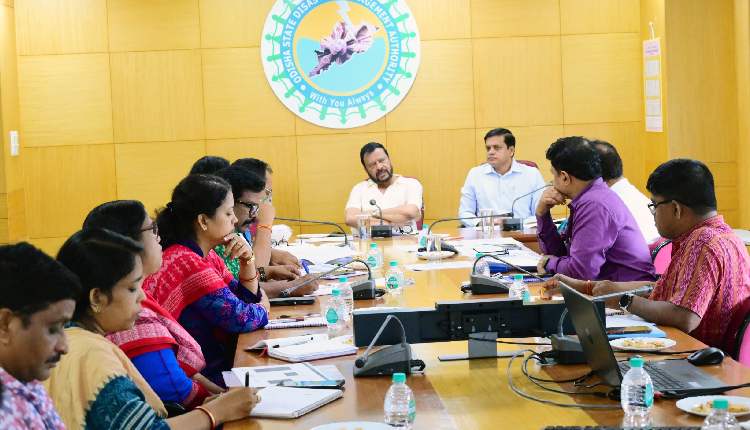
The Odisha government evaluated its disaster preparedness in light of the potential formation of a low-pressure area over the north Andaman Sea and declared that all necessary steps were being taken to manage heavy rain and other weather-related emergencies. Suresh Pujari, Minister of Disaster and Revenue Management, presided over the high-level meeting in Rajiv Bhawan’s OSDMA conference hall. He stated that the state is coordinating with the India Meteorological Department (IMD) and advised people not to panic due to unverified reports regarding the developing weather system.
According to the weather assessment presented during the meeting, an upper-air cyclonic circulation was present over northern Thailand at 8:30 a. m. on September 18 and reached up to 9. 4 kilometers above mean sea level. By the evening of September 19, a low-pressure area is anticipated to develop over the area, and by the evening of Friday, it will likely go to the north Andaman Sea. Over the following three to four days, the system is predicted to gradually intensify and travel west-northwestward towards the coast between southern Odisha and northern Andhra Pradesh. Nevertheless, it was informed at the conference that its probable intensity and precise path would become clearer over the next two days.
Pujari stated that the state government was completely prepared to handle the constant rain, thunderstorms, and heavy rainfall and ordered district Collectors to be on high alert. Over the last two months, Odisha has experienced prolonged rain as a result of four low-pressure systems and eleven deep depressions, he noted. According to the minister, flood-related damage assessment for the current year has been finished, and the distribution of compensation is in its last stage. So far, approximately Rs 226 crore has been paid out for losses to clothes and household goods, damage to houses, crop losses, and vegetable damage. The rest of the remuneration would be dispersed soon, and efforts were also being made to restore agricultural land that had been impacted by sand deposition.