
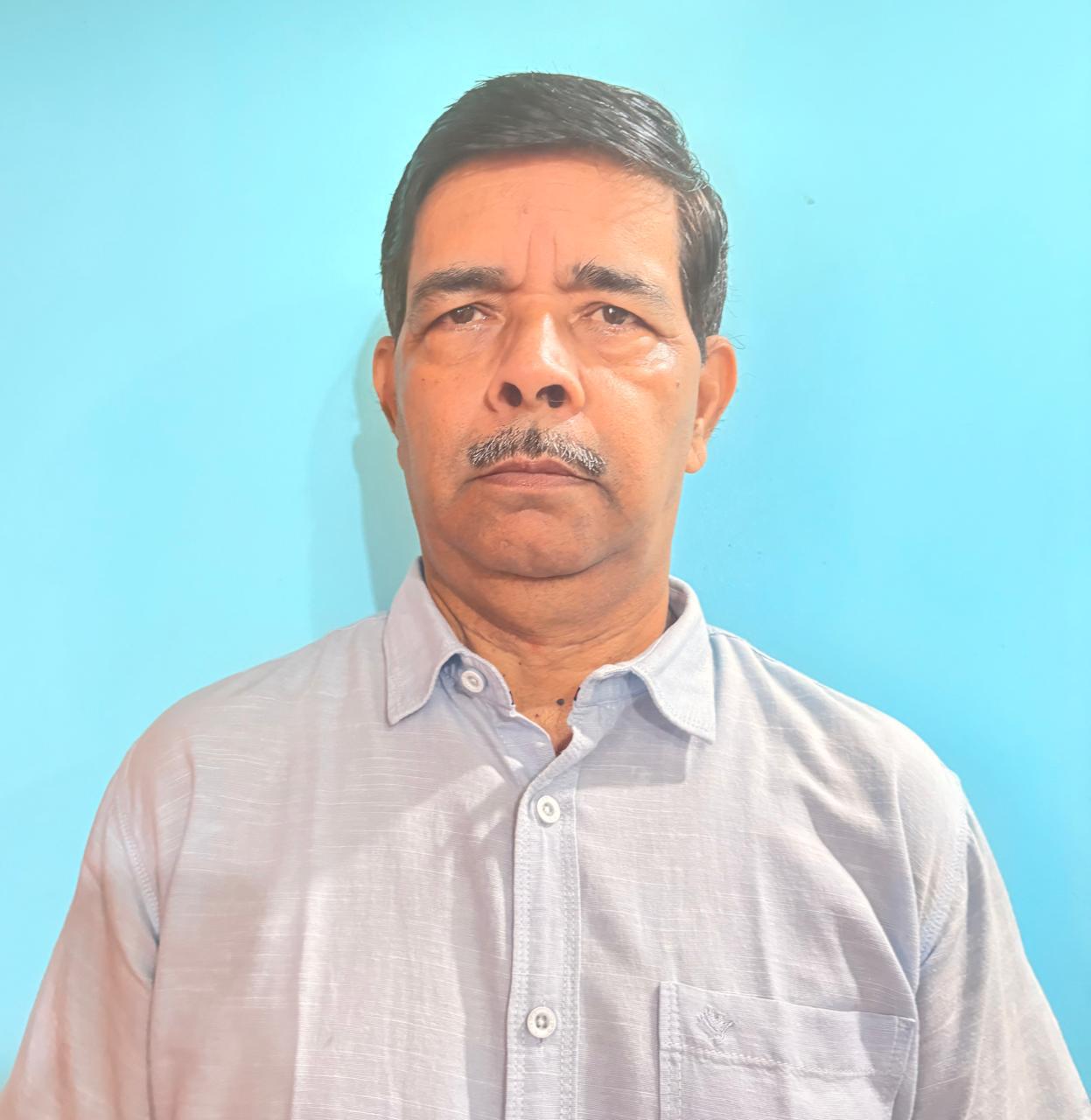
In an industry where technical expertise, operational precision and the ability to adapt to changing market dynamics determine success, leadership is often measured by the ability to turn challenges into opportunities. For Ranjay Kumar, CEO of Misrilal Mines Private Limited, the journey has been defined by technical excellence, continuous learning and a firm belief in empowering people. With decades of experience in the ferroalloys industry, he has been instrumental in strengthening the company’s capabilities, particularly in the production of premium-grade ferrochrome.
Originally from Giridih district in Jharkhand, Kumar pursued his engineering education in Metallurgy at the Regional Institute of Technology, Jamshedpur, now known as NIT Jamshedpur. Following the completion of his four-year engineering programme, he began his professional career with Indian Metals and Ferro Alloys Limited (IMFA) at Choudwar as a Graduate Engineer Trainee. His early responsibilities as shift in-charge and furnace in-charge laid the foundation for a career built around practical knowledge of industrial operations.

Over the years, he gained experience across several prominent organisations, including Bhutan Ferro Alloys, Sri Vasavi Industries, Prakash Industries, Jindal Stainless, Visa Steel and Balasore Alloys. Each professional association added to his understanding of ferrochrome production, process management and plant operations. For the past seven years, he has been associated with Misrilal Mines, where he currently serves as Chief Executive Officer.
One of the most significant contributions under his technical supervision has been the development and commercial production of high-chromium, low-silicon ferrochrome. Traditionally, several Indian producers focused on conventional grades containing around 60 per cent chromium and 2–4 per cent silicon. Recognising the growing demand in European markets for premium-grade material, Kumar worked towards developing products with chromium content exceeding 65–67 per cent and silicon levels below one per cent.
Having previously undertaken research and development initiatives in low-silicon production at Balasore Alloys, he carried this technical experience to Misrilal Mines, where the product was successfully manufactured on a commercial scale. The premium-grade product also commands a higher market value compared to conventional ferrochrome, creating opportunities for better realisations and greater foreign exchange earnings for the country. He believes that the success of such initiatives can encourage more Indian manufacturers to explore value-added production and strengthen India’s position in international markets.
For Kumar, however, industrial growth is not limited to production figures or technological advancements. His leadership philosophy rests on education, guidance and collective responsibility. He believes in developing the capabilities of his subordinates so that they can take independent decisions and contribute effectively to organisational growth. Rather than viewing younger professionals as competitors, he welcomes their ideas and remains open to learning from them. His advice to emerging professionals is simple: never work with a closed mind.
This people-first approach extends to workplace culture. He emphasises hand-holding, providing direction and standing alongside employees when challenges arise. He also places considerable importance on maintaining strong relationships with the workforce, ensuring that employees receive the support they deserve. His emphasis is on creating an environment where responsibilities are fulfilled without unnecessary stress and where teams function with mutual trust. He describes the workplace culture at Misrilal as one built around a sense of family and shared accountability.

Operationally, the company has also been working towards expanding its production capacity. When Kumar joined, the facility had one 9 MVA furnace with a production capacity of approximately 1,210. Subsequently, a second furnace was established, followed by plans for two additional furnaces. Despite market fluctuations and a temporary downturn in demand, the company has continued to adapt its production strategy, with plans to commission another furnace from December 2026, depending on market conditions.
Looking ahead, Kumar sees considerable potential in the ferrochrome industry, particularly as demand for premium-grade products begins to recover in international markets. His message to the next generation of industry professionals is rooted in the values that have shaped his own journey: work sincerely, remain receptive to ideas and never allow your mind to become closed to possibilities.
At Misrilal Mines, his journey reflects a larger understanding of industrial leadership — that sustainable progress comes not merely from expanding infrastructure, but from advancing technology, nurturing talent and creating an organisation where people grow together.
