

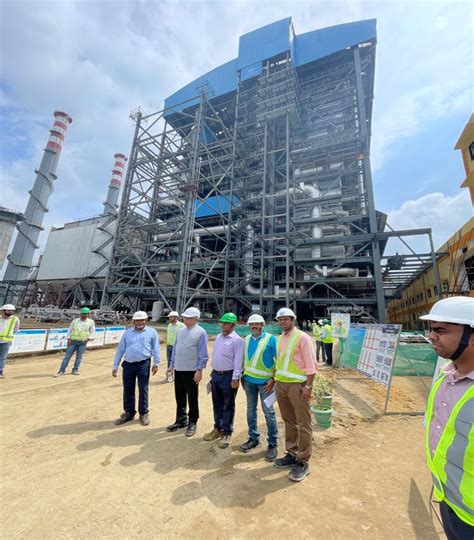
A ₹19,000-Crore Industrial Bet at a Crossroads
One of Odisha’s most ambitious industrial projects is entering a decisive phase.
The coal-gasification-based Talcher Fertilizers Limited (TFL) project in Angul district has reached 72.97% overall progress as of August 31, 2026, even as the long-delayed development faces a fresh push to resolve execution and financial challenges. Its revised project cost stands at ₹19,062.22 crore, according to company documentation and recent reporting.
Designed to produce approximately 1.27 million tonnes of urea annually, Talcher is more than another large fertiliser plant. It is being developed as a landmark attempt to manufacture urea using domestic coal through gasification, providing an alternative feedstock route to conventional natural-gas-based fertiliser production.
The project’s importance therefore extends from Odisha’s industrial landscape to India’s wider ambitions in fertiliser security, coal gasification and import substitution.
The Numbers Behind the Talcher Megaproject
The scale of the project is substantial:
₹19,062.22 crore — Revised project cost
72.97% — Overall progress as of August 31, 2026
₹3,508 crore — Financial incentive reportedly sought
1.27 MMTPA — Planned annual urea capacity
2,200 tonnes/day — Ammonia plant capacity
3,850 tonnes/day — Urea plant capacity
December 2027 — Revised commissioning target
The revised cost is proposed to be financed through approximately ₹12,250.06 crore of debt and ₹6,812.16 crore of equity, according to TFL documentation.
These figures make Talcher one of the most significant industrial projects currently under implementation in Odisha.
Why Talcher Is Different
What distinguishes the Talcher project is its technology and feedstock.
Instead of depending primarily on natural gas to produce fertiliser, the complex is designed to convert coal into synthesis gas, or syngas, which can subsequently be used in the production chain for ammonia and urea.
The Ministry of Coal says coal gasification can support production of products including synthetic natural gas, ammonia, urea, methanol and other chemicals. The government views the technology as one route towards extracting greater chemical value from domestic coal while supporting import substitution.
For Talcher, this has particular relevance because of its proximity to Odisha’s coal resources.
The project is expected to utilise coal from the Talcher coalfields, with provision for blending pet-coke to deal with the high ash content of the domestic coal feedstock.
Four PSUs Behind One Strategic Project
Talcher Fertilizers Limited is a joint venture promoted by four major public-sector entities:
GAIL (India) Limited, Coal India Limited, Rashtriya Chemicals and Fertilizers Limited and Fertilizer Corporation of India Limited.
TFL currently lists GAIL, Coal India and RCF as holding 31.85% each, while FCIL holds the remaining 4.45%.
The venture was created to revive fertiliser production at the historic Talcher site.
The original FCIL unit began production in 1980 but later became financially and technologically unviable and was eventually closed in 2002. The revival initiative evolved over subsequent years into the present greenfield coal-gasification-based ammonia-urea complex.
That history makes the current project not simply an expansion, but an attempt to transform an old industrial location using a substantially different technological model.
From ₹8,000 Crore to More Than ₹19,000 Crore
The road to revival has not been straightforward.
The initiative dates back to 2013, when the revival proposal was estimated at around ₹8,000 crore. Its structure, technology, financing requirements and execution scope subsequently evolved considerably.
Today, the approved revised project cost stands at ₹19,062.22 crore.
The increase illustrates the scale of the challenges associated with executing a first-of-its-kind industrial project over an extended period.
More importantly, it places considerable attention on the next stage: converting expenditure and construction progress into an operating industrial asset.
₹3,508-Crore Financial Push
A significant new development is TFL’s reported request for a ₹3,508-crore financial incentive under the Centre’s surface coal-gasification programme.
The support has been sought through a viability-gap-funding mechanism as efforts intensify to improve the economics and accelerate completion of the project.
This comes against the backdrop of a much larger national coal-gasification strategy.
The Government of India has set a target of 100 million tonnes of coal-gasification capacity by 2030. The Ministry of Coal currently counts approximately 2.6 MTPA of Talcher coal-gasification capacity as under implementation.
That places Talcher within a much broader national effort rather than treating it as an isolated Odisha industrial project.
Why Has the Project Been Delayed?
Talcher was originally expected to begin production in October 2024. Its current commissioning target is December 2027—more than three years later.
Major turnkey contracts for the coal-gasification and ammonia-urea packages were awarded to China Wuhuan Engineering in 2019.
Government explanations have cited disruption caused by the Covid-19 pandemic as one factor behind procurement, construction and equipment-erection delays. Subsequent execution-related issues between TFL and the contractor further affected progress.
The delay is central to understanding the story. Talcher represents enormous strategic potential, but that potential depends on completing and successfully commissioning a technically complex project.
Conciliation Push to Break the Deadlock
There is now a renewed effort to resolve outstanding contractual issues.
The government has initiated a conciliation process involving China Wuhuan Engineering, with former Chief Justice of India D. Y. Chandrachud appointed as conciliator, according to recent reporting.
The objective is to address unresolved execution issues and help place the project on a clearer path towards completion.
At the site itself, infrastructure work has continued. Both compartments of the raw-water reservoirs have been completed, the intake-water pipeline has been installed, and mobilisation work involving a large crane has progressed.
These developments do not erase the delays, but they provide measurable signs of movement.
Odisha Steps In to Support the 2027 Target
The Odisha government also has a significant interest in seeing the project completed.
According to recent reporting, Odisha Power Generation Corporation (OPGC) has assured completion of the required 220-kV power-line connectivity by December 2026, supporting efforts to meet the project’s revised schedule.
For Odisha, Talcher sits at the intersection of several strategic sectors: coal, energy, fertilisers, heavy industry and infrastructure.
Its eventual commissioning would therefore carry significance beyond the boundaries of the plant itself.
Fertiliser Security and the Eastern India Connection
India has been working to strengthen domestic fertiliser production while reducing vulnerabilities associated with global supply disruptions and volatile raw-material markets.
The government says domestic urea production capacity has risen substantially over the past decade, and the Talcher unit forms part of its continuing effort to expand indigenous production.
RCF describes Talcher as strategically important because successful coal-based production could provide an alternative feedstock route and help meet urea requirements in the eastern part of the country.
For an agricultural economy of India’s scale, fertiliser security is not simply an industrial issue. It intersects directly with farming, food production, foreign exchange exposure and supply-chain resilience.
Coal Beyond Power Generation
Talcher also represents a different conversation about the future use of coal.
Traditionally, coal in India has been overwhelmingly associated with electricity generation and heavy industry. Gasification seeks to use coal as a feedstock for higher-value products such as chemicals, fertilisers and synthetic fuels.
The Ministry of Coal argues that these applications could support import substitution, energy security and value-added industrial production.
Talcher is therefore an important test of whether a large coal-gasification project can successfully move from policy ambition and construction into sustained commercial operation.
The Bigger Question: Can Talcher Deliver?
That is ultimately what makes the story compelling.
The project has money behind it. It has four major PSUs behind it. It has strategic importance for the Centre. It has access to Odisha’s coal ecosystem. And after years of construction, it has crossed the 70% progress mark.
But it has also experienced substantial delays, rising costs and contractor-related execution challenges.
The next phase will determine whether those pieces can finally come together.
The revised December 2027 target now becomes the critical date to watch.
From Odisha’s Coalfields to India’s Farms
If successfully commissioned, Talcher would connect two seemingly distant parts of India’s economy: Odisha’s coalfields and the country’s agricultural sector.
Coal extracted domestically would enter a gasification process, become feedstock for ammonia and ultimately contribute to the production of urea for agriculture.
That industrial chain explains why Talcher matters far beyond its ₹19,062-crore price tag.
It represents an attempt to turn a domestic natural resource into a higher-value product while strengthening domestic fertiliser capacity.
A Project With Much to Prove
Talcher’s recent progress provides grounds for renewed attention—but not for declaring victory prematurely.
At 72.97% overall progress, significant work remains before the plant becomes an operational industrial asset. The financial-support request, conciliation process and revised commissioning schedule underline the challenges that still need to be resolved.
For Odisha, however, the stakes are substantial.
A successfully commissioned Talcher complex would add a major industrial asset to Angul’s landscape and place the state at the centre of one of India’s most closely watched coal-gasification experiments.
For India, it would test whether domestic coal can support a commercially viable alternative route for producing one of agriculture’s most important inputs.
After years of delays, the ₹19,000-crore Talcher bet is moving again. The real milestone will come when construction finally gives way to production.