
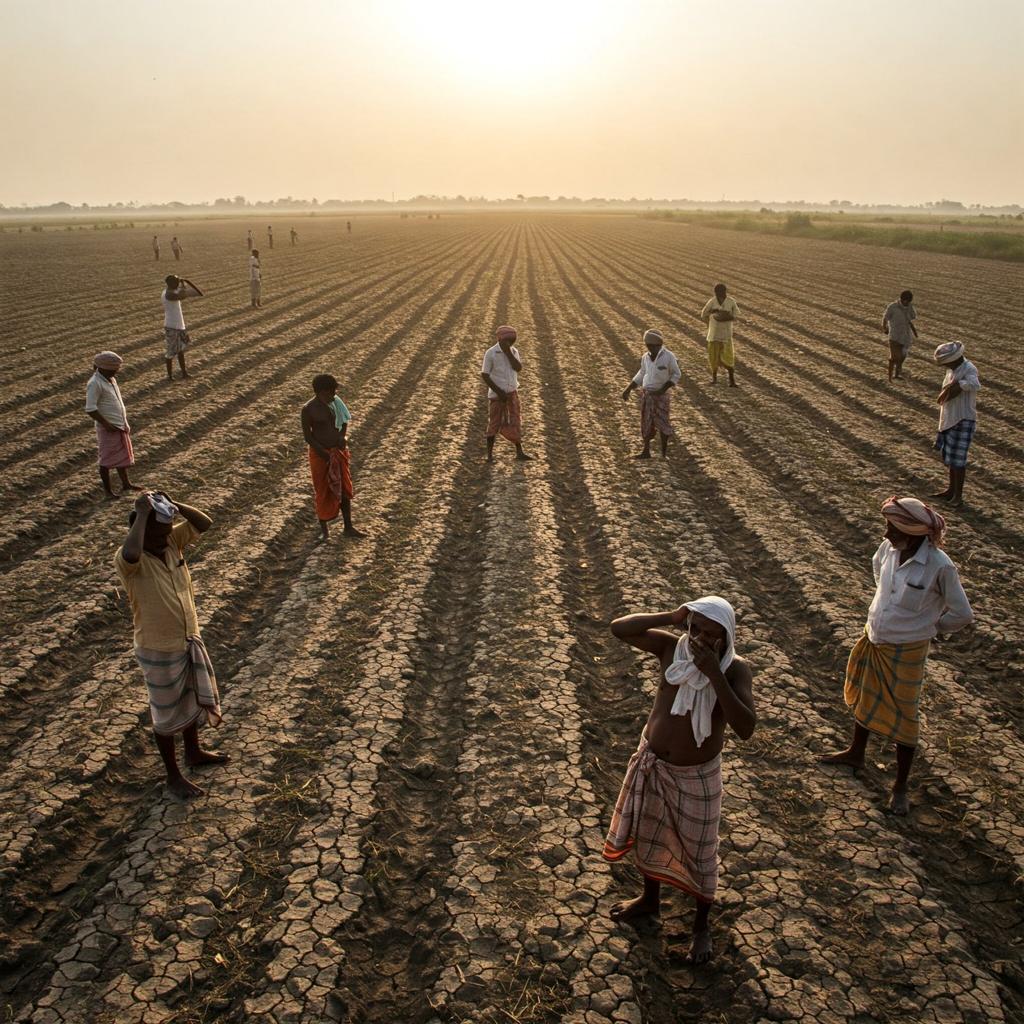
Andhra Pradesh is facing a major agricultural and water crisis after the state government declared 388 mandals across 21 districts drought-affected for the 2026 Kharif season. Of these, 283 mandals have been classified as severely affected and 105 as moderately affected, highlighting the scale of rainfall deficiency across the state.
The drought declaration follows a sharp shortfall in southwest monsoon rainfall. According to the government order, Andhra Pradesh received only 197.6 mm of rainfall between June 1 and August 31, against a normal figure of 424.3 mm — a deficit of 53.4 per cent during that period. Prevailing El Niño conditions have added to the weather-related difficulties. The Indian Express
The drought declaration covers a large geographical area, including districts across both coastal Andhra and Rayalaseema. Among the affected districts are Kurnool, Nandyal, Ananthapuramu, Sri Sathya Sai, YSR Kadapa, Annamayya, Chittoor, Prakasam, Palnadu, Bapatla, Guntur, Krishna, NTR, Eluru, Kakinada, Visakhapatnam and several others.
The impact has been particularly severe in the Rayalaseema region. According to reports, 186 of the 388 drought-declared mandals are located in Rayalaseema, where water scarcity and inadequate rainfall have historically posed major challenges to agriculture and rural livelihoods. The Indian Express
The severity of the current situation is also reflected in official rainfall data. Andhra Pradesh’s weather authorities recorded substantial rainfall deficits across multiple districts. Some areas recorded deficits exceeding 50 per cent, including Prakasam, Sri Sathya Sai, Annamayya and Markapuram during the relevant period. DES Weather
The drought declaration is more than an administrative classification. It can potentially unlock a series of relief measures for affected agricultural households.
The government has indicated that the declaration will facilitate access to emergency agricultural credit, restructuring of farm loans, input subsidies and calamity-related relief assistance. Such measures can be particularly important for farmers who have already invested money in seeds, fertilisers, labour and other agricultural inputs but have been unable to achieve normal crop development because of inadequate moisture.
The agricultural consequences could extend beyond individual farms. A prolonged rainfall deficit can affect sowing, crop yields, livestock, groundwater levels and reservoir storage. If water shortages continue, rural families may also face increased pressure to seek temporary employment outside their villages.
The state government moved to declare the drought earlier than the normal October 31 timeline. Officials have said that the decision was based on multiple indicators rather than rainfall figures alone.
The assessment reportedly included rainfall deviation and dry spells along with indicators such as the Sown Area Index, vegetation conditions, soil moisture, reservoir levels and groundwater conditions. District-level assessments were subsequently examined by a high-level drought committee before the final declaration. The New Indian Express
The government’s decision has nevertheless triggered political criticism.
The opposition YSR Congress Party has questioned why the drought declaration was not made earlier, arguing that severe conditions had already become visible by September. The government, on the other hand, has emphasised the need to move quickly now that the formal drought assessment has been completed.
Chief Minister N. Chandrababu Naidu has also raised a larger, long-term water-management issue. He has spoken about interlinking the Godavari and Cauvery river systems as a potential way of addressing recurring drought conditions in southern India. The Indian Express
The proposal reflects a wider debate over whether India’s response to drought should focus primarily on emergency relief or also on major structural changes in water management.
Andhra Pradesh has long struggled with uneven rainfall distribution. Some parts of the state receive substantially more rainfall than the drought-prone areas of Rayalaseema. This geographical imbalance has repeatedly prompted debates over irrigation infrastructure, river-linking projects, reservoir management and groundwater conservation.
The current crisis also brings climate variability into focus. The government has specifically cited El Niño conditions as one of the factors contributing to the rainfall deficit. However, the immediate challenge remains practical: ensuring that affected farmers have access to financial assistance and that water resources are protected as the agricultural season progresses.
For rural households, the drought is not merely a statistic. A failed or weakened crop can mean lost income, mounting debt and reduced ability to invest in the next agricultural season.
The declaration across 21 districts therefore represents one of Andhra Pradesh’s most significant agricultural developments of the year. With 388 mandals affected and 283 classified as severely affected, the scale of the crisis will require close monitoring in the months ahead.
The immediate priority will be relief. The larger question is whether Andhra Pradesh can use the current crisis to accelerate long-term reforms in irrigation, groundwater conservation and drought-resistant agriculture.
For farmers across the affected districts, the hope is that the drought declaration will translate quickly from government paperwork into credit support, agricultural assistance, water management and tangible relief on the ground.
