
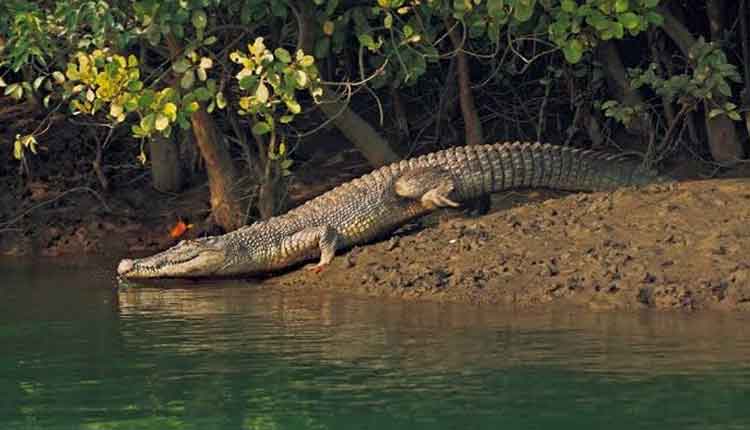
During its yearly nesting survey, Bhitarkanika National Park found 117 active estuarine crocodile nests, demonstrating a steady breeding population and the ongoing success of conservation activities in the ecologically crucial mangrove area. The Mangrove Forest Division (Wildlife), Rajnagar, surveyed every wildlife range in the national park between May 1 and June 30 in order to determine the species’ breeding status. The results of the study showed that the Kanika Wildlife Range had the highest percentage of active nests (106), followed by the Rajnagar Wildlife Range (10) and the Mahakalpada Wildlife Range (1).
According to officials, 1,858 estuarine crocodiles are now found in the Bhitarkanika mangrove habitat, a Ramsar wetland of worldwide significance. According to the most recent data, crocodile nesting activity has been steady over the last five years, which is indicative of conservation management, scientific monitoring, and ongoing habitat protection. In 2022 and 2023, the park recorded 122 active nests, which were followed by 114 in 2024, 116 in 2025, and 117 this year.
According to forest officials, the yearly nesting study is an essential component of the long-term estuarine crocodile monitoring program. Officials can assess breeding patterns, pinpoint significant nesting locations, bolster habitat conservation efforts, and direct future conservation planning thanks to the exercise. Odisha’s wetlands are especially important for crocodile conservation since it is the only state in India where all three crocodilian species—saltwater crocodile, mugger, and gharial—remain in the wild.
