
From leadership continuity and the Buxar Thermal Power Project to new board developments and renewable energy ambitions, SJVN advances its role in India’s evolving power sector.
By – Snigdha Mishra | The Interview Times
New Delhi | 13 October 2026
At a time when India’s energy sector is undergoing a significant transformation, SJVN Limited continues to strengthen its position through leadership continuity, major project milestones and an increasingly diversified power portfolio.
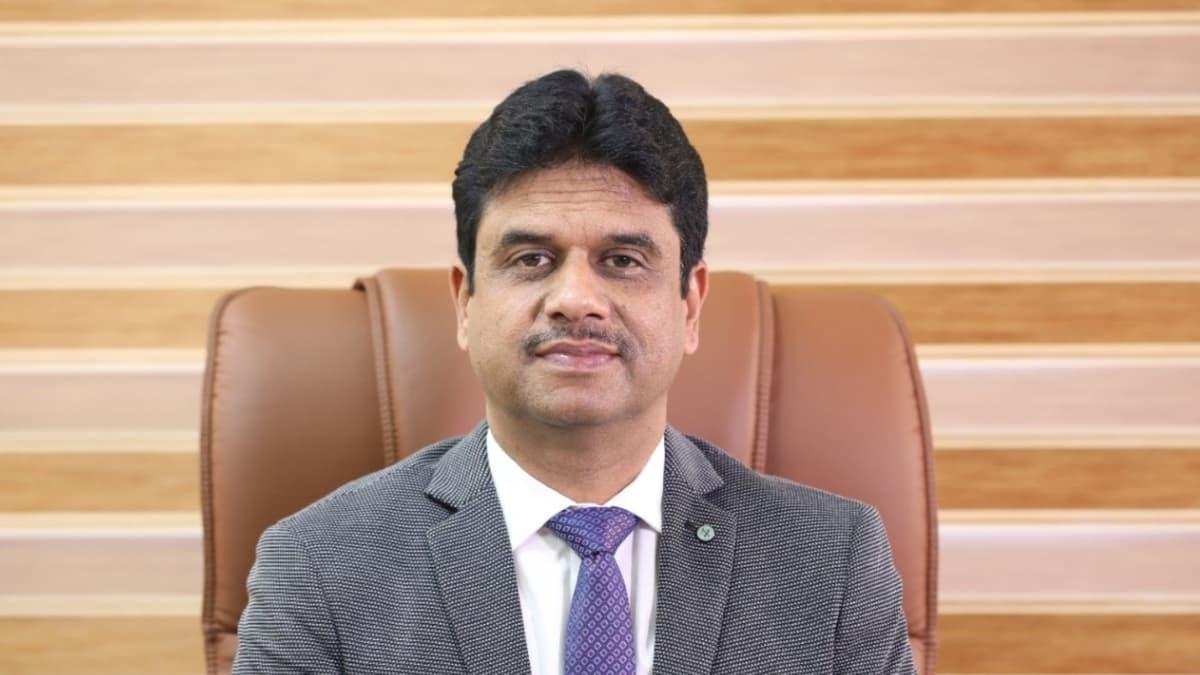
The Ministry of Power has extended the additional charge of Chairman and Managing Director (CMD) of SJVN Limited entrusted to Shri Bhupender Gupta for another six months, effective from 1 August 2026, or until a regular incumbent assumes charge or further orders are issued, whichever is earlier.
The decision provides continuity at the helm of the Navratna public sector undertaking as it navigates an important phase of infrastructure development, power generation expansion and clean energy transition.
With recent developments including the commercial operation of the second unit of the Buxar Thermal Power Project and a new appointment to SJVN’s Board, the company’s leadership and operational trajectory remain in focus.
Leadership Continuity at a Critical Juncture
Shri Bhupender Gupta, who also serves as Chairman and Managing Director of NHPC Limited, has held additional charge of SJVN since 1 May 2025.
He assumed charge as NHPC CMD on 4 September 2025, bringing extensive experience in the power sector to both organisations.
His continued responsibility at SJVN comes at a time when public sector energy enterprises face increasing expectations to accelerate project execution, maintain financial discipline and contribute to India’s long-term energy security.
The six-month extension is an interim administrative arrangement, rather than a permanent appointment. Nevertheless, it provides continuity as the company works towards its operational and strategic objectives.
A Distinguished Career Spanning More Than Three Decades
An electrical engineering graduate with an MBA in Operations Management, Shri Gupta brings more than 34 years of professional experience across the power sector.
He began his career with ACC Limited in 1991 before joining SJVN in 1995.
During his early years at SJVN, he was closely associated with the 1,500 MW Nathpa Jhakri Hydro Power Station, gaining experience in planning, erection, commissioning, operation and maintenance of electromechanical equipment.
His international exposure includes a deputation in Bhutan between 2002 and 2005 at the 1,020 MW Tala Hydroelectric Project.
He subsequently held important responsibilities at REC Limited, REC Transmission Projects Company Limited and REC Power Distribution Company Limited, contributing to project financing, execution and consultancy activities.
In December 2020, he joined the Punatsangchhu Hydroelectric Project Authority in Bhutan as Director (Technical).
He later became Director (Technical) of THDC India Limited in June 2023, where he contributed to major energy infrastructure projects, including the 660 MW Khurja Super Thermal Power Project and the Tehri Pumped Storage Plant.
His professional journey across hydropower, thermal generation, project financing and infrastructure execution provides a broad perspective on the challenges facing India’s electricity sector.
Major Milestone: Buxar Thermal Power Project Advances
One of the significant developments in SJVN’s recent operational journey is the progress of the 1,320 MW Buxar Thermal Power Project in Bihar, comprising two units of 660 MW each.
Following the commissioning of Unit-I, Unit-II achieved commercial operation in September 2026, marking an important step towards the project’s full operational capacity.
The development represents a major milestone in SJVN’s diversification beyond its traditional hydropower portfolio.
Shri Bhupender Gupta participated in the milestone programme and inaugurated the project’s centralised control room, highlighting the importance of operational readiness and coordinated project management.
The Buxar project is expected to strengthen electricity supply and support energy infrastructure development in the region.
While India continues to accelerate renewable energy deployment, conventional generation capacity remains part of its wider strategy for meeting electricity demand and maintaining grid reliability.
For SJVN, the Buxar development demonstrates its expanding capabilities across different generation technologies.
Fresh Corporate Development: New Nominee Director Joins SJVN Board
In another recent development, Shri Raman Gharsanghi was appointed as the Government of Himachal Pradesh’s nominee director on the Board of SJVN Limited, effective 12 October 2026.
The appointment adds a new dimension to the company’s governance framework during a period of operational expansion and leadership continuity.
As a joint venture originally established by the Government of India and the Government of Himachal Pradesh, SJVN has longstanding institutional connections with the state.
Board-level representation plays an important role in corporate governance, strategic oversight and coordination among key stakeholders.
The appointment comes as the company continues to manage a growing portfolio of projects across multiple states and international locations.
SJVN’s Record Generation and Expanding Operational Portfolio
SJVN’s performance during FY 2025–26 reflects significant growth in its operational capabilities.
The company and its associate entities reported their highest-ever annual generation of 13,302.390 million units, alongside the addition of approximately 1,730 MW of installed capacity during the financial year.
Its flagship 1,500 MW Nathpa Jhakri Hydro Power Station crossed 150 billion units of cumulative electricity generation, demonstrating the continued importance of hydropower in the company’s portfolio.
The 412 MW Rampur Hydro Power Station also recorded its highest-ever annual generation of approximately 2,108 million units.
In the renewable energy segment, the 1,000 MW Bikaner Solar Power Project achieved full-capacity commissioning and crossed one billion units of generation.
The commissioning of the 70 MW Dhubri Solar Power Project in Assam and the 75 MW Jamui Solar Power Project in Bihar further strengthened the company’s solar energy presence.
Following these developments, SJVN’s operational portfolio reached approximately 4,271.50 MW, according to the company’s FY 2025–26 reporting.
These milestones illustrate SJVN’s gradual evolution from a predominantly hydropower-based enterprise into a diversified energy organisation.
Financial Performance: Revenue Growth Amid Profitability Challenges
On the financial front, SJVN reported consolidated revenue of approximately ₹4,722.81 crore during FY 2025–26.
However, consolidated Profit After Tax stood at approximately ₹641.85 crore, compared with ₹818.02 crore in the preceding financial year.
The figures reflect a mixed financial picture: revenue growth and operational expansion accompanied by a decline in profitability.
The company also declared a total dividend of ₹1.50 per share for the financial year.
As SJVN continues to invest in capital-intensive power infrastructure, maintaining financial efficiency, managing project costs and ensuring timely commissioning will remain important priorities.
For public sector enterprises, long-term performance depends not only on capacity additions and electricity generation but also on sustainable returns and disciplined project execution.
Hydropower Remains Central to SJVN’s Future
Despite its diversification into thermal and solar power, hydropower remains an important component of SJVN’s long-term development strategy.
The company continues to advance projects across India and Nepal, including:
- 900 MW Arun-3 Hydroelectric Project, Nepal
- 382 MW Sunni Dam Hydroelectric Project, Himachal Pradesh
- 210 MW Luhri Stage-I Hydroelectric Project, Himachal Pradesh
- 69.50 MW Dhaulasidh Hydroelectric Project, Himachal Pradesh
These projects form part of the company’s broader effort to strengthen generation capacity and contribute to regional energy development.
Recent management reviews and project visits have also focused attention on execution progress at important hydropower facilities.
Hydropower remains relevant to India’s energy transition because of its ability to support grid flexibility and complement variable renewable sources such as solar and wind.
At the same time, large hydroelectric projects require careful management of construction timelines, environmental obligations, rehabilitation concerns and financial risks.
Renewable Energy and Emerging Technologies
India’s power sector is moving towards a future defined by renewable energy, digitalisation, energy storage and greater operational efficiency.
SJVN’s expanding solar portfolio reflects this transition.
The company has also highlighted the importance of emerging technologies, including artificial intelligence, cybersecurity, green hydrogen, energy storage and electric vehicle grid integration.
These areas are increasingly relevant as electricity systems become more complex and renewable generation assumes a larger role.
India’s target of achieving 500 GW of non-fossil-fuel electricity capacity by 2030 and its broader net-zero emissions goal for 2070 provide the national policy context for such investments.
For SJVN, the challenge will be to translate these strategic priorities into commercially viable projects while maintaining reliable electricity supply.
Beyond Power Generation: Employment and Regional Development
The significance of major energy projects extends beyond the electricity they produce.
Power infrastructure investments can generate demand for engineering services, construction, equipment manufacturing, logistics, maintenance and technical expertise.
They can also create direct and indirect employment opportunities in project locations.
For regions hosting hydropower, solar and thermal projects, infrastructure development can support local businesses and improve economic connectivity.
However, the lasting value of such investments depends on responsible implementation, environmental safeguards, community engagement and the creation of sustainable local opportunities.
As a public sector enterprise, SJVN’s broader responsibility includes balancing commercial performance with its contribution to national development.
The Road Ahead: Leadership, Execution and Energy Security
Shri Bhupender Gupta’s extended tenure comes during a demanding period for SJVN.
The company must continue commissioning major projects, managing financial pressures, expanding its renewable energy portfolio and maintaining operational performance across existing facilities.
The recent Buxar Thermal Power Project milestone demonstrates progress in generation diversification, while the appointment of a new nominee director reflects continuing developments in corporate governance.
Together, these events highlight a company navigating operational growth and institutional transition.
The effectiveness of this phase will ultimately be measured by project delivery, financial resilience, technological adaptation and contribution to India’s energy security.
Powering People, Progress and a Sustainable Tomorrow
SJVN’s journey reflects the changing role of India’s public sector power enterprises.
From its hydropower foundations to its growing involvement in solar and thermal generation, the company is expanding its capabilities in response to the country’s evolving energy requirements.
Under Shri Bhupender Gupta’s continued additional leadership, the coming months will be important for sustaining operational momentum and strengthening institutional performance.
The next chapter of SJVN will be defined not merely by the megawatts it generates, but by its ability to combine reliable power, responsible development, financial discipline and long-term national progress.
The Interview Times | Business • Leadership • Development
