
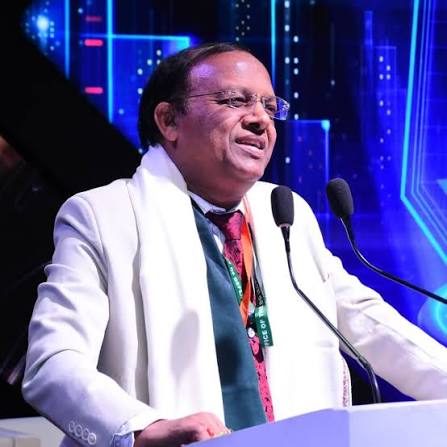
For Dr. B.K. Das, Distinguished Scientist and Director General of the Electronics & Communication Systems (ECS) cluster at the Defence Research and Development Organisation (DRDO), the story of India’s defence preparedness is ultimately a story of technological self-reliance. With a career spanning more than three decades in DRDO, Dr. Das has worked across missile testing, electro-optics, radar, telemetry, surveillance and advanced communication systems. He currently leads the ECS cluster, which plays a critical role in developing technologies that enable modern defence platforms. DRDO
His journey into defence research also has a strong Odisha connection. A graduate of Burla Engineering College, Dr. Das went on to pursue his M.Tech and Ph.D. at IIT Kharagpur. He joined DRDO in 1987 and subsequently became closely associated with India’s missile testing ecosystem. As Director of the Integrated Test Range (ITR), Chandipur, he contributed to the evolution of sophisticated test and evaluation capabilities for missiles, rockets and airborne weapon systems.
His experience at ITR exposed him to one of the most demanding aspects of defence research: transforming scientific concepts into reliable operational capabilities. From electro-optical tracking systems and telemetry to radar and real-time data processing, Dr. Das has been associated with technologies that allow complex weapon systems to be tested, evaluated and improved. His association with major missile trials has also placed him close to some of India’s most significant milestones in indigenous defence technology.
Today, the nature of warfare is changing rapidly. Artificial intelligence, autonomous systems, electronic warfare, advanced sensors, cyber capabilities and quantum technologies are redefining the battlefield. Dr. Das has argued that future defence preparedness will depend not merely on manufacturing equipment domestically, but on achieving sovereignty in design, technology, supply chains, knowledge and digital capabilities.
One of the most visible areas of this technological transformation is border surveillance. DRDO is developing indigenous systems involving fibre-optic intrusion detection, high-resolution cameras, infrared tracking, hyperspectral and multispectral imaging, radar systems and AI-enabled technologies. These capabilities are aimed at creating a more integrated security architecture capable of detecting, tracking and responding to emerging threats.
The growing threat posed by drones has added another dimension to this challenge. Counter-drone technology now requires the ability not only to detect and identify an aerial threat but also to neutralise it. DRDO has already developed counter-drone capabilities involving both soft-kill and hard-kill approaches, while next-generation systems are being explored to address increasingly sophisticated unmanned threats.
Dr. Das has also consistently highlighted the importance of startups and industry in India’s defence ecosystem. He has described next-generation technology startups as crucial to India’s future and emphasised the need for stronger handholding and supply-chain integration. This reflects a broader shift in India’s defence strategy, where government laboratories, academia, established industries and startups increasingly need to work together.
For Odisha, his journey carries an additional significance. The state already hosts important defence establishments, including the Integrated Test Range at Chandipur and Hindustan Aeronautics Limited’s facility at Sunabeda, giving it a strong foundation to emerge as a defence manufacturing and technology hub.
At the heart of Dr. B.K. Das’s career is therefore a larger idea: India’s security in the future will depend on India’s ability to create, control and continuously innovate its own technologies. From missile ranges in Chandipur to AI-enabled surveillance and next-generation electronic warfare, his professional journey mirrors the transformation of Indian defence research from technology acquisition to technology creation and, increasingly, technology leadership.
