
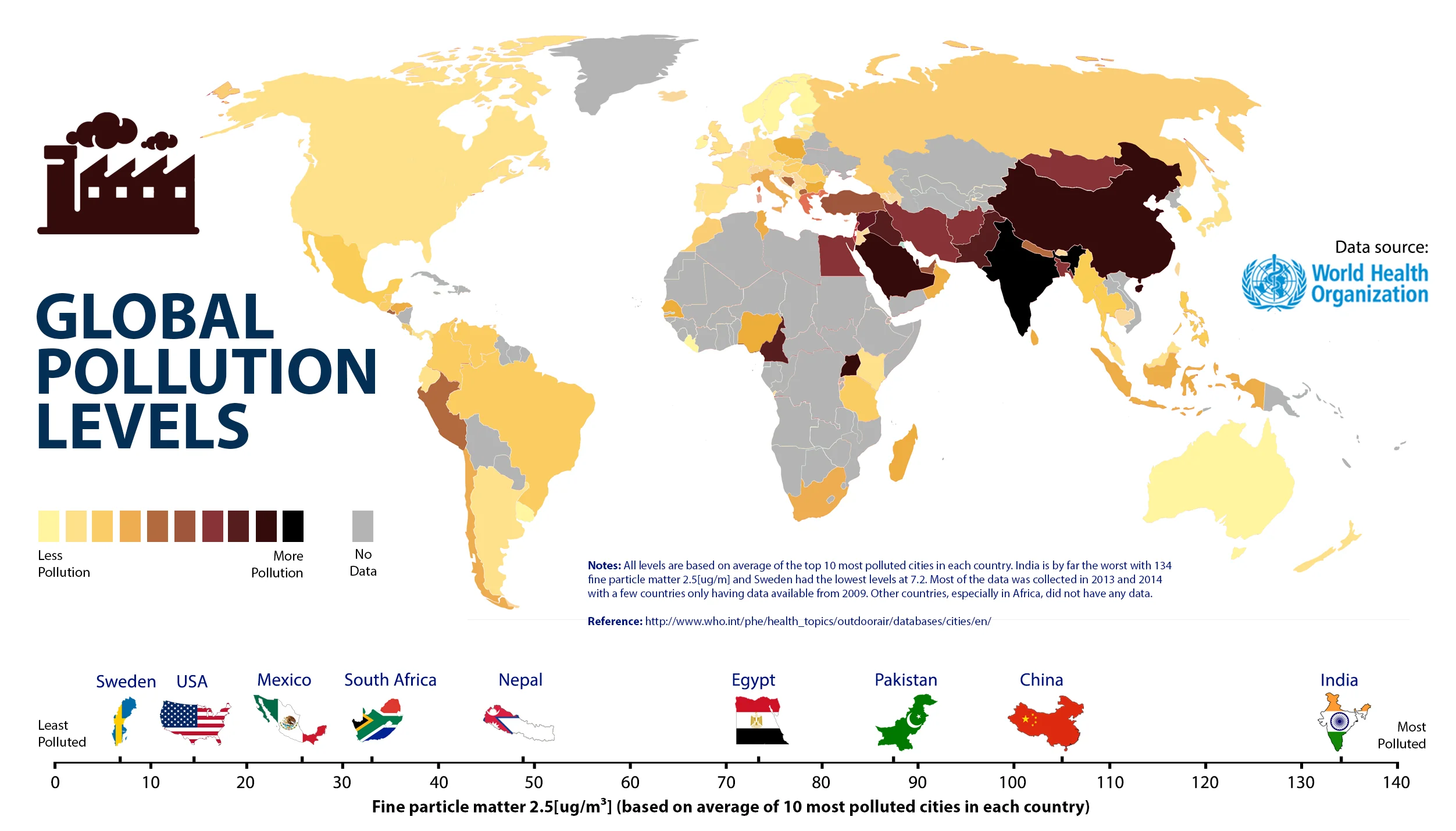
The world is facing an unprecedented environmental crisis as new reports indicate that global pollution levels have surged to unprecedented highs. The alarming data comes amidst a backdrop of intensifying climate change impacts and growing public concern over environmental degradation.
Unprecedented Surge in Pollution
According to the latest study released by the International Environmental Agency (IEA), global air pollution levels have increased by 15% over the past year, marking the steepest rise in decades. This surge is attributed to a combination of factors including increased industrial activity, deforestation, and a significant rise in vehicular emissions.
Dr. Emily Roberts, lead researcher at the IEA, expressed grave concerns over the findings. “The current levels of pollution are not just a statistic; they represent a dire threat to global health and the environment. We are seeing a sharp rise in particulate matter and toxic gases, which are contributing to severe respiratory issues and accelerating climate change.”
Health Impacts on the Rise
The health implications of this surge in pollution are already being felt worldwide. Medical professionals report a significant increase in cases of respiratory diseases, cardiovascular conditions, and even premature deaths linked to poor air quality. Cities across the globe, from New Delhi to Los Angeles, are experiencing unprecedented levels of smog and haze.
Dr. Michael Chen, a pulmonologist based in New York, noted, “The spike in pollution has had an immediate impact on public health. We are witnessing an increase in emergency room visits related to respiratory distress and heart conditions. This trend is unsustainable and calls for immediate action.”
Environmental Consequences
The environmental repercussions are equally severe. The rise in pollution is contributing to the acceleration of climate change, with higher levels of greenhouse gases exacerbating global warming. Additionally, pollution is harming biodiversity, with toxic chemicals leaching into water bodies and soil, affecting ecosystems and wildlife.
A recent report from the World Wildlife Fund (WWF) highlights the threat to endangered species and critical habitats. “Pollution is not just a human issue; it’s a global crisis affecting all forms of life. We are witnessing a decline in species diversity and the degradation of natural habitats, which could have long-term impacts on ecological balance.”
Global Response and Initiatives
In response to the escalating crisis, several governments and organizations are ramping up their efforts to combat pollution. The United Nations has called for an urgent international summit to address the pollution crisis and explore comprehensive strategies to mitigate its impacts.
Several countries have announced new environmental regulations aimed at reducing emissions and promoting cleaner technologies. For instance, the European Union has introduced stricter air quality standards and is investing heavily in renewable energy sources. Similarly, China is expanding its efforts to reduce coal consumption and enhance urban green spaces.
Public Advocacy and Future Outlook
Public advocacy groups are mobilizing to demand more robust actions from policymakers. Campaigns calling for stricter pollution controls and greater transparency in environmental reporting are gaining momentum.
As the world grapples with this alarming trend, the call for collective action is louder than ever. Experts emphasize the need for immediate, coordinated efforts to address pollution and its root causes.
Dr. Roberts of the IEA concludes, “The current situation is a wake-up call for all of us. We must act decisively and collaboratively to reverse these trends and protect both our health and our planet. The time for action is now.”
Conclusion
The dramatic rise in global pollution levels is a stark reminder of the urgent need for comprehensive environmental policies and individual actions. As the crisis deepens, the focus must shift to sustainable practices, innovative solutions, and global cooperation to safeguard the future of our planet.
Stay tuned for further updates as this developing story unfolds.
