
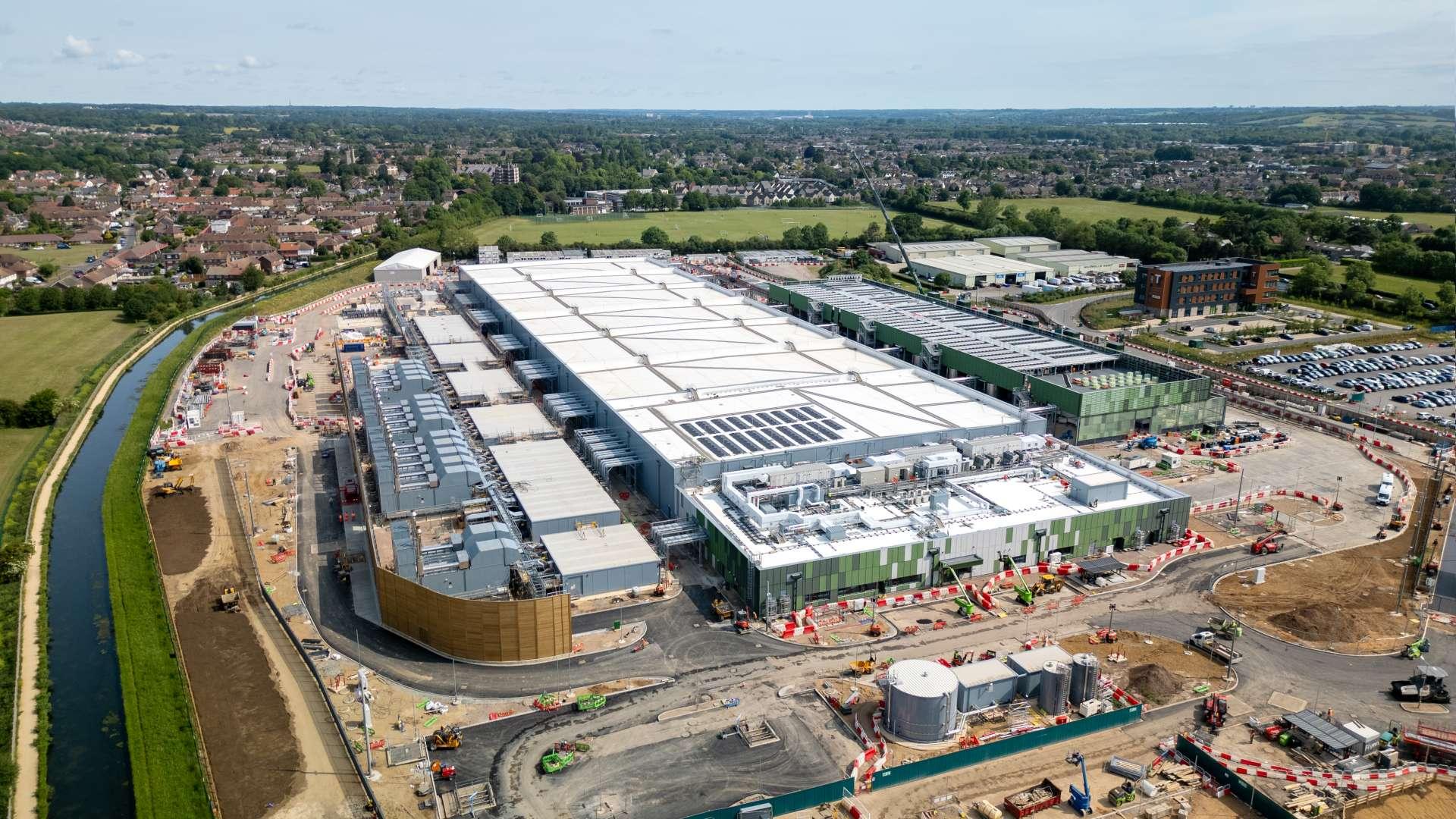
As Amazon, Google and Microsoft accelerate their artificial intelligence infrastructure investments in India, questions over water consumption, electricity demand and environmental sustainability are bringing a new challenge to the country’s digital ambitions.
By – Snigdha Mishra | The Interview Times

India’s AI Dream Meets an Uncomfortable Reality
India is positioning itself as one of the world’s emerging artificial intelligence powerhouses. From hyperscale data centres to cloud computing and advanced digital infrastructure, global technology giants are making enormous investment commitments to strengthen the country’s position in the international AI economy.
Amazon, Google and Microsoft are collectively planning approximately $56.5 billion in Indian data-centre investments by 2030, according to reporting by Reuters.
But behind this extraordinary investment momentum, another story is emerging.
As massive computing facilities expand, communities are questioning their environmental and social costs. Concerns surrounding water consumption, electricity requirements, construction activities and neighbourhood disruption are increasingly becoming part of the debate over India’s digital transformation.
The central question is no longer simply how quickly India can build AI infrastructure.
It is whether the country can expand its digital economy while protecting the resources and communities that support it.
$56.5 Billion: The Scale of India’s Data Centre Ambition
The rise of generative AI, cloud computing and digital services has created unprecedented demand for high-performance computing infrastructure.
Data centres house the servers, storage equipment, networking systems and cooling technologies that power modern digital services. As AI applications become more sophisticated, demand for computing capacity is expected to grow.
For technology companies, India offers a large digital market, a growing technology workforce and expanding demand from enterprises, government agencies and consumers.
The planned investments by Amazon, Google and Microsoft demonstrate the country’s strategic importance in the global technology industry.
However, these figures represent investment plans extending through 2030, rather than expenditure already completed.
Their implementation will depend on project development, infrastructure availability, regulatory processes and commercial conditions.
The Water Question: Can India’s Cities Sustain the AI Boom?
One of the most pressing issues surrounding large data centres is water consumption.
Many facilities use water-based cooling systems to manage the heat generated by thousands of servers operating continuously.
Reuters has highlighted estimates suggesting that Indian data centres consumed approximately 150 billion litres of water in 2025, with demand potentially more than doubling by 2030.
These are sector-level estimates and projections, not independently measured consumption figures for every facility.
Nevertheless, the figures raise important questions for cities already experiencing pressure on water resources.
Unlike many conventional commercial buildings, data centres can operate around the clock. Their cooling requirements vary according to equipment, climate, operating intensity and cooling technology.
The environmental consequences therefore depend significantly on how each facility is designed and operated.
For policymakers, the challenge is to encourage technological growth without placing unsustainable pressure on drinking-water supplies, agriculture or local ecosystems.
Amazon’s Mumbai Expansion Faces Community Concerns
The tension between infrastructure development and neighbourhood interests is becoming visible around proposed and expanding data-centre facilities.
According to Reuters, residents near an Amazon-linked data-centre project in Mumbai have raised concerns about construction activities and potential pressure on local infrastructure.
The company has maintained that dedicated infrastructure arrangements are intended to avoid additional strain on public utilities.
The dispute illustrates a broader issue facing large technology investments.
Even when a project promises employment, investment and improved digital connectivity, nearby communities may demand clearer information about its environmental footprint, construction impacts and long-term resource requirements.
Such concerns should not automatically be interpreted as opposition to technology itself.
They reflect the importance of transparent planning, environmental safeguards and meaningful community engagement.
Google’s $15 Billion Andhra Pradesh Plan Draws Scrutiny
Another major development is Google’s proposed $15-billion investment in AI and data-centre infrastructure in Andhra Pradesh.
The initiative represents one of the most ambitious technology infrastructure commitments associated with India’s emerging AI economy.
However, Reuters reports that the project has attracted environmental objections, with questions being raised about its potential impact on local resources and surrounding communities.
Google and relevant state authorities have disputed aspects of these concerns.
The situation demonstrates how the success of large technology investments increasingly depends not only on capital and engineering capability but also on environmental credibility and public confidence.
For India, attracting global investment is important.
Ensuring that projects develop responsibly is equally significant.
The Electricity Challenge: AI’s Growing Energy Appetite
Water is only one dimension of the debate.
Modern AI infrastructure requires substantial electricity to power computing equipment, cooling systems and associated operations.
As data-centre capacity expands, the electricity sector must respond to additional demand while maintaining reliable supply for households, industries and public services.
India is already undertaking major investments in renewable energy, transmission infrastructure and battery storage.
The challenge is ensuring that digital infrastructure growth aligns with the pace of power-system expansion.
Data centres can potentially support renewable-energy development through long-term power procurement, energy-efficient design and investment in cleaner electricity.
However, environmental benefits depend on the actual energy sources used and the effectiveness of supporting infrastructure.
The future of AI cannot be separated from the future of energy.
Odisha’s Opportunity: Building a Responsible Digital Economy
For Odisha, the national debate carries particular relevance.
The state is seeking to expand its economic identity beyond traditional sectors such as mining, steel, aluminium and thermal power into technology, electronics, digital services and advanced infrastructure.
Bhubaneswar’s developing technology ecosystem could create opportunities for cloud computing, AI services and future data-centre investment.
Odisha also possesses an established industrial and energy base that could support technology-intensive businesses.
Yet large digital infrastructure projects require careful consideration of electricity supply, cooling technologies, water availability, land use and environmental safeguards.
There is no evidence from the Reuters investigation that the specific objections raised around projects elsewhere in India apply to Odisha.
Rather, the national experience offers an important lesson: responsible infrastructure planning should begin before environmental conflicts arise.
For Odisha, the opportunity is not merely to attract data centres.
It is to develop a sustainable digital-industrial ecosystem that combines technological investment with efficient resource management and local economic benefits.
Can Technology Solve Technology’s Environmental Problem?
The technology industry is exploring several approaches to reducing the environmental impact of large computing facilities.
Advanced cooling systems, liquid cooling, water recycling, renewable electricity procurement and more efficient computing equipment can help reduce resource intensity.
However, no single solution eliminates the environmental footprint of data centres.
Even highly efficient facilities can increase overall resource consumption if computing demand grows rapidly enough.
This creates an important distinction between improving efficiency and reducing total environmental impact.
A credible sustainability strategy must therefore consider both.
Companies also face growing expectations to disclose facility-level water usage, energy consumption, emissions and environmental performance.
Greater transparency could help communities, investors and regulators assess whether promised safeguards are delivering measurable results.
The Bigger Picture: Growth, Responsibility and India’s Digital Future
India’s artificial intelligence ambitions represent a significant economic opportunity.
Data centres can attract global capital, strengthen digital infrastructure, support businesses and create demand for specialised engineering, technology and construction services.
At the same time, the emerging public debate shows that investment scale alone cannot determine whether a project is successful.
The quality of planning, environmental safeguards, community engagement and long-term resource management will increasingly influence the future of India’s technology infrastructure.
The concerns reported around major data-centre developments should therefore be understood as a challenge to build better infrastructure, not as proof that India’s AI ambitions must be abandoned.
India’s next technology revolution will be judged not only by the computing power it creates, but also by how responsibly that power is built.
As billions of dollars flow into the digital economy, the defining question remains:
Can India become a global AI powerhouse without placing an unsustainable burden on the communities and natural resources surrounding its data centres?
Source: Reuters investigation, 9 October 2026. Investment figures, environmental estimates and community concerns are attributed to the reporting and should be updated as further company disclosures become available.
