
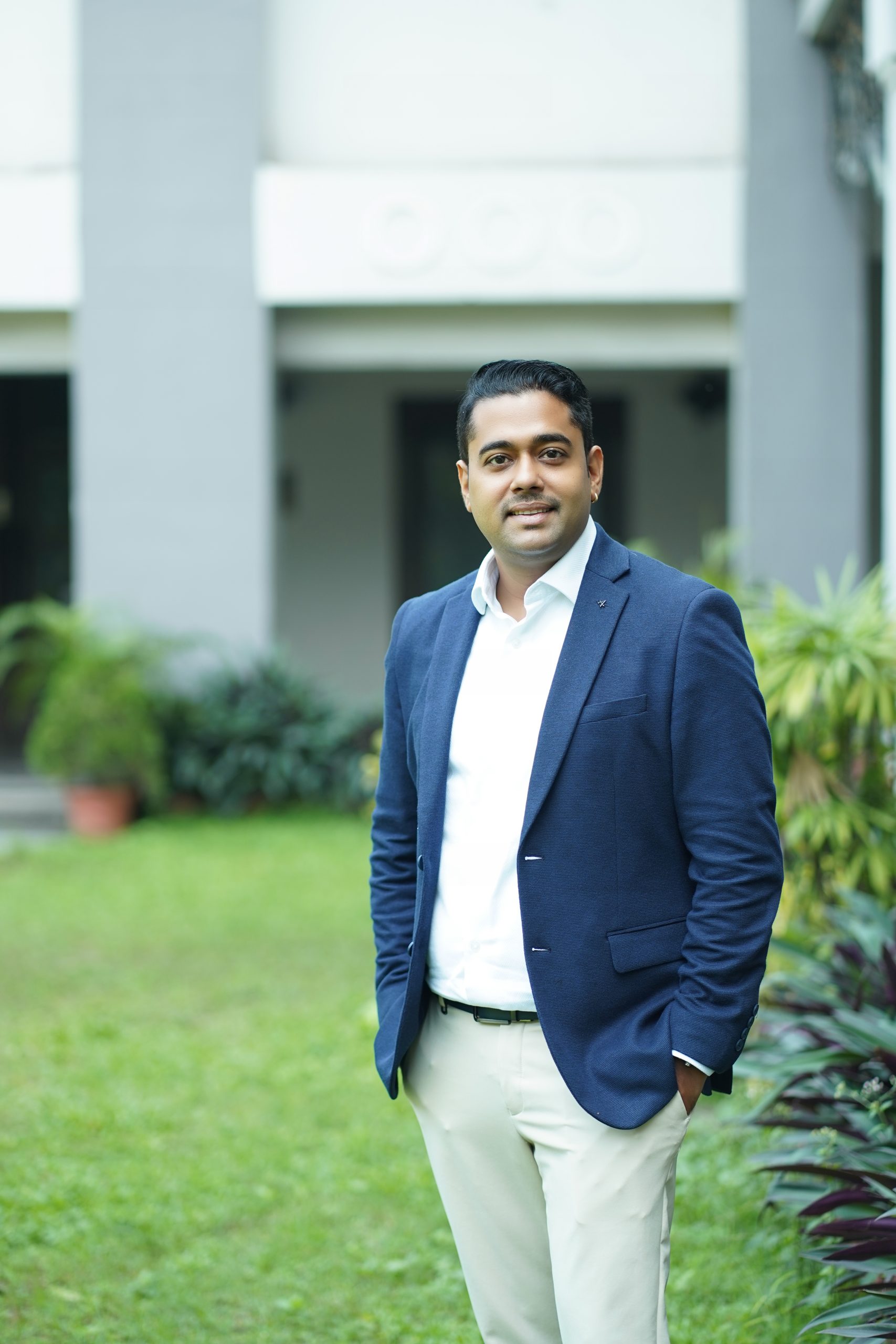
From Hotel Surya Garden in Talcher to the upcoming Surya Eco Resorts near Satkosia, the architect and environmental planner is pursuing a deeply human ambition: places where guests feel cared for, employees feel valued and local communities have a stake in growth.
By – Snigdha Mishra

What do we carry home from a journey?
Sometimes, it is a landscape. Sometimes, a meal whose flavour remains long after the holiday ends. Often, it is something quieter: the kindness of a stranger, an unexpected conversation, the reassurance of being looked after in an unfamiliar place.
That question—what stays with a guest after they leave—runs through Pritam Patnaik’s understanding of hospitality.
In conversation with The Interview Times, he recalls observing the places he visited as an architect, a professional and a traveller. He was interested in the experiences people remembered and spoke about afterwards. What had made them feel comfortable? What had surprised them? What had given an otherwise ordinary visit a story worth sharing?
Those observations now inform his work at Hotel Surya Garden in Talcher and the development of Surya Eco Resorts near Satkosia.
His ambitions reach beyond the boundaries of either property. They concern the way visitors encounter Odisha, the opportunities tourism creates for local people and the care required when building in a landscape that draws travellers precisely because of its character.
At the heart of it is a simple aspiration: to make hospitality feel personal.
An architect’s eye, a human concern
Patnaik’s professional journey began with learning how places are made.
After studying architecture, he pursued a master’s degree in environmental planning at the School of Planning and Architecture, Bhopal. Architecture sharpened his attention to individual spaces. Planning widened his perspective to the relationships between settlements, communities, water, land and the natural environment.
His early work included assignments with the Andhra Pradesh Capital Region Development Authority and involvement in the master plan and conservation project for Anasakti Ashram in Uttarakhand. A National Institute of Urban Affairs fellowship compendium also records academic distinctions, including a Proficiency Gold Medal and thesis awards.
These experiences gave him a way to look beyond a building’s appearance.
A building changes how people move, meet, work and rest. It uses resources and becomes part of an existing neighbourhood or landscape. For an environmental planner, those relationships are part of the design responsibility.
In a reflection shared by SPA Bhopal’s Department of Environmental Planning, Patnaik described his education as giving him a value system and a stronger sense of responsibility towards communities and their surroundings.
Joining the family hospitality business brought that perspective into daily contact with guests.
The questions became immediate. Does someone arriving late feel at ease? Does the team understand what the guest needs? Does the property offer a meaningful connection to the place outside its doors?
His training taught him to understand a setting; hospitality asked him to understand the person arriving in it.
The small gestures that earn a guest’s trust
At Hotel Surya Garden, the answer often begins with something modest.
Patnaik describes guests reaching Talcher after a demanding working day. Some check in late in the evening. Once they have settled into their rooms, the team calls to ask whether they need laundry assistance or a meal.
The gesture recognises the practical reality of travel. Tomorrow’s clothes may need attention. Dinner may have been missed. A guest may be too tired to begin making enquiries.
Someone has thought ahead.
Patnaik calls this anticipatory service. Its purpose is to make guests feel comfortable, valued and cared for.
Talcher’s business environment gives that approach a particular relevance. Many visitors arrive with work schedules to manage, and the quality of their stay depends on how smoothly the hotel helps them get through the day.
Trust grows through these moments. The guest knows whom to call, feels comfortable asking for help and begins to associate the property with reliability.
As Surya Garden undergoes renovation, Patnaik says the effort extends to service standards across departments. Food, housekeeping and guest interactions are all part of the renewal.
He describes encouraging chefs to experiment with dishes, inviting feedback from guests and using those responses to decide what should become part of the menu. The people being served have a voice in how the experience evolves.
For a family enterprise, this offers a thoughtful way forward: preserve the familiarity guests appreciate while continuing to earn their confidence.
Caring for the people who provide the welcome
The same concern appears in Patnaik’s public account of Surya Uday, a staff facility at Surya Filling Station in Talcher.
He described accommodation, a canteen and recreation space for the team. Yet the moment he chose to remember was visiting senior executives joining frontline employees for a game of carrom.
The interaction stayed with him because of the ease it created between people.
“The guest experience will never exceed the employee experience,” he wrote.
The thought has clear relevance to hospitality. Employees are asked to be patient, attentive and welcoming throughout the day. Their working conditions and sense of respect influence how consistently they can offer that care.
In the interview, Patnaik speaks about recruiting locally, training people and improving the way the business operates. He also acknowledges the difficulty of introducing more structured systems while retaining the values that helped the enterprise grow.
Professionalisation, for him, involves people learning and developing alongside the business.
That includes preserving their judgement. He sees useful applications for artificial intelligence in marketing and developing ideas, but describes frustration with polished workplace messages that fail to answer a straightforward question.
In a hotel, an unresolved question can become an unresolved guest problem. Clear thinking and the willingness to take responsibility remain essential.
His view of leadership rests partly on “the courage to ask the right questions”—and to accept responsibility for what follows.
Discovering another Odisha
When Patnaik speaks about tourism, the conversation soon moves beyond the familiar routes through Puri, Konark, Bhubaneswar and Chilika.
He wants visitors to discover more of the state, particularly central Odisha.
Angul and Talcher are closely associated with industry. He acknowledges that economic identity while describing a region that also holds heritage, religious traditions, craft, food and striking natural settings.
Dhenkanal Palace, Kapilash, Joranda and Satkosia appear in his account as parts of a larger journey waiting to be connected.
His hotel has already shown him where that journey can begin.
A guest may arrive for work, stay across a weekend and ask how to spend a free Sunday. Patnaik says the team arranges day trips according to individual interests, helping visitors explore beyond the purpose of their original visit.
A business trip can become someone’s first personal connection with Odisha.
That is a valuable opportunity. The traveller is already there. A carefully planned experience can introduce them to a place they might never have selected from a holiday brochure.
Patnaik believes storytelling is central to making those encounters possible. He points to the strong associations travellers have with Rajasthan’s royal heritage and Kerala’s backwaters and Ayurveda. Such associations help people imagine a journey before they undertake it.
Odisha has rich stories of its own—maritime traditions, festivals, food, craftsmanship, architecture and community life. His argument is that these need to be connected to experiences that visitors can understand and enjoy.
A hotel’s recommendations, its menu, the craft it displays and the local guides it works with all contribute to that introduction.
Every host helps shape the story a traveller takes home.
Near Satkosia, a different idea of luxury
The upcoming Surya Eco Resorts gives Patnaik an opportunity to develop these ideas in a setting where the landscape is central to the experience.
Satkosia’s Mahanadi gorge, forested hills and wildlife habitats give the region a distinctive appeal. Odisha Tourism also identifies its ecological importance, including its river and forest ecosystems.
For a project nearby, the surroundings bring both opportunity and responsibility.
Patnaik describes water conservation, energy efficiency, responsible site planning, landscaping and locally appropriate architecture as considerations being incorporated into the development. Indian Green Building Council certification is among the goals being pursued.
His understanding of luxury helps explain that approach. In the interview, he speaks about the value of quiet, space and meaningful experiences.
For a traveller whose everyday life is crowded with schedules and demands, those qualities can be deeply attractive. Delivering them requires care for the setting that makes them possible.
Patnaik also brings the discussion down to operational details. At Surya Garden, he describes attention to rainwater harvesting, reuse of water in landscaped areas and composting food waste.
These choices may receive less attention than a room or a restaurant, but they determine how responsibly a property functions over time.
He wants guests to understand that work, too. Recalling properties that explain their conservation and waste-management practices to visitors, he uses the phrase “educate without imposing.”
The aim is to make responsible practices an engaging part of the stay. A guest can appreciate how the property works while continuing to enjoy its comfort.
For Surya Eco Resorts, the task ahead is to carry those intentions through construction and into everyday operation.
A future shared with the neighbourhood
One of Patnaik’s strongest convictions concerns the people living around a tourism project.
It should never become “an island of prosperity” while the surrounding community sees little benefit, he says.
His examples give the principle practical meaning: local recruitment and training, regional suppliers, Odia cuisine and opportunities for artisans. He speaks about Dhenkanal’s Dhokra craft and introducing guests to the skills behind it.
For the upcoming resort, he says a women’s self-help group has already been formed to prepare paper packaging for operational use and guest gifting.
It is a small but concrete connection between a property’s needs and local livelihoods. A routine purchase becomes an opportunity for nearby producers to participate in the business.
The wider Satkosia landscape already offers examples of community involvement in tourism. The Wildlife Institute of India’s management assessment records employment associated with the Badmul tourism complex managed by a local eco-development committee. This is an existing regional initiative, separate from the Surya development.
Such experiences give substance to the broader question Patnaik raises: who gets to participate when a destination grows?
The people whose food, traditions, skills and knowledge make a place distinctive should have a meaningful role in its tourism economy. Their involvement also makes the visitor’s encounter with the region richer.
For Patnaik, local identity and local opportunity belong in the same conversation.
Giving the vision a durable foundation
There is a demanding commercial reality behind these ambitions.
A destination property takes time to plan, build and establish. It needs appropriate finance, capable teams and an understanding of how demand may develop.
In a public account of an industry discussion with Odisha’s Tourism Department, Patnaik described advocating for lending assessments that better reflect the long development periods and particular circumstances of destination-based hospitality projects.
This adds depth to his interest in tourism. He is thinking about the conditions required to make a project viable, as well as the experience it may eventually offer.
A business must be able to endure if the opportunities around it are to endure.
His priorities for the coming years include continued service improvements at Surya Garden, development of the eco-resort and exploration of other locations. In the interview, he discusses plans in the Deomali area and an interest in smaller premium homestays with fewer rooms and more personalised service.
These are ambitions at different stages, with the character of each location intended to influence what is built.
The thread connecting them is a desire to create places that feel considered: in their design, in their service and in their relationship with the people around them.
What remains after checkout
The most compelling part of Patnaik’s vision lies in the way its different ambitions meet.
An employee who feels respected is better placed to care for a guest. A local artisan introduces that guest to a tradition. A thoughtful excursion changes their impression of a region. Careful planning helps protect the landscape they came to experience.
These connections give hospitality its human depth.
Patnaik’s work is still unfolding. The resort is taking shape, new possibilities are being explored and an established hotel is renewing itself. The promise will be realised through the consistency of the work that follows.
But the intention is clear. He wants visitors to encounter Odisha through its people and places—and to leave with a feeling that reaches beyond satisfaction with a room.
Perhaps that is the memory worth building towards: the feeling that, for a little while, an unfamiliar place made room for you.
