
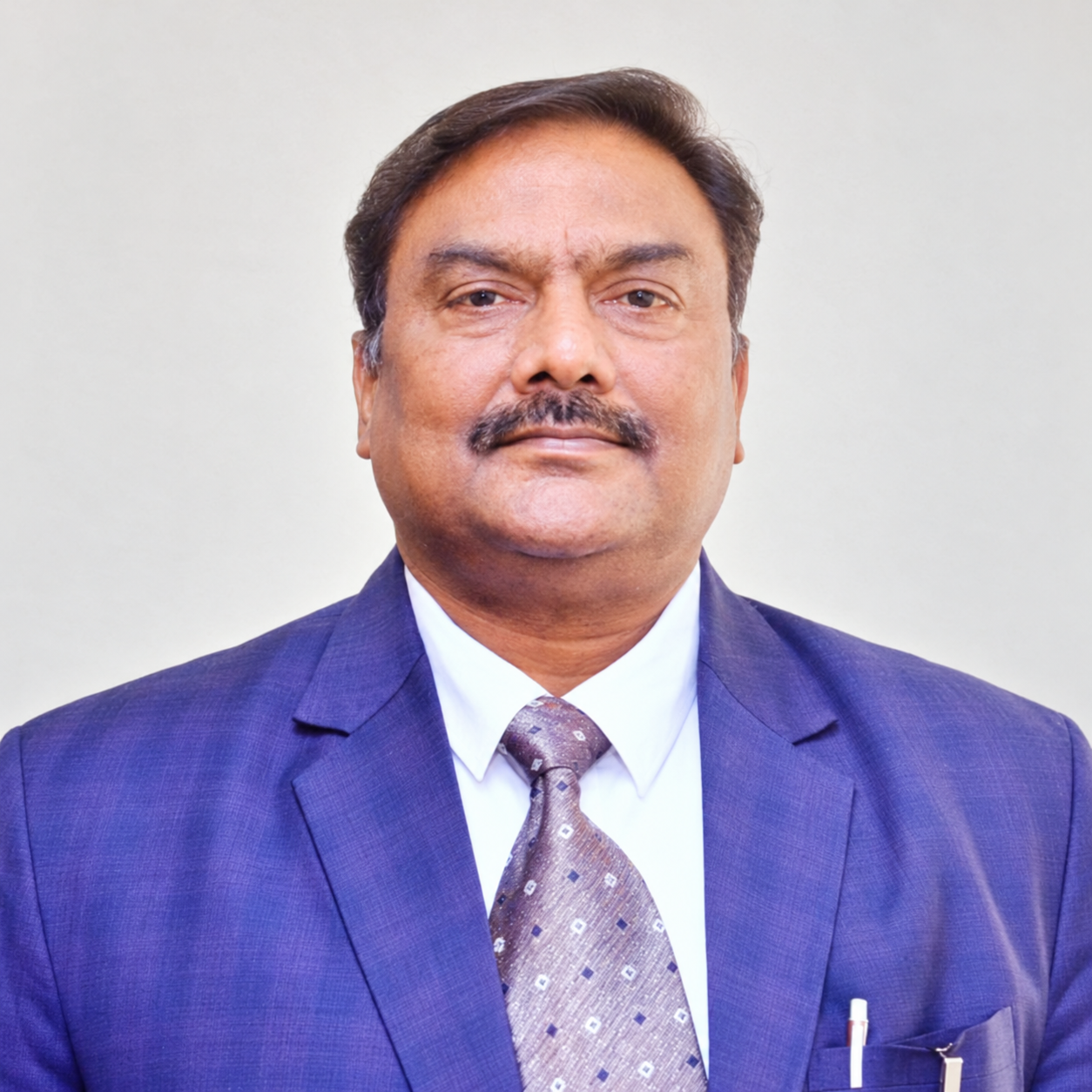
With more than three decades of mining experience, Satish Jha brings operational knowledge and technical expertise to Eastern Coalfields Limited as the company pursues stronger production, reliable supplies and responsible growth.
By – Snigdha Mishra
2 November 2026
The work of a mining enterprise begins well before coal reaches its customers. It involves planning, equipment, people and decisions made under demanding conditions. Its performance depends on how effectively these elements come together—and whether growth can be sustained without compromising safety or accountability.
For Satish Jha, Chairman-cum-Managing Director of Eastern Coalfields Limited (ECL), this is the responsibility at the centre of leadership.
With a career spanning more than three decades in mining, Jha brings experience across underground and opencast operations to the Coal India subsidiary. His tenure comes at a time when the industry faces several connected expectations: improve productivity, strengthen supplies, modernise operations and manage environmental responsibilities.
ECL’s latest operational figures provide a timely perspective on this journey. They show stronger production and offtake, while drawing attention to the organisational effort needed to sustain progress.
Eastern Coalfields Reports Strong October Growth
ECL recorded 4.6 million tonnes of coal production in October 2026, representing 27.9% year-on-year growth. Its coal offtake reached 4.9 million tonnes, increasing 35.1% over the corresponding month.
The cumulative figures also showed improvement. During April–October 2026, production reached 26.9 million tonnes, up 12.3%, while offtake stood at 32.2 million tonnes, rising 23.6%.
These are provisional figures, disclosed in Coal India’s performance announcement dated 1 November 2026. The growth percentages follow the company’s reported calculations; the published tonnage figures are rounded.
Production and offtake represent different parts of the operating cycle. Production measures coal extracted, while offtake reflects coal supplied from operations. Improvement across both indicators is therefore relevant to understanding the company’s performance.
Nevertheless, a strong reporting period is a starting point for assessment. Sustained progress requires dependable equipment, coordinated logistics, effective mine planning and consistent execution across teams.
Satish Jha’s Journey: Experience Across Mining and Planning
Jha assumed charge as Chairman-cum-Managing Director of ECL on 19 December 2024. Before joining the company in this role, he served as Director (Technical/Engineering Services) at Central Mine Planning and Design Institute Limited (CMPDIL). He also held additional charge as Director (Technical/Planning and Projects) at Central Coalfields Limited (CCL).
His professional experience spans large mechanised underground and opencast mining operations, with responsibilities across CMPDIL, CCL, Northern Coalfields Limited and South Eastern Coalfields Limited.
His academic qualifications include a B.E. in Mining from Nagpur University and an M.Tech in Industrial Engineering and Management from IIT (ISM), Dhanbad. He also holds a First-Class Mine Manager’s Certificate of Competency.
The relevance of this background lies in the connection between planning and practical execution. A mining project must work on the ground, where technical decisions interact with equipment, workforce requirements, regulatory processes and operating conditions.
For a company such as ECL, leadership therefore requires both an understanding of immediate operational needs and the ability to prepare for longer-term challenges.
Safety and Modernisation on the Leadership Agenda
The demands of mining leadership extend beyond achieving production targets. Safe working conditions, technical preparedness and responsible operating practices are central to the quality of performance.
These priorities featured in the 13 May 2026 visit of Union Minister of State for Coal and Mines Satish Chandra Dubey to ECL. The review covered production, dispatch, mine safety, operational efficiency and sustainable development initiatives.
During the visit, the minister emphasised technological advancement, efficient resource utilisation and continued improvement in safety standards. He also appreciated Team ECL’s performance during FY 2025–26 despite operational challenges.
The review offers a useful perspective on the company’s responsibilities. Modernisation must support practical improvements in how work is planned and carried out. Its value depends on whether it helps teams operate more reliably, manage risks and use resources effectively.
For Jha and ECL’s wider leadership team, the task is to keep these priorities connected with the company’s growth objectives.
Organisational Discipline Beyond the Mine
Operational efficiency also depends on the systems that support daily work.
ECL’s Special Campaign 6.0 brought attention to e-waste management, pendency reduction, space optimisation and digitalisation. The initiative scheduled its preparatory phase for 15–30 September 2026, followed by implementation from 2–31 October 2026.
At the launch, Jha emphasised collective participation and encouraged employees to contribute actively to the campaign’s objectives. The programme connected workplace cleanliness and administrative improvement with sustainability and organisational efficiency.
Such initiatives may attract less attention than production announcements, but they address practical aspects of institutional performance. Managing obsolete materials, improving records and reducing pending work can help an organisation use its resources more effectively.
A Ministry of Coal update dated 16 October 2026 reported that ECL had generated ₹2.21 crore through scrap disposal under Special Campaign 6.0. This was an update during the campaign, rather than its final consolidated outcome.
Integrity and Accountability in Public-Sector Leadership
The responsibilities of a public-sector enterprise include the way decisions are taken and resources are managed.
At ECL’s inauguration of Vigilance Awareness Week 2026 on 26 October, Jha emphasised integrity, transparency and ethical conduct in professional and personal life. Company leadership and officials participated, while area teams joined through video conferencing.
For a mining organisation, accountability must extend across levels of responsibility. It influences the quality of supervision, the handling of resources and the confidence employees and stakeholders place in institutional processes.
Leadership communication establishes expectations. The continuing challenge is to translate those expectations into consistent decisions and everyday practice.
The People Behind Performance
Every production figure represents the work of many teams.
Mining professionals, equipment operators, engineers, maintenance personnel, safety teams and administrative staff contribute to the operating cycle. Their coordination determines whether plans can become dependable outcomes.
This makes the human dimension of leadership especially significant. Employees need clarity about priorities, appropriate skills and working systems that support responsible performance.
As mining practices evolve, organisations must also help their people adapt. Technology can improve capability, but its effectiveness depends on those who operate, maintain and interpret it.
For ECL, sustained progress will require attention to both technical systems and the teams responsible for putting them into practice.
Balancing Growth with Responsibility
The central challenge ahead is maintaining a balance between several legitimate priorities.
Customers depend on reliable supplies. Employees depend on safe working conditions. Communities have an interest in responsible operations. The enterprise must also strengthen efficiency and prepare for future requirements.
These expectations cannot be addressed through production growth alone. They require disciplined planning, investment decisions, supervision and continued engagement across the organisation.
Jha’s experience in operations and mine planning provides relevant preparation for this responsibility. The effectiveness of that experience will ultimately be reflected in how the company manages its challenges over time.
Powering ECL’s Next Chapter
ECL’s latest performance figures provide an encouraging indication of operational momentum. They also establish a benchmark against which subsequent progress can be assessed.
For Satish Jha, the leadership task is to help sustain that momentum while strengthening the foundations beneath it: safety, operational reliability, workforce capability and accountable management.
His journey brings together technical education, experience across mining enterprises and responsibility for a company whose performance matters to customers and employees alike.
The next chapter at Eastern Coalfields will be shaped by how consistently it converts experience and organisational effort into dependable results—and how responsibly those results are achieved.
