
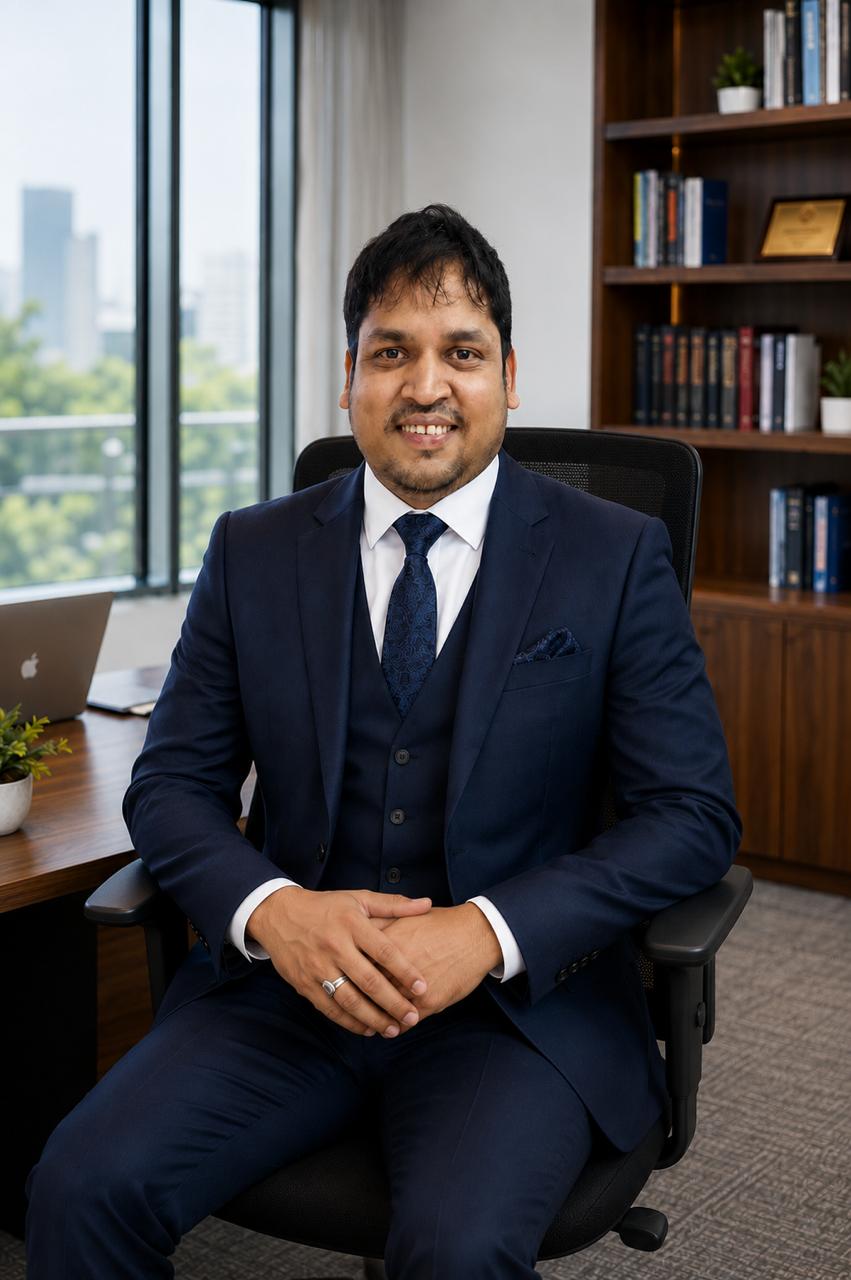
From modest beginnings in iron ore brokerage to establishing a growing presence in India’s mineral supply chain and international markets, Rahul Agarwal’s journey reflects the determination, business ethics and strategic relationships behind Seven Hills Minerals Private Limited.
Odisha’s mineral wealth has long been central to India’s industrial development. With its extensive deposits of iron ore, coal and manganese, the state occupies a significant position in the country’s mining and steel ecosystem. Yet transforming these natural resources into a successful business demands far more than geographical advantage. It requires an understanding of mineral quality, dependable sourcing networks, market fluctuations, logistics and, above all, the ability to build lasting commercial relationships. Among the enterprises operating within this competitive landscape is Seven Hills Minerals Private Limited, an Odisha-based company that has developed its presence in mineral trading, procurement, supply chain management and international iron ore exports. At the centre of this journey is Rahul Agarwal, Director and Founder of Seven Hills Minerals, whose entrepreneurial experience began with brokerage and gradually evolved into building an independent mineral business. In an exclusive conversation with The Interview Times, Agarwal spoke about his early struggles, the company’s evolution, its international operations, the realities of India’s mineral market and his ambitions for the future.
From Brokerage to Building Seven Hills Minerals
Every successful business has a beginning, and for Rahul Agarwal, that beginning was rooted in the practicalities of iron ore trading. Before establishing Seven Hills Minerals, he worked as a broker, connecting buyers requiring minerals with suppliers capable of providing them. His role demanded extensive market knowledge, access to mining networks and the ability to identify suitable material for different customers. Rather than beginning with substantial financial backing, Agarwal relied on relationships, industry experience and his understanding of procurement. As he explained during the conversation, his initial work involved identifying mineral sources for clients and earning a commission when transactions were completed. Although this model helped him understand the industry, he eventually decided that he wanted to move beyond facilitating transactions for others. He wanted to establish his own enterprise, take direct responsibility for procurement and sales, and develop long-term commercial partnerships. That decision became the foundation of Seven Hills Minerals. Registered on December 13, 2019, the company established its base in Odisha’s mineral-rich Barbil region of Keonjhar district. Over time, it expanded its business activities, leveraging industry connections and market expertise to serve customers in India and abroad. The company’s leadership also includes directors Amit Kumar Kedia and Saurav Sultania, alongside Rahul Agarwal. For Agarwal, the transition was not simply about starting a company. It was about transforming years of practical industry experience into an organised business capable of growing independently.
Seven Hills Minerals: Strengthening India’s Mineral Supply Chain
Seven Hills Minerals has positioned itself within the mineral and steel industry’s procurement, supply and logistics network, with iron ore forming an important part of its business. The company’s activities cover mineral sourcing, trading, quality assessment, transportation coordination and export facilitation. Its website also identifies bauxite, manganese and limestone among the minerals included in its broader service portfolio. Operating in a sector where buyers depend on consistent material specifications, timely delivery and competitive pricing, Seven Hills Minerals has focused on establishing relationships with major industrial customers. The company identifies organisations such as JSW Ispat Special Products, Bhushan Power and Steel, Rashmi Group, Jai Balaji Group, Shyam Sel & Power and Neo Metaliks among the industrial names associated with its business journey. According to its published company profile, Seven Hills Minerals has developed mining-related infrastructure, processing capabilities and logistics arrangements designed to support movement of minerals from sourcing locations to industrial consumers and ports. However, Agarwal’s interview reveals that the underlying strength of the business is its procurement knowledge. Having spent years understanding how mineral markets function, he places considerable importance on knowing the source, specifications and commercial viability of the material before committing to a transaction. This operational discipline has helped shape the company’s approach to building and retaining customers.
Quality Assurance Begins Before the Material Is Lifted
One of the most significant challenges in mineral trading is maintaining consistency. Iron ore is not a uniform commodity. Its value and suitability depend on factors such as iron content, impurities, physical characteristics and the requirements of the purchasing industry. For a supplier, the consequences of inconsistent material can extend beyond financial losses to damaged business relationships. Agarwal explained that his experience in supply and procurement has given him a practical understanding of the types of minerals available at different locations. Before procuring material, the company’s team visits mining sites, inspects the available stock and assesses its suitability. The objective is to identify potential quality concerns before transportation or delivery begins.
This approach reflects a broader philosophy within Seven Hills Minerals: reliability is established through preparation rather than promises alone. In a highly competitive market, the company considers accurate assessment, transparent communication and dependable execution fundamental to maintaining long-term industrial relationships.
Entering International Markets: The Export Journey of Seven Hills Minerals
A major milestone in the company’s development was its entry into international iron ore trading. Initially focused on the domestic market, Seven Hills Minerals gradually began exploring export opportunities as its procurement network expanded. According to the company’s published export timeline, its first major international shipment took place during 2020–21, when approximately 35,000 metric tonnes of iron ore were exported through Visakhapatnam Port.
The company subsequently expanded its operations through Gangavaram Port, reporting four shipments totalling approximately 2.7 lakh metric tonnes across 2020–21 and 2021–22.Gopalpur Port later emerged as an important export gateway. Seven Hills Minerals reports handling approximately 5.6 lakh metric tonnes through 11 shipments from 2022 to 2026.The company’s export profile also identifies a shipment of approximately 55,000 wet metric tonnes through Dhamra Port during 2025–26, with Paradip Port listed as a future operational destination. Overall, its website reports more than 9.6 lakh metric tonnes of iron ore exported across its recorded export journey. These milestones illustrate how an enterprise that began with limited financial resources gradually developed access to large-scale mineral transportation and international commodity markets.
Singapore, the UAE and the China Connection
During the interview, Agarwal explained the commercial structure through which Seven Hills Minerals participates in international trade. Although China remains an important destination for iron ore shipments, the company frequently deals through trading intermediaries based in Singapore and the United Arab Emirates. According to Agarwal, this arrangement allows Seven Hills Minerals to conduct business through established international commercial networks without necessarily maintaining direct contractual relationships with the ultimate industrial consumers in China. He also emphasised the importance of secure international payment arrangements, particularly the use of letters of credit. Such arrangements are significant in commodity trading, where transaction values can be substantial and payment security is an important part of risk management. The company’s website names IMR Metallurgical Resources, KTP Exports, JSW International Tradecorp, Tata International Singapore and Falcon Comtrade among the buyers and trading organisations associated with its export activities. For Seven Hills Minerals, international expansion has therefore depended not only on identifying demand but also on maintaining commercial discipline across sourcing, shipment execution and payment.
When Domestic Demand Changes the Export Equation
While international business has contributed to the company’s development, Agarwal acknowledges that the export market has become increasingly challenging. One of the most important changes, according to him, has been the growing domestic demand for iron ore, including lower-grade material. In earlier years, certain low-grade iron ore fines had limited opportunities within India’s domestic industrial ecosystem and were therefore exported to overseas markets, particularly China. With the development of domestic beneficiation and processing capabilities, however, more of this material can now find buyers within India. Agarwal explained that domestic realisations can sometimes be more attractive than export prices, making overseas sales less commercially viable. This has changed the calculations for companies involved in mineral procurement and trading. Rather than treating exports as an automatic growth opportunity, Seven Hills Minerals must regularly evaluate whether domestic or international sales offer better commercial outcomes. The shift demonstrates an important reality of the mineral industry: demand patterns, processing infrastructure and pricing conditions can reshape the market even for established suppliers.
Managing Price Volatility and Supply Constraints
Mineral trading is closely exposed to market fluctuations. Prices can change because of steel demand, mine output, transportation costs, international conditions and shifts in domestic consumption. For Seven Hills Minerals, Agarwal’s response has been to develop a flexible commercial approach instead of assuming that prices will remain stable. He explained that transactions must be assessed carefully and that purchasing at different market levels may be necessary to balance commercial exposure. In his view, the company must remain disciplined about the relationship between what it procures and what it can sell. Yet the more serious difficulty, he suggested, is not always price movement. It is the availability of suitable material. Agarwal described supply constraints and changes in access to mineral resources as major barriers to achieving the company’s ambitions. He also discussed another difficult experience in the business: payment delays or failures involving certain industrial buyers. These experiences have influenced Seven Hills Minerals’ decision to place greater emphasis on working with larger, financially established customers and developing reliable long-term business associations. The lesson is straightforward. Increasing sales volumes has limited value unless the company can simultaneously maintain dependable supplies, manageable financial exposure and payment security.
The Pandemic, Mining Disruptions and an Industry in Transition
The mineral industry has experienced significant structural changes over the past decade, including regulatory interventions, disruptions to mining operations and shifts in international commodity prices. Discussing the impact of mining closures associated with investigations and regulatory scrutiny, Agarwal recalled how the reduced availability of material created difficulties for businesses dependent on consistent mineral supplies. However, he described the COVID-19 period differently from many other business leaders. While the pandemic initially disrupted numerous industries, the subsequent recovery in steel demand and commodity prices created favourable trading conditions for parts of the iron ore market. Agarwal recalled a substantial increase in iron ore prices during this period, making it commercially significant for participants who could source and supply material. His observations underline how the experience of an economic crisis can differ across industries. For Seven Hills Minerals, navigating these changes has reinforced the importance of market awareness, procurement flexibility and the ability to respond quickly to changing industry conditions.
Odisha’s Mineral Advantage and the Challenge of Industrial Growth
As a businessman operating in Odisha’s mineral sector, Agarwal believes that the state possesses substantial opportunities for industrial development. Its deposits of iron ore, coal and manganese provide the foundation for mining, steel manufacturing, mineral processing and related industries. Yet he argues that resource availability alone cannot guarantee industrial growth. During the conversation, he identified land acquisition, labour-related issues and the business environment as significant challenges affecting industrial expansion in Odisha. He also drew comparisons with neighbouring mineral-bearing states, arguing that the effectiveness of policy implementation can influence how successfully states convert their mineral resources into industrial investment. His views reflect a concern shared in different forms across resource-based industries: the need to balance industrial development with administrative efficiency, community interests and regulatory certainty. For Agarwal, Odisha’s next stage of economic development will depend not only on extracting mineral resources but also on creating conditions that encourage more industries to invest, establish facilities and generate employment within the state.
Mining Regulations and the Cost of Doing Business
Government regulations were another major subject of the interview. Agarwal discussed the financial obligations placed on businesses within the mining ecosystem, including royalties, statutory contributions and auction-related premiums. He raised concerns about the cumulative impact of these expenses, particularly when businesses must also manage fluctuations in mineral prices and supply conditions.
His broader argument was that increases in costs at the raw-material stage can eventually affect downstream industries and, ultimately, consumers. At the same time, his comments illustrated the complexity of mining regulation, where revenue collection, environmental safeguards, compliance and industrial competitiveness must coexist.
For Seven Hills Minerals, operating within this environment makes regulatory awareness an essential part of business planning.
Relationships, Reputation and the Business of Trust
Throughout the conversation, Agarwal repeatedly returned to one principle: business relationships are built through ethical conduct. He believes that reputation spreads quickly within an interconnected industry. A customer’s experience with a supplier can influence the decisions of several other potential customers, making honesty and reliability especially important in commodity trading. For Seven Hills Minerals, these ideas have practical significance. The company operates in a market where successful transactions depend on several parties, including mine operators, material suppliers, transporters, port service providers, industrial buyers and international trading intermediaries. Maintaining trust across such a network requires consistency over time. Agarwal’s approach has therefore been to develop relationships based on commercial transparency, reliable delivery and a clear understanding of customer expectations. This emphasis on reputation also explains his preference for relationships that can grow over the long term rather than transactions focused exclusively on immediate profitability.
Employment, Operations and the Human Side of Seven Hills Minerals
Beyond its commercial activities, Seven Hills Minerals also contributes to the broader ecosystem of employment and services associated with the mineral sector. During the interview, Agarwal referred to a core employee strength of approximately 50–60 people, while indicating that additional personnel are associated with plant-level operations. The company’s business also depends on services across transportation, mineral handling, inspection and logistics. These functions demonstrate the wider economic connections created by mineral trading and supply businesses. Although mineral enterprises are often judged by their turnover or shipment volumes, their ability to coordinate people, equipment and services is equally important to day-to-day operations. For Agarwal, running Seven Hills Minerals involves managing these operational relationships while maintaining the flexibility required in a changing commodity market.
A Larger Vision for the Years Ahead
Despite the company’s progress, Agarwal does not consider its present position the limit of what Seven Hills Minerals can achieve. He spoke about having substantial long-term ambitions for the enterprise, while acknowledging that the pace of expansion is influenced by mineral availability, market conditions and access to reliable sources. His focus remains on strengthening procurement capabilities, developing relationships with major industrial customers and responding to opportunities in both domestic and international markets.
The company’s existing export infrastructure and experience in large-volume mineral movements provide a platform for future development. However, Agarwal understands that ambitions must be supported by practical execution. Growth cannot depend solely on rising commodity prices or increasing demand. It also requires the supply security, financial planning and customer relationships necessary to operate through unfavourable market cycles. His perspective combines entrepreneurial ambition with an awareness of the limitations imposed by the market.
Rahul Agarwal Beyond Business: A Philosophy of Patience and Persistence
Although the company’s development remains the central achievement of his professional journey, Agarwal’s personal outlook offers insight into the values that guide his decisions. His association with business began early, and he describes his entrepreneurial foundation as one built without significant initial capital. He attributes much of his progress to industry knowledge, relationships and the willingness to continue building despite difficulties. Outside work, he prefers a relatively simple routine. He spends time with friends, engages in conversations within his social circle and values rest after his professional commitments. His advice to aspiring entrepreneurs is shaped by the lessons of building a business gradually. “Ethics should be right,” he emphasised during the interview. He also cautioned young people against expecting immediate wealth or overnight success. Comparing business development to constructing a wall, he explained that a lasting enterprise must be built piece by piece. The comparison captures the philosophy behind his journey: meaningful growth emerges through repeated effort, patience and a willingness to establish strong foundations.
Seven Hills Minerals and the Road Ahead
The story of Seven Hills Minerals Private Limited is closely connected to the changing dynamics of Odisha’s mineral economy. From its roots in the state’s mineral trading ecosystem, the company has moved towards a broader position in domestic procurement, industrial supply and international iron ore exports.
Its development reflects the opportunities available to entrepreneurs who can combine local industry knowledge with organised operations and wider commercial networks. At the same time, its experience reveals the difficulties that remain: mineral scarcity, changing export economics, price volatility, regulatory costs and the challenge of maintaining consistent quality and payments. For Rahul Agarwal, these are not reasons to abandon ambition. They are realities that must be understood and managed while building a sustainable enterprise. As Odisha continues to strengthen its position within India’s industrial landscape, companies such as Seven Hills Minerals have an opportunity to contribute to the connection between mineral resources, domestic manufacturing and global markets. And for Agarwal, the ambition remains clear: to build a company whose growth is measured not only through the minerals it supplies, but also through the trust it earns, the relationships it sustains and the business foundation it leaves for the future.
Seven Hills Minerals is, ultimately, a story of how experience, perseverance and commercial integrity can turn a modest beginning into an enterprise with ambitions extending far beyond its origins.
