
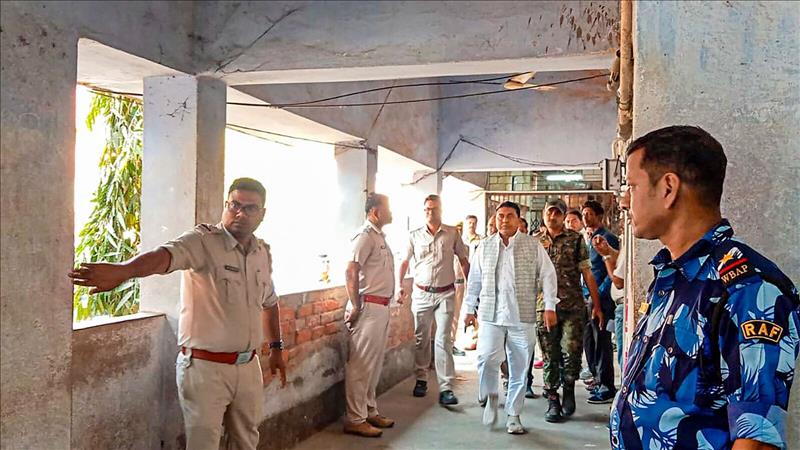
In a significant development concerning the Sandeshkhali violence case, Sheikh Shahjahan, a prominent figure in the region, has been apprehended by authorities 55 days after the attack on Enforcement Directorate (ED) sleuths. An important turning point in the current inquiry into what happened at Sandeshkhali, West Bengal, is Shahjahan’s arrest. He was remanded to 10-day police prison after his arrest, which highlights the seriousness of the matter and the rigors of the legal process.
A small village in West Bengal’s North 24 Parganas district called Sandeshkhali has recently been the center of controversy and violence. There have been violent occurrences and conflicts in the area, which have increased tension and raised worries about law and order.
Sandeshkhali’s socio-political fabric is woven together with the history of Sheikh Shahjahan, a popular figure in the community. Shahjahan, who is well-known for his power and standing, has long been a well-liked and controversial figure in local politics and community issues.
An inquiry into purported financial irregularities and unlawful activity was started by the Enforcement Directorate (ED), which led to Sheikh Shahjahan’s imprisonment. Money laundering and unlawful transactions were suspected, and Shahjahan was a significant person of interest in the ED’s investigation.
Among the many topics covered by the ED’s investigation were reports of wrongdoing, including the alleged molestation of women in the area, and claims of land acquisition through illicit means. The probe has grown more complex as a result of these accusations, which have also increased public outrage.
The Sandeshkhali violence case highlights how difficult it is to deal with problems like crime, corruption, and social discontent. Law enforcement officials and politicians face a difficult task in trying to strike a balance between upholding regional peace and stability and the pursuit of justice.
In addition, Sheikh Shahjahan’s detention calls into question the effectiveness of the legal system and the necessity of exhaustive and unbiased investigations. For the public to have faith in the legal system, accountability and transparency must be maintained.
The effects of such events on the impacted populations must be taken into account. A great deal of people’s lives and means of subsistence have been impacted by the unrest and disturbance brought on by the Sandeshkhali violence.
Respecting the concepts of justice and due process is essential as the case develops and the investigation deepens. Addressing fundamental issues and promoting reconciliation requires giving all parties involved a forum to air their frustrations and concerns.
A sobering reminder of the difficulties in resolving socioeconomic and political issues is provided by the Sandeshkhali violence case. Progress can be made in the direction of long-lasting peace and prosperity by encouraging communication, encouraging accountability, and giving affected communities’ welfare top priority.
In conclusion, a major step forward in the pursuit of justice and accountability has been made with Sheikh Shahjahan’s arrest in the Sandeshkhali violence case. Nevertheless, it also emphasizes the necessity of a multidimensional strategy for resolving fundamental problems and fostering societal cohesiveness. Upholding the rule of law and defending the rights of all parties involved requires vigilance and commitment, which must be maintained throughout the legal process.
