
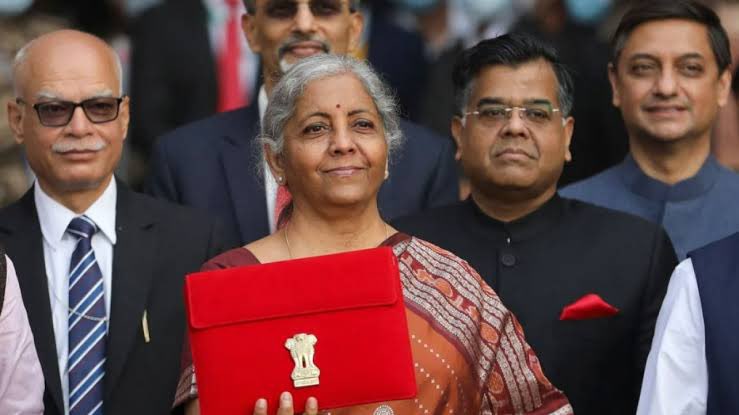
Finance Minister Nirmala Sitharaman will probably propose the entire budget for 2024–25 on July 24 during the Parliament’s Monsoon Session, taking up the task of increasing growth and containing inflation. On February 1, the Finance minister had presented the interim Budget. The Financial Express reported that the Economic Survey for the current fiscal year will be presented on July 23. In this aspect, there hasn’t been any formal confirmation, though. According to the article, a final decision has not yet been made on any date. It is customary to recommend a 15-day interval between two sessions of Parliament. The first sitting of the 18th Lok Sabha ended on July 2. The following session will therefore probably start between July 18 and July 22.
Significant policy adjustments or middle-class compromises had not been made in the interim budget. As a result, expectations for the Budget FY2024–25 are rising. Furthermore, President Droupadi Murmu had promised in her speech to Parliament that the entire budget would feature “historic steps” and important economic choices. Calling it the government’s “futuristic vision” for “Viksit Bharat,” she asserted that the speed of reforms would quicken.
An analysis that appeared on moneycontrol.com claims that despite rising living expenses, the salaried class is waiting for tax reductions. The analysis referenced a Deloitte report stating that the salaried class is in favor of changing the tax slabs, modifying the rates of the Housing Rent Allowance (HRA), offering incentives for the purchase of electric vehicles (EVs), and providing more funding for affordable housing. Even if the new personal tax regime was established in 2023 with budgetary adjustments, the rates under the previous tax regime stayed the same. For example, under the new regime, the minimum exemption amount was raised from Rs 2.5 lakh to Rs 3 lakh. The 37 per cent fee on incomes over Rs 5 crore was lowered to 25 per cent.
Analysts claim that during the last ten years, health spending has stagnated significantly. Moneycontrol reports that the Union government has only set aside 0.3% of GDP for healthcare. Despite a brief spike to 0.41 percent of GDP during the epidemic, health spending eventually fell to 0.28 percent. There has also been a decrease in the percentage of the National Health Mission, a major government endeavour. It made up more than 60% of all medical expenses before the pandemic. However, the data indicates that in FY24, it was at its lowest point in a decade, at 54.6%.
