
India Moves Towards Red Warning Labels on Junk Food After Supreme Court Pressure
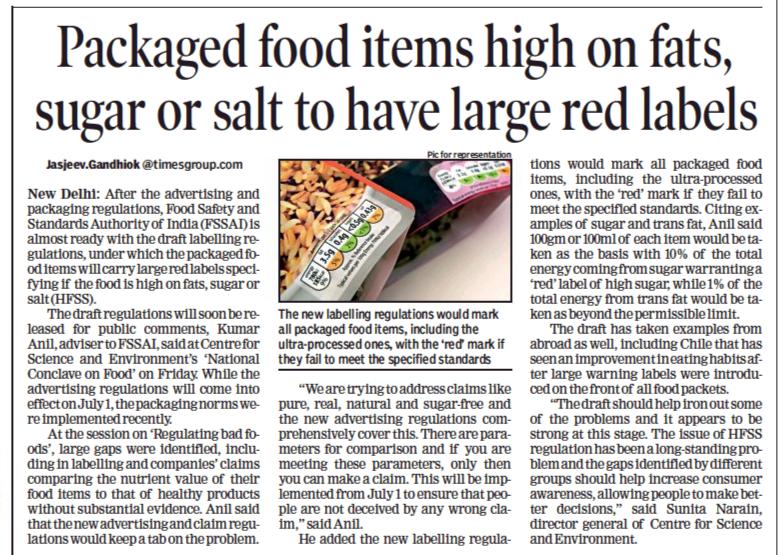
A major change could soon appear on packaged food shelves across India. The Food Safety and Standards Authority of India (FSSAI) has proposed prominent red, hexagonal warning labels on packaged foods that contain high levels of nutrients such as sugar, salt and saturated fat.
The proposal was submitted to the Supreme Court in a compliance affidavit and follows growing pressure for consumers to be given clearer information about the health risks associated with highly processed foods.
Under the proposed system, packages could carry warnings such as “HIGH SUGAR”, “HIGH SALT” or “HIGH FAT”, making the information visible on the front of the packet rather than requiring consumers to search through the nutritional information on the back.
The proposal comes after the Supreme Court questioned the government’s delay in implementing stronger front-of-pack warnings. The court had pushed the Centre and FSSAI to take a decision on the issue, amid concerns over India’s growing burden of obesity and diet-related disease.
What makes this unusual?
For years, consumers have largely relied on ingredient lists and nutritional tables printed in small text on the back of packages. The proposed system would make unhealthy nutritional characteristics immediately visible before purchase.
The proposal also has implications for India’s enormous packaged-food industry. Major food and beverage companies have historically raised objections to strong warning-label systems, arguing that such labels can oversimplify nutritional information.
The proposed rules are expected to be implemented in phases, giving manufacturers time to reformulate products and adjust packaging. Certain single-ingredient foods, including products such as salt, sugar and edible oil, are proposed to be exempt.
Why this matters to every Indian
This isn’t just a regulatory story.
It could change what millions of Indians see every time they buy:
- biscuits
- chips
- packaged snacks
- breakfast cereals
- confectionery
- sweetened beverages
- processed foods
The question is no longer simply what is inside the packet — but whether the packet will soon be required to warn you about it.
