
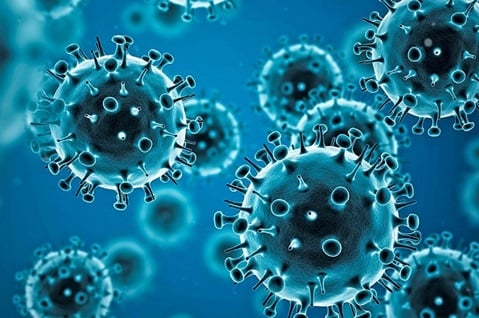
Health authorities in the United Kingdom have reported that anxiety and difficulty sleeping are new symptoms associated with the most recent Covid-19 sub-variant JN.1. JN.1, which is a descendant of BA.2.86, was first discovered in August and is now present in over 40 countries. The World Health Organization (WHO) has classified JN.1 as a variant of interest (VOI) due to its rapid spread. Unlike BA.2.86, JN.1 has an additional L455S mutation in the spike protein, which increases its transmissibility. Despite this, no new or unusual symptoms related to the virus have been reported.
The majority of symptoms that have been reported thus far are exclusive to upper respiratory tract infections, and include fever, coughing, sore throats, body aches, and runny noses. However, the Office for National Statistics (ONS) in the UK has identified two additional symptoms as of December 2023: anxiety and difficulty sleeping. As of early November, more than 10% of UK Covid patients had regularly reported feeling anxious or overly concerned, according to the ONS’s winter Covid report. According to the data, runny nose (31.1%), cough (22.9%), headache (20.1%), fatigue (19.6%), muscle pain (15.8%), sore throat (13.2%), difficulty sleeping (10.8%), and anxiety (10.5%) are the most common Covid-19 symptoms.
It’s interesting to note that only 2-3% of UK cases are currently reported for the once-common loss of taste and smell. However, a person’s health and level of immunity to the virus predominantly determine whether or not they will experience some or all of these symptoms, including those that have not been widely documented in the past. The results coincide with a recent increase in Covid infections worldwide. The WHO reports that during the past month, there has been a 52% increase in the number of new Covid-19 cases worldwide. Global hospital and intensive care unit admissions as well as mortality have increased, according to the UN health body.
Meanwhile, India recorded 573 fresh cases of Covid and two deaths in the last 24 hours, the Union Ministry of Health and Family Welfare said on Tuesday. The total number of active cases stands at 4,565. The country reportedly also has a total of 197 cases of the JN.1 from 11 states — Kerala, Goa, Gujarat, Odisha, Karnataka, Maharashtra, Rajasthan, Tamil Nadu, Telangana, Odisha, and Delhi.
