Interview Times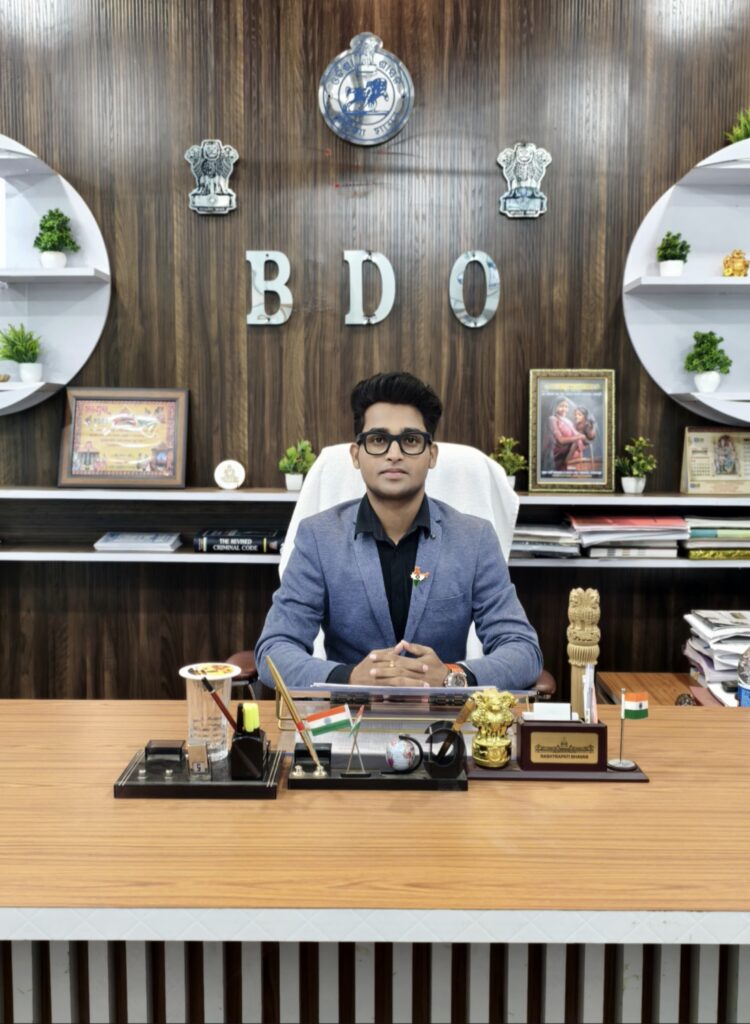
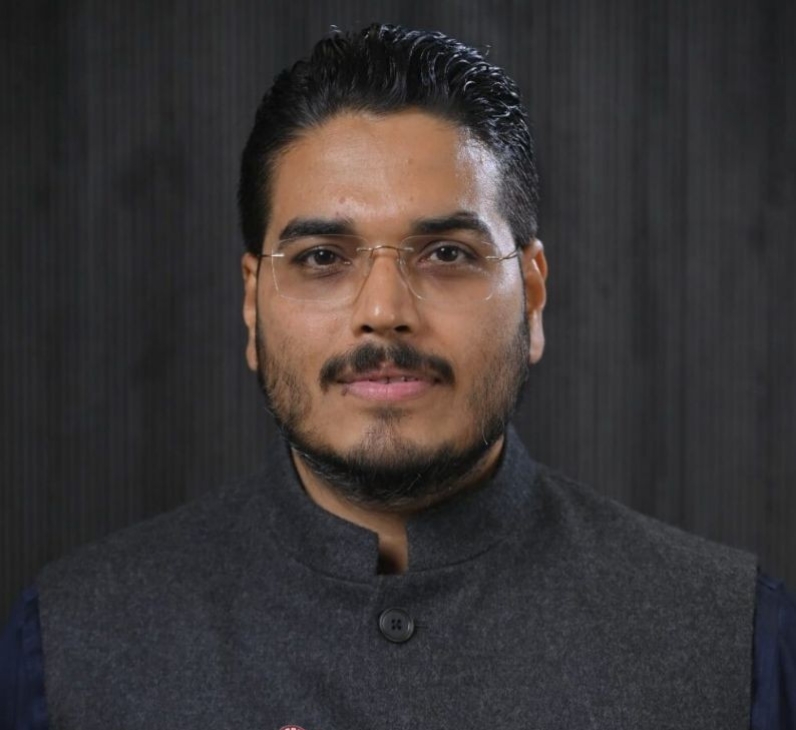
Khirod Chandra Sahu is a dedicated officer of the Odisha Civil Services (OCS), recruited in 2015, with a strong academic foundation in public administration. He has completed his Post Graduation in Public Administration and holds an M.Phil degree, reflecting his deep engagement with governance and administrative studies. Currently, he is serving as the Block Development Officer (BDO), Nandahandi in Nabarangpur district, where he is actively involved in grassroots development and public service delivery. Hailing from Mohangiri village of M. Rampur block in Kalahandi district, he brings with him a grounded understanding of rural realities and a committed approach to inclusive development. The Interview Times had a conversation with him, below are the answers he responded to The Interview Times Questionnaire.

Q1- Sir, was there a defining moment in your early life that shaped your interest in public service?
Answer: I was born and brought up in a village with no electricity or internet. Until my 12th standard, I had no awareness of the Civil Services, nor did I have anyone around me who could guide me about the exam or the role of the administration. However, I always held great respect for officers like the BDO and the Tahasildar. Whenever our village faced challenges—be it roads, drinking water, sanitation, or rural housing—we would write an application to the BDO, and timely action would be taken.
After completing my 12th, I joined BJB College in Bhubaneswar, where I was introduced to a competitive environment. It was there that I first learned about the Civil Services Examination. Coming from a remote hilly region, I understood how a dedicated civil servant can act as a crucial bridge between the government and the people, bringing meaningful change to society. Inspired by this realization, I began my preparation with determination and succeeded in clearing the exam on my first attempt.
Q2- What, in your view, are the biggest administrative challenges in Odisha today?
Answer: The major administrative challenges include:
1. High workload and effective time management
2. Breakdowns in communication
3. Budgetary limitations and resource constraints
4. Resistance to organizational change and new technologies
5. Increasing expectations and demands from the public
6. Staffing issues and varying levels of human resource competencies
7. The need to make complex and critical policy decision.
Q3- Sir, can you share a project or initiative you are particularly proud of?
Answer: I have taken up many initiatives like:-
(1) Conducted village level special Camp/Village Panchayat under my Initiative” ASHA(ଆଶା)-A Hope (ଏକ ଭରଷା)”.
“ASHA” stand for Asa(ଆସ) Samaste (ସମସ୍ତେ) Hata Misei (ହାତ ମିଶେଇ )Agaku jiba(ଆଗକୁ ଯିବା) to ascertain the Local issues & grassroot problems & thereby redress the greivances of the people at their doorstep.
Under this Initiative, we redressed around 1500 grievances within a month & provided necessary benefits to public.
(2) Conducted awareness program at Number of GPs and Villages on Pension, PDS, MGNREGA, Farming, Livelihood Mission etc. under My initiative ” CAMPAIGN”.
“CAMPAIGN” stand for Conduct of “Composite Awareness & Monitoring Program by Analyzing & Identifying Grassroot level Necessities”. ( C- Composite,A- Awareness,M- Monitoring,P- Program,A- Analyzing,I- Identifying,G- Grassroot level,N- Necessities)
(3)Visited a numbers of Agri- farms, Vegetables garden, fruits garden and Goshala to assess the feasibility, quality & quantity of production and discussed how to enhance the quality, quantity and production so as meet the local as well as market need.
Here is my Concept of “FARMING”- (F)Farming (A)Augmentation through (R)Rejuvenation & Rapid (M)Monitoring And (I)Investment in (N)New (G)Generation Technology .
(4).Here is my Concept of ” SEVA DEVA”( ସେବା ଦେବା)l
S- Social, E-Empowerment through,V – Vulnerabilities,A- Assessment (“SEVA/ସେବା”) and D- Development through,E- Ensuring,V- Values and, A- Accountability ( “DEVA/ଦେବା “).
SEVA DEVA- Social Empowerment through Vulnerability Assessment and Development through Ensuring Values and Accountability.
(5). VOTER- Voter Orientation Through Enrollment & Revision
The aim of this initiative is to enroll more & more young Eligible Voters & perspective Voters in the electoral roll so as strengthen the Democracy. Under this initiative, Conducted awareness camp at many colleges & enrolled around 1000 young Eligible Voters in the electoral roll.
Q4- How has the service shaped you as a person and leader?
Answer: This service not only shaped me as a person and a leader but also helped me become a more empathetic and socially aware human being. It enabled me to understand the needs of individuals as well as the broader needs of society. It transformed my outlook toward community engagement and instilled deeper values and ethics within me. Through this experience, I learned how to navigate critical and conflict-driven situations, political scenarios, disaster management, crisis management, and many other complex challenges.
Overall, this service transformed my mindset and reinforced my dedication to contributing positively to society and upholding cultural harmony.
Q5. Sir, you recently walked 3 km to a remote hilltop village to personally enquire about people’s issues, a visit that received wide public and media attention. What motivated you to take this initiative?
Answer: My only Motivation is my Service and my sole motivation is to serve the people. As the entire jurisdiction within the block falls under my responsibility, I firmly believe that no individual should be left behind in accessing government benefits. I make consistent efforts to reach out to the community and communicate with them to understand their basic needs and requirements.
For many residents, visiting the office requires traveling long distances, often costing them at least ₹1000 and consuming an entire day—without any assurance of resolving their concerns. This amount is significant for them, and I do not want their hard-earned money and time to be spent unproductively. Therefore, I prefer to visit their homes personally and provide services at their doorstep, ensuring convenience, efficiency, and true public service.
Q6- What message would you give to young aspirants preparing for Civil Services today?
Answer: (1) Never give up until you achieve your goals. Do not look back—set your objectives, pursue them with determination, face every challenge, and claim your well-earned success. Problems and obstacles will come and go, but time does not return. Stay motivated and keep moving forward.
(2) “Risking is better than regretting.” Breathe in confidence and breathe out doubt. Take calculated risks until your efforts lead you to your destination.
(3) Success is a journey, not a destination. Do not pause simply because you’ve started achieving results. Continue giving your best and work toward building your own identity.
(4) Civil Service is more than a Job & career—it is an emotion, a hunger, a proffesion,a calling, and a passion. Give your best, crack the exam, join the service, and serve the people in the best way possible.