
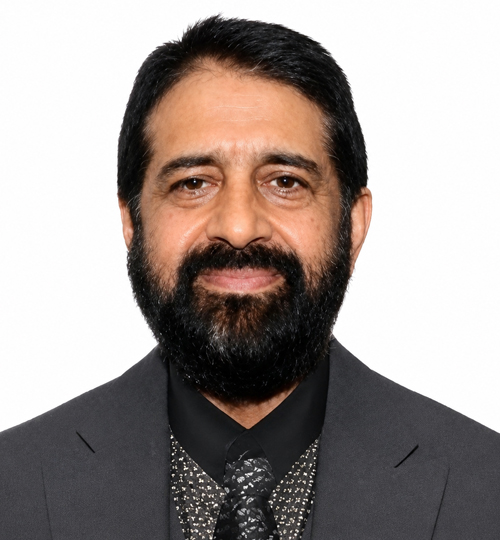
Rather than functioning as a conventional diplomat focused solely on protocol and policy, Anil Sooklal has emerged as one of the most compelling voices shaping the modern relationship between India and South Africa. As South Africa’s current High Commissioner to India, he is not merely managing bilateral ties between two influential democracies; he is shaping a deeper narrative of shared heritage, post-colonial solidarity, and economic partnership between India and Africa.
In an era where diplomacy is increasingly shaped by trade corridors, strategic alliances, and geopolitical competition, Anil Sooklal stands apart as a rare figure who brings history, scholarship, and human connection into the centre of international relations. As South Africa’s current High Commissioner to India, he is not merely managing bilateral ties between two influential democracies; he is shaping a deeper narrative of shared heritage, post-colonial solidarity, and economic partnership between India and Africa.
What makes Sooklal particularly compelling is that his diplomatic journey is inseparable from his personal history. Descended from Indian indentured labourers who were taken to South Africa in the late nineteenth century to work on sugarcane plantations, he represents a living bridge between the two nations. For him, India is not just a strategic partner; it is part of an ancestral memory.
That emotional and historical connection gives Sooklal a distinctive voice in diplomacy—one that combines intellectual depth with practical statecraft.
Born into South Africa’s Indian diaspora community, Sooklal grew up in a society shaped by apartheid, racial divisions, and the long struggle for equality. Yet rather than allowing history to become a burden, he transformed it into a lens through which he views global cooperation. His speeches frequently return to themes of resilience, dignity, and multicultural coexistence, values rooted equally in the anti-apartheid movement and India’s own freedom struggle.
Unlike many career diplomats who emerge solely from bureaucratic systems, Sooklal’s foundation lies in academia. He holds two doctoral degrees from the University of KwaZulu-Natal—one in Oriental History and another in Religious Studies. He is also recognised as the first South African to receive a doctorate in Hindu Studies, an achievement that reflects not only scholarly distinction but also a deep engagement with India’s philosophical traditions.
That intellectual grounding has become one of his defining strengths. In diplomatic circles, Sooklal is known for blending historical perspective with policy pragmatism. He approaches diplomacy not simply as negotiation, but as the management of narratives, identities, and shared aspirations.
Before assuming his present role in New Delhi, Sooklal served in several strategic assignments for the South African government. His diplomatic résumé includes postings to the European Union, Belgium, and Luxembourg, along with responsibilities as Ambassador at Large for Asia and BRICS affairs. Importantly, he also served in India during the late 1990s as a counsellor at the South African mission, giving him early exposure to India’s political and economic systems long before the country emerged as a global powerhouse.
That prior experience has proven invaluable today.
India and South Africa share a unique relationship built not only on commerce and diplomacy but also on moral history. The connection stretches from Mahatma Gandhi’s formative years in South Africa to Nelson Mandela’s admiration for India’s anti-colonial movement. Sooklal has repeatedly emphasised that the bilateral relationship cannot be understood through economics alone; it is fundamentally anchored in a shared struggle against racism, colonialism, and systemic injustice.
That perspective shapes his current diplomatic mission.
Since taking charge as High Commissioner, Sooklal has focused heavily on expanding the visibility of India–South Africa cooperation. According to him, the two countries already collaborate extensively across trade, pharmaceuticals, education, mining, agriculture, technology, and multilateral platforms, but much of this engagement remains “invisible” to the broader public.
His goal is to change that.
Trade and investment have become central pillars of his outreach strategy. South Africa views India as one of its most important Asian partners, while India increasingly sees Africa as a strategic growth frontier. Sooklal has actively encouraged stronger business collaboration through chambers of commerce, regional industry partnerships, and sector-specific engagement in renewable energy, healthcare, infrastructure, and agri-business.
What distinguishes his approach is the emphasis on mutual development rather than transactional diplomacy. He consistently frames South Africa not merely as a market, but as a gateway into the African continent for Indian businesses seeking long-term growth opportunities.
At the same time, he also positions India as an essential partner in Africa’s developmental ambitions.
This balancing act has become particularly relevant within platforms such as BRICS and IBSA, where India and South Africa increasingly align on questions of global governance, multipolarity, trade reform, and representation of the Global South. Sooklal has openly expressed optimism about India’s growing role in BRICS leadership and sees deeper India–Africa cooperation as critical in reshaping international power structures.
Yet beyond geopolitics, Sooklal’s most effective diplomacy may lie in his ability to humanise international relations.
Unlike diplomats who remain confined to elite policy circles, he actively engages with diaspora communities, educational institutions, and cultural forums. His participation in events such as Pravasi Bharatiya Divas reflects his belief that diaspora communities are not merely symbolic links but strategic connectors capable of driving commerce, innovation, and cultural exchange.
His outreach in cities such as Bhubaneswar is especially significant. Traditionally, foreign diplomatic engagement in India has concentrated on Delhi, Mumbai, and Bengaluru. Sooklal’s willingness to engage with emerging regional ecosystems signals a broader understanding of India’s changing economic geography. For states such as Odisha—with growing ambitions in mining, renewable energy, education, and industrial development—South Africa presents both a strategic partner and an investment opportunity.
Sooklal recognises this shift.
He sees India’s rise not as a metropolitan story alone, but as one increasingly driven by regional entrepreneurship, infrastructure growth, and local innovation ecosystems. That insight explains why his engagements often extend beyond formal diplomatic protocol into conversations around education partnerships, skill development, healthcare collaboration, and people-centric development models.
There is also a symbolic dimension to his leadership.
At a time when global diplomacy is frequently characterised by hard power competition and ideological polarisation, Anil Sooklal represents a softer yet highly influential model of statecraft—one rooted in history, culture, and human connection. His own life story embodies the journey of the Indian diaspora in South Africa: from indentured labour and exclusion to intellectual achievement and diplomatic leadership.
In many ways, he personifies the evolving India–Africa story itself.
For businesses, policymakers, and cultural institutions alike, Sooklal’s tenure signals a growing convergence between India and South Africa—not just as trading partners, but as nations attempting to shape a more balanced and inclusive global order. And in that evolving relationship, he remains one of its most articulate and credible bridge-builders.
