
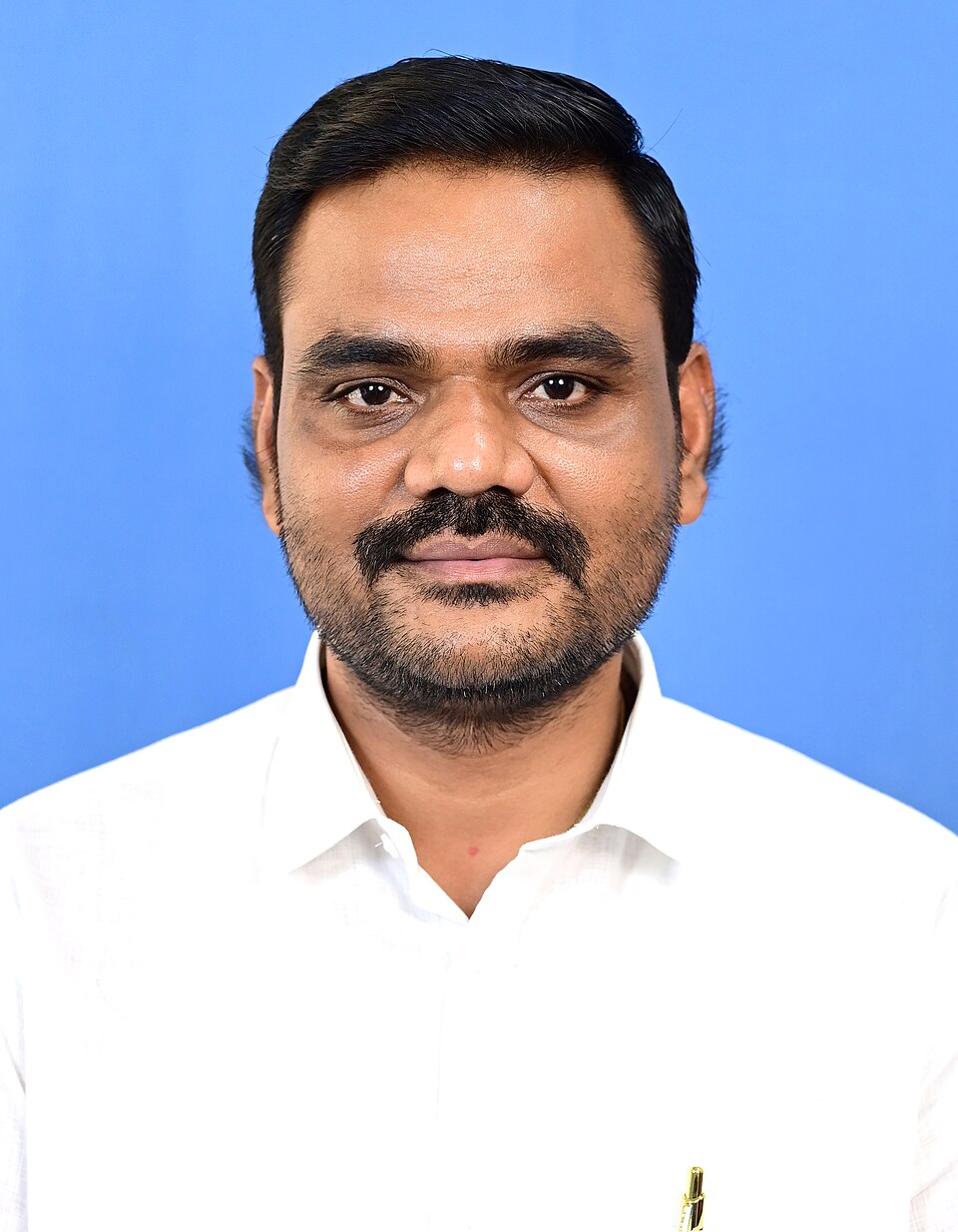

In a political landscape where ministerial appointments often follow decades of seniority, Sampad Chandra Swain is a striking exception. A first-time MLA, a son of a farmer from Jagatsinghpur, and a man who earned his MBA before he ever entered public life — he assumed charge of Odisha’s Industries, Skill Development and Technical Education portfolio in June 2024 with no political pedigree to lean on, only a clear vision and an unrelenting work ethic. In less than two years, he has overseen the grounding of over 80 industrial projects, attracted investment proposals worth ₹16.73 lakh crore, and taken Odisha’s industrial story to boardrooms across Asia, Europe, and the Americas. What drives him is not ambition for its own sake, but a deep-seated belief that industrial growth is the most powerful tool a government has to change the lives of ordinary people.
Swain does not speak the language of political performance. He speaks the language of delivery — of land handed over, factories inaugurated, MoUs converted into construction activity, and young people finding work within their own state rather than migrating elsewhere. He brings to the role a rare combination: the analytical discipline of a trained manager and the emotional understanding of a leader who grew up watching what poverty and unemployment do to communities. That combination is reflected in every initiative his ministry has undertaken since taking charge.
A Journey Rooted in Purpose
Sampad Chandra Swain was born in 1986 in Rangiagada, a village in Jagatsinghpur District on Odisha’s eastern coast. He grew up in a farming household, which gave him a direct understanding of rural economic realities — the dependence on seasonal income, the vulnerability of communities without stable employment, and the aspiration for something better that runs through every household in coastal Odisha.
He pursued a Master of Business Administration from Magnus School of Business in 2009, equipping himself with tools that would later inform his approach to industrial governance. While many of his peers used their education to build corporate careers, Swain returned to public life, working within the BJP’s grassroots structure in Jagatsinghpur and steadily earning the trust of communities through consistent presence and practical work. When the 2024 Odisha elections arrived, he stood from the Paradeep constituency and won decisively — polling 84,518 votes and defeating his nearest rival by 15,787 votes. It was a mandate built not on family name but on personal credibility.
Hitting the Ground Running
When Chief Minister Mohan Charan Majhi appointed Swain as Minister for Industries, Skill Development and Technical Education on 12 June 2024, the expectations were enormous. Odisha under the new BJP government had promised a departure from the incrementalism of the past. Swain wasted no time. Within weeks of taking charge, he was chairing review meetings of IPICOL — the Industrial Promotion and Investment Corporation of Odisha — assessing the pipeline of pending projects, identifying clearance bottlenecks, and setting timelines for delivery.
The results came quickly. From June 2024 to end of 2025, the state approved investments worth over ₹7 lakh crore — expected to generate over 4.5 lakh employment opportunities. During 2025 alone, 80 industrial projects were grounded and inaugurated with a combined investment of over ₹1.78 lakh crore, creating direct employment for more than 1.43 lakh people. Foundation stones were laid for 148 projects worth ₹2.87 lakh crore. These were not aspirational numbers on a presentation slide — they reflected actual construction activity, actual jobs, actual economic momentum across the state.
Utkarsh Odisha: Where Ambition Met Execution
The defining moment of Swain’s first year in office was the Utkarsh Odisha – Make in Odisha Conclave 2025, a landmark investment summit that brought Odisha’s industrial ambitions to a global audience. Over 5,241 industrialists attended. International delegations arrived from Singapore, Malaysia, Australia, Poland, the United Kingdom, and the United States. The conclave received 593 investment proposals totalling ₹16.73 lakh crore across 20 sectors — manufacturing, green energy, infrastructure, IT, chemicals, pharma, and more.
What set the conclave apart was what happened after it. Within months, work on investments worth ₹2.04 lakh crore had already commenced on the ground. Of the 145 entities that formally signed MoUs worth ₹12.89 lakh crore, a significant number had moved from intent to action with unusual speed. Swain had personally driven a follow-up mechanism to ensure that every signed MoU translated into an actual project, not a shelf document. In a country where investment summits are sometimes more spectacle than substance, Odisha’s conversion rate stood out.
Rourkela and the Rise of Western Odisha
Perhaps the most deliberate signal of Swain’s industrial vision has been his focus on Western Odisha — a region historically rich in minerals but starved of finished-goods manufacturing and employment-intensive industry. In January 2026, the Silver Jubilee edition of Enterprise Odisha was held in Rourkela, the steel city that defines the region’s economic identity. Swain was central to the event, which saw projects worth ₹8,884 crore launched and grounded, generating 6,832 jobs directly. MoUs and investment intents worth ₹52,026 crore were secured, with an employment potential of over 20,000 people.
The event also included a landmark allocation of 1,447 acres to Vedanta Aluminium in Kamakhyanagar, Dhenkanal, for a 3 million tonne per annum aluminium smelter and a 4,900 MW Captive Power Plant — one of the single largest industrial commitments in Odisha’s recent history. Industry leaders from Tata Steel, JSW, SAIL, AMNS, and Dalmia Cement were present. By hosting Enterprise Odisha in Rourkela, Swain sent an unambiguous message: no region of Odisha would be left behind in the state’s industrial transformation.
From Minerals to Manufactured Goods
For decades, Odisha’s wealth flowed outward in the form of raw minerals — iron ore, bauxite, coal, chromite — while value addition happened in factories elsewhere. Swain is determined to break this pattern. At the CII Odisha Mining and Construction Equipment Expo 2026, he articulated a clear strategic shift: Odisha would no longer be content with extraction alone. Downstream processing, value-added manufacturing, and entry into emerging mineral categories would define the next phase.
Among those emerging categories, rare earth minerals hold particular promise. As the global economy races to build clean energy infrastructure — electric vehicles, batteries, solar panels, and semiconductors — the demand for rare earth elements is set to surge. Odisha’s geological profile positions it well to play a role in this supply chain, and Swain has signalled that the state intends to develop not just mining capacity but refining and processing capability, turning raw geological advantage into sustained industrial value.
Skilling Odisha’s Youth
Swain has been unequivocal about one belief: industries cannot succeed without a skilled workforce, and no investment attraction strategy is complete without a parallel investment in human capital. Under his watch, Odisha secured the top position in the national India Skills competition — a recognition of the state’s vocational training ecosystem. The World Skill Centre in Bhubaneswar, already producing industry-ready talent, is being joined by two more centres in Sambalpur and Berhampur, extending the skilling infrastructure into Western and Southern Odisha.
Financial support is being extended to student entrepreneurs, acknowledging that the startup ecosystem requires nurturing from the college campus stage. Skill development curricula are being co-designed with industries and academic institutions to ensure alignment between what classrooms teach and what production floors need. For Swain, this is not a social welfare measure — it is the foundation of Odisha’s long-term industrial competitiveness.
Small Units, Big Impact
Not every milestone carries a lakh-crore headline, and Swain understands that. In April 2026, he inaugurated a garment manufacturing unit in Khurda, established by Epic Group across 40 acres. The unit is expected to employ 7,050 people — a number that translates directly into livelihoods for families across the district. It was a reminder that industrial transformation is ultimately a human story, measured not in aggregate investment but in individuals who find steady incomes, reduced migration, and improved family lives.
The garment unit is also emblematic of Odisha’s widening industrial base. Alongside steel, aluminium, petrochemicals, and mining, the state is now building capacity in textiles, pharma, electronics, and IT — sectors that are export-oriented, labour-intensive, and capable of drawing in a much broader population into formal employment. Two dedicated pharma parks are in the pipeline. The IT and ITeS sectors are being actively pursued. Odisha’s industrial identity is no longer defined by a single dominant sector.
The Road to Samrudh Odisha 2036
Every initiative Sampad Chandra Swain has pursued since taking office is anchored to a single long-term vision — Samrudh Odisha 2036. The framework envisions Odisha as one of India’s top industrial states within a decade: a destination chosen by global companies not merely for its natural resources but for its reliable infrastructure, its business-friendly governance, its skilled workforce, and its track record of converting commitments into delivered projects.
The emerging Raipur-Ranchi-Rourkela corridor reflects the regional connectivity dimension of this vision. The twin pharma parks, the World Skill Centres, the rare earth strategy, the garment clusters — each is a building block. Swain himself has said that the truest measure of success will not be the investment numbers. It will be whether Odisha’s young people choose to stay and build their futures at home. That aspiration — rooted not in economics but in the dignity of every Odia family — is what ultimately defines this minister’s mission.
