Manaswini Mohapatra

Strong institutions are rarely built by administrators alone. They are often shaped by visionary leaders who understand the power of ideas, the importance of communication, and the responsibility of nation-building. Prof. (Dr.) K. G. Suresh stands among that distinguished league of leaders whose professional journey has seamlessly connected journalism, academia, public policy, and institution-building.
Over a career spanning more than three decades, Dr. Suresh has emerged as one of India’s most respected media educators, public intellectuals, and institutional leaders. His contributions have left an enduring impact on journalism education, media ethics, democratic discourse, and the development of knowledge-based institutions across the country.
From the Newsroom to National Influence
Long before he became an academic leader, Dr. Suresh built a formidable reputation in the world of journalism. As a senior journalist and Chief Political Correspondent with the Press Trust of India (PTI), he covered some of the most significant political developments in contemporary India.
Those who have worked with him often speak of his sharp analytical abilities, deep understanding of India’s political ecosystem, and unwavering commitment to factual and ethical journalism. His years in the newsroom provided him with firsthand exposure to the dynamics of governance, public policy, elections, and democratic institutions.
The experience not only shaped him as a journalist but also gave him a unique perspective on the role of media in a rapidly evolving democracy.
Transforming Journalism Education
While many accomplished journalists remain within the profession, Dr. Suresh chose a path that would multiply his impact exponentially. Recognizing that the future of journalism depended on nurturing competent, ethical, and socially responsible media professionals, he transitioned into academia.
His appointment as Director General of the Indian Institute of Mass Communication (IIMC), India’s premier media education institution, marked a significant chapter in his career. At IIMC, he focused on strengthening academic standards, modernizing curricula, encouraging industry engagement, and reinforcing the values of responsible journalism.
Under his leadership, the institute continued to produce media professionals capable of navigating an increasingly complex information landscape. His emphasis on ethics, credibility, and public responsibility resonated strongly at a time when media worldwide was grappling with questions of trust and accountability.
Former students and colleagues often recall his ability to combine academic rigor with practical insights drawn from decades of field experience. He consistently encouraged young journalists to look beyond headlines and understand the broader social implications of their work.
Leading Through Educational Innovation
Dr. Suresh’s commitment to educational excellence extended further when he assumed the role of Vice-Chancellor of Makhanlal Chaturvedi National University of Journalism and Communication.

Leading a specialized university dedicated to journalism and communication required a strategic vision that balanced tradition with innovation. During his tenure, he worked toward expanding the university’s academic footprint, promoting research initiatives, strengthening industry partnerships, and creating opportunities for students to engage with emerging trends in media and communication.
His leadership reinforced the idea that universities must not merely impart knowledge but also prepare students to become responsible citizens, critical thinkers, and contributors to society.
Steering One of India’s Most Prestigious Cultural Institutions
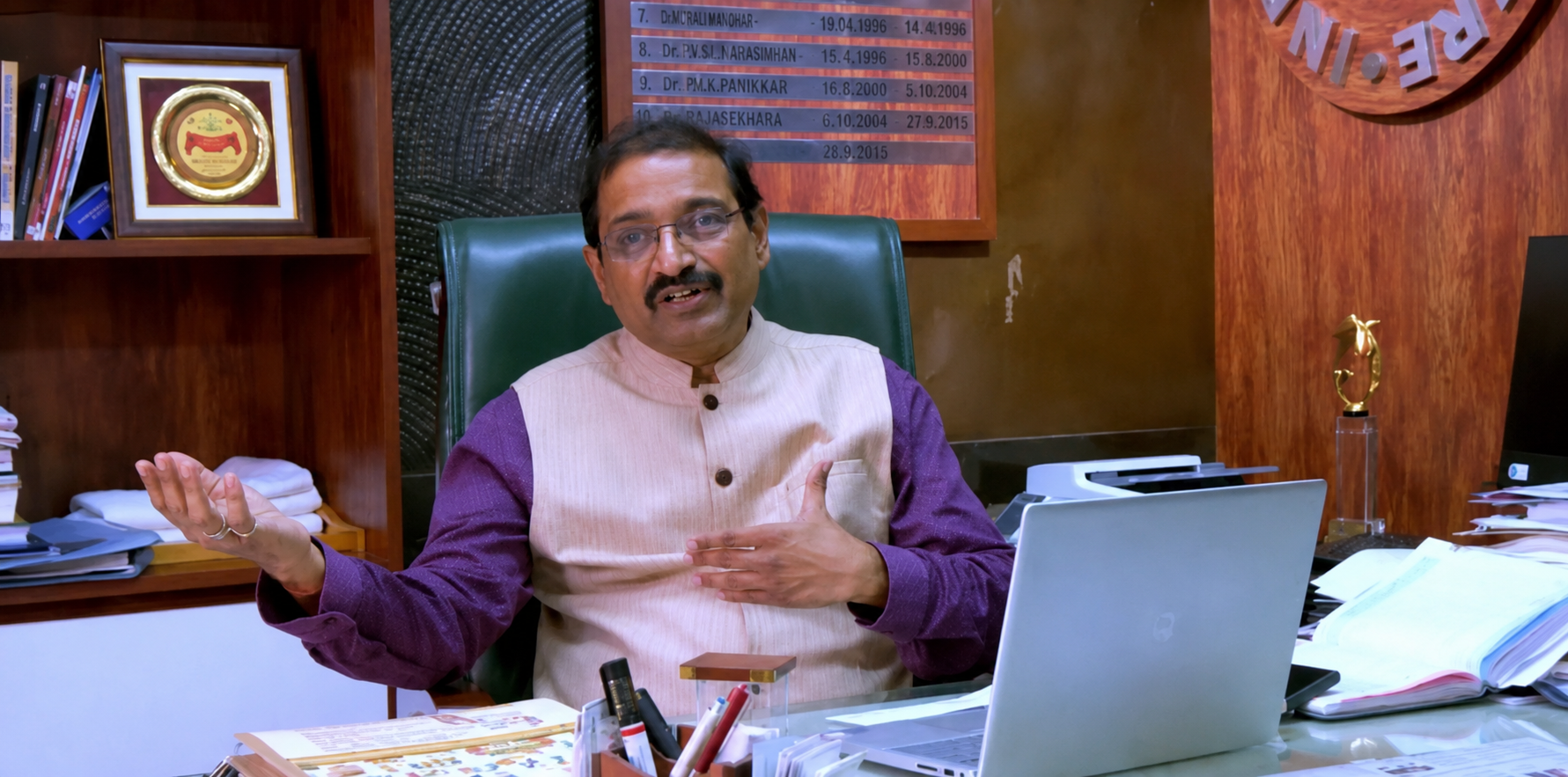
Today, Dr. Suresh serves as the Director of the India Habitat Centre in New Delhi, one of the country’s most respected cultural and intellectual institutions.
The India Habitat Centre has long been recognized as a vibrant platform where ideas, arts, sustainability, public policy, literature, culture, and civic engagement converge. It hosts a diverse range of events, discussions, exhibitions, performances, and forums that bring together policymakers, scholars, artists, entrepreneurs, and citizens.
Under Dr. Suresh’s stewardship, the institution continues to strengthen its role as a national hub for dialogue and intellectual exchange. His leadership reflects a belief that meaningful conversations are essential for social progress and democratic vitality.
Associates often describe him as a leader who understands that institutions thrive when they remain inclusive, dynamic, and relevant to the changing needs of society.
A Leadership Philosophy Rooted in Integrity
Throughout his professional journey, a few principles have consistently defined Dr. Suresh’s approach to leadership.
Integrity has remained central to his work, whether in journalism, academia, or institutional administration. Equally important has been his belief in inclusiveness, continuous learning, and the cultivation of talent.
He has often advocated for responsible communication, constructive public discourse, and the role of education in strengthening democratic institutions. These values have enabled him to build credibility across diverse professional domains and earn the respect of journalists, educators, policymakers, and students alike.
A Builder of Institutions and Ideas
The story of Prof. (Dr.) K. G. Suresh is not merely the story of an accomplished journalist or an academic administrator. It is the story of an institution-builder who has consistently worked to strengthen the platforms through which societies learn, communicate, and evolve.
From reporting on the nation’s affairs as a political correspondent to guiding aspiring journalists, leading universities, and directing one of India’s foremost cultural centres, his journey reflects a rare combination of intellectual depth, administrative excellence, and public service.
At a time when information shapes societies and institutions play an increasingly critical role in national development, leaders like Dr. Suresh remind us that progress depends not only on technology or infrastructure but also on informed citizens, ethical communication, and strong institutions.
His life’s work stands as a compelling example of how one individual’s commitment to knowledge, integrity, and nation-building can influence generations and contribute meaningfully to the development of a modern, democratic India.