Monjita Sarkar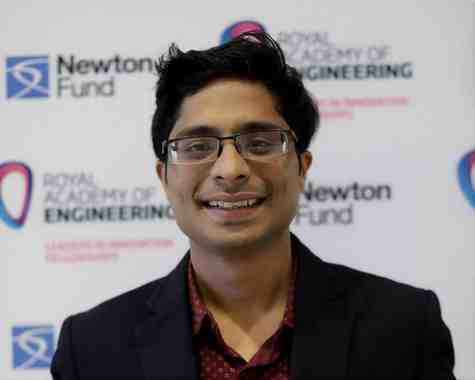
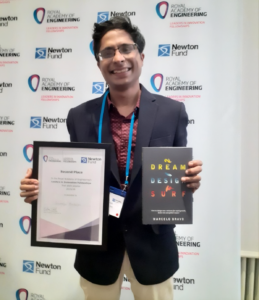
Soumalya Mukherjee is the CEO of Tan90 Thermal Solutions. It is a company working to remap the current cold stage scenario towards sustainability by pioneering a unique cold chain model: Cooling as a Service (CaaS). Through this model it offers energy-efficient cooling solutions to businesses on lease.
At the heart of the company’s technology are proprietary Phase Change Materials (PCM) developed entirely in-house. Tan90’s PCM span temperatures from –50°C to +80°C and offer longer cycle lives and double the turnaround time compared to existing alternatives.
The Interview Times presents parts of his entrepreneurial journey in his own words:
Q1) Tan90 pioneered the Cooling-as-a-Service (CaaS) model, where customers lease thermal panels rather than buying them. You claim that this has achieved zero customer churn across eight cities. What convinced you to go asset-light and offer cooling as a service rather than simply selling products ?
Honestly, we didn’t design this model, our customers wrote it for us. In the early days we’d show someone the panels, they’d agree the technology worked, and then ask the question that taught us everything: “Why should I own these?” And they were right. Cooling is critical to them, but it’s never the thing they want to spend their mornings maintaining or repairing. So eventually we flipped it. Keep using the panels, we’ll own them, recharge them, swap them out when they tire. You just pay for the cooling you actually use. The moment we said that, the whole hesitation disappeared, no big cheque upfront, no panic about a breakdown on the hottest afternoon of the year. And because the panels stay ours, every failure in the field became our problem to fix, which is exactly how it should be. People treat the zero-churn number like some retention trick. It isn’t. We simply took away the reason to leave, so nobody does.
Q2) Tan90 serves food logistics, pharma, diagnostics as well as quick commerce. Which vertical has seen the most ready adoption of your product and services? And which sector do you think has scope for further integration?
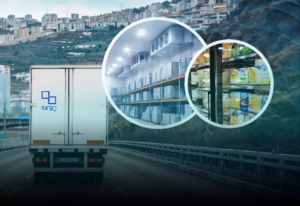
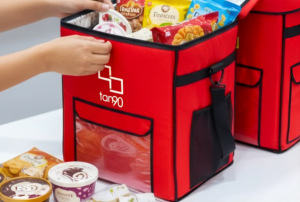
Quick commerce, and I’ll be honest, a good part of that was timing. The ten-minute-delivery boom hit right as we found our feet, and suddenly every player had a problem nobody had really solved: how do you move a tub of ice cream across a hot Indian city in minutes and have it arrive as ice cream, not soup. That’s exactly the problem we’d spent years obsessing over, so our panels and sachets just slotted into what they were already doing, no new fleets, no upheaval. That adoption was almost impatient. The one I keep watching, though, is pharma and diagnostics. It moves slower because you have to be validated and qualified, and that asks for real patience. But the cargo is precious, sometimes it’s someone’s medicine, and once you’ve earned your place in that supply chain, you’ve earned it for good. Nobody swaps out a trusted temperature solution on a whim when lives are on the line. Quick commerce is where we grew up. Pharma is where we go deep.
Q3) You have forayed to the Philippines and have recently built a presence in the US as well. I read about your plan to enter the EU markets as well. What regulatory barriers or even regional advantages do you seek to navigate in the coming years for your successful expansion?
Each market has its own personality, so we’ve stopped walking in with a single script. The Philippines almost felt built for us, all those islands, cold chain stitched together loosely, and laying conventional refrigeration everywhere is just too expensive. So they get to skip a whole generation of equipment and come straight to passive cooling. We work there mostly on fisheries and frozen movement, where a few hours without cooling is the difference between a catch worth something and nothing.
The US is the grown-up in the room, mature and crowded, so it’s less about explaining who we are and more about quietly proving the numbers, especially on the pharma side. It helps that energy is expensive there and a lot of these companies genuinely mean their sustainability targets. Europe asks for the most paperwork of the three, but most of it works in our favour, the rules tightening around high-emission refrigerants are basically pushing the market toward exactly what we already do. So there we’re not arguing about direction, we’re just doing the slow, unglamorous work of certifications and material approvals.
Q4) You describe Tan90 not as a cooling company but as a thermal management company — with ambitions in HVAC, data centres, solar cell management, and battery cooling. How do you decide where to focus when the technology has such wide applicability?
This is the part of the job that keeps me honest, and frankly it’s harder than the science ever was. Phase change material isn’t a cold-chain thing, it’s a platform, it touches data centres, air conditioning, solar, batteries, EVs. And that breadth is dangerous, I’ve watched good deeptech companies quietly fall apart from chasing everything at once simply because they could. So we’re ruthless about it now. I ask three things. Is the pain bad enough that someone pays us this year, not someday. Do we genuinely have an edge here, or are we about to run a science experiment on someone else’s money. And does pay-as-you-cool even fit the way that customer buys.
Cold chain answers yes to all three today, so that’s the engine, that’s what keeps the lights on. The bigger bets, data centres, batteries,those are long, patient games, so we line them up rather than lunge at them. The cold chain feeds the family. The new things decide how big the family eventually becomes.
Q5) What was your strategy in competing against ice and dry ice as the industry norm?
We never once tried to be cheaper than ice, you simply can’t, ice wins on day one, so we made our peace with that early and stopped fighting on price. But sit with ice for a while and its real cost shows up. It melts before the trip is done, you can’t hold a temperature with it, it adds dead weight, and you’re forever topping it up.
Dry ice is worse, especially for the small operator, the fellow selling ice cream off a cart, it vanishes on you because it sublimates, the supply is unreliable, and it’s a hazard to handle. So our line was simple: “don’t count the trip, count the season”.
The re-buying, the spoilage, the wasted product, the labour, the stock you threw away. Count all of that honestly, and then tell me what was actually cheaper. The panel-leasing model killed the last objection, the upfront cost of buying in.
And after that, a lot of it was just sitting with people, an ice cream vendor, a pharma distributor, gently helping them see the season instead of the single trip. There’s no shortcut for that kind of trust. You earn it one conversation at a time.
Q6) You’ve been able to pull an impressive list of investors. The Series A funds are earmarked for new product lines (cold chain, HVAC, data centres) and expansion into 10 more Indian cities, particularly Tier-II markets, as well as Southeast Asia, the Middle East, and Africa. Which of those bets do you think is the highest-risk, highest-reward?
Data centres, without hesitation. The Tier-2 India push and the new cold chain lines are us stretching into things we already do well, so the risk there is honest execution, and execution I can stay on top of.
Southeast Asia, the Middle East, Africa are bumpier roads geographically, but underneath it’s still cold chain, and cold chain is home for us. Data centres are a different beast entirely. The market is vast and swelling because of all this AI compute, and the energy and sustainability pressure on those buildings is intense, which is exactly the kind of tailwind we love. But it’s the furthest thing from where we live today, long sales cycles, an unforgiving reliability bar, and a room already full of liquid and air cooling players in no mood to make space for the newcomer.
We’d earn every inch from scratch. If it lands, it could be bigger than everything else we’re doing put together. If it drags, it quietly eats our money and our attention. That’s exactly why we’re funding it off the back of a healthy cold chain business, and not gambling the company on it. You take a swing like that standing on solid ground, or you don’t take it at all.