
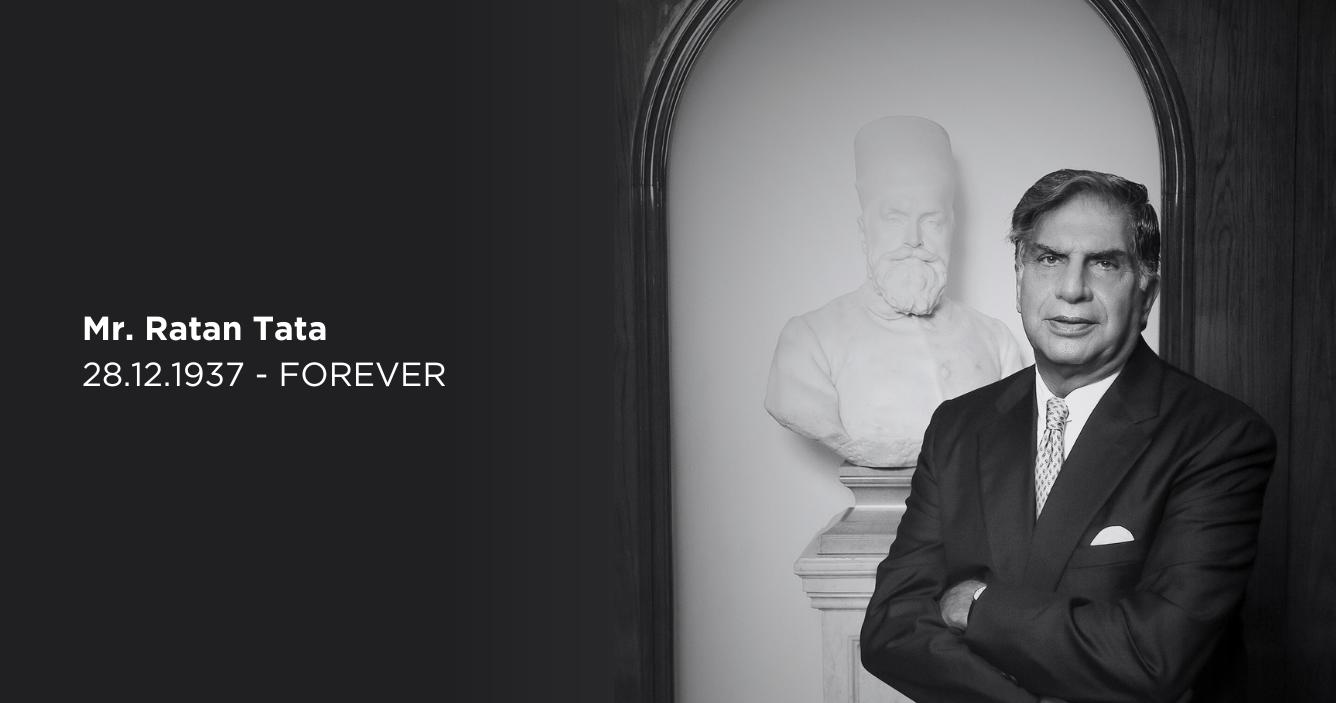
Ratan Tata Remembered: Two Years On, the Legacy of a Leader Who Put India Before Himself
On his second death anniversary, India remembers the industrialist whose leadership extended beyond boardrooms, whose philanthropy touched countless lives, and whose vision helped redefine Indian enterprise.
By – Snigdha Mishra
Bhubaneswar | October 9, 2026
Two years have passed since India bid farewell to one of its most respected industrial leaders, Ratan Naval Tata. Yet his influence remains deeply embedded in the country’s industrial ambitions, corporate values and collective memory.
On October 9, 2024, Ratan Tata, Chairman Emeritus of Tata Sons, passed away at the age of 86. His death marked the end of an extraordinary chapter in Indian business history, but the principles he championed continue to resonate across generations.
For millions of Indians, Ratan Tata was more than a business leader. He represented a rare combination of ambition and humility, commercial success and social responsibility, global competitiveness and national commitment.
As India observes his second death anniversary, his life offers a reminder that the greatest measure of leadership is not simply the wealth an organisation creates, but the difference it makes in society.
From a Legacy of Trust to a Global Business Empire
Born on December 28, 1937, Ratan Tata inherited an extraordinary institutional legacy, but his contribution was not merely to preserve it. He transformed it.
When he became Chairman of Tata Sons in 1991, India was entering a period of profound economic change. Liberalisation was opening new possibilities, and Indian businesses faced increasing pressure to compete globally.
Under his leadership, the Tata Group expanded its international presence and strengthened its position across industries, including automobiles, steel, information technology, hospitality and consumer products.
Major international acquisitions, including Tetley by Tata Tea, Corus by Tata Steel and Jaguar Land Rover by Tata Motors, demonstrated the growing confidence of Indian enterprise on the world stage.
These decisions helped reshape perceptions of Indian business. Tata companies were no longer simply participating in global markets; they were becoming influential international competitors.
The Vision Behind the Tata Nano
Among Ratan Tata’s most widely discussed initiatives was the Tata Nano, unveiled in 2008.
The project emerged from his ambition to make safer family transportation more accessible to ordinary Indian households.
Although the Nano did not achieve sustained commercial success, it reflected an important dimension of his leadership: a willingness to pursue innovation around the needs of everyday people.
For Tata, engineering and enterprise were not solely about premium markets or financial returns. They could also be instruments of accessibility and social progress.
That philosophy continues to offer a meaningful lesson for India’s growing startup and manufacturing ecosystems.
A Business Leader Who Believed in Humanity
Perhaps the most enduring aspect of Ratan Tata’s public image was his compassion.
He was widely admired for his support of education, healthcare, scientific research, animal welfare and community development.
The Tata philanthropic tradition predates his leadership, but he remained a prominent advocate of its values.
Through the Tata Trusts and the broader Tata institutional ecosystem, the group has supported initiatives addressing critical social needs, from medical research and educational opportunity to rural livelihoods.
His personal affection for animals, particularly dogs, also became a defining part of his public persona.
These interests revealed a leader whose concerns extended well beyond corporate performance.
The Humility That Made Him Extraordinary
Despite being associated with one of India’s largest business groups, Ratan Tata was admired for his understated personality.
He rarely projected the image of a conventional corporate celebrity. His public presence was marked by restraint, dignity and an emphasis on institutional purpose.
That humility helped him connect with people far beyond the business community.
Young entrepreneurs looked to him for inspiration. Professionals respected his ethical reputation. Ordinary citizens admired his simplicity and commitment to India.
His leadership suggested that influence need not be accompanied by extravagance, and that respect is earned as much through conduct as through achievement.
An Inspiration for India’s Entrepreneurs
Ratan Tata’s contribution to India’s entrepreneurial landscape also extended to his support for emerging businesses.
Following his retirement as Chairman of Tata Sons in 2012, he became associated with several startups as an investor and mentor.
His interest in young enterprises reflected an openness to new ideas, disruptive technologies and unconventional business models.
For a generation of founders, his encouragement carried significance beyond financial investment.
It demonstrated that established business leaders could play a constructive role in nurturing the next generation of Indian innovation.
As India continues to strengthen its startup ecosystem, that example remains particularly relevant.
A Legacy That Continues Beyond His Lifetime
The story of Ratan Tata cannot be measured only through acquisitions, revenues or corporate milestones.
It is also a story about trust.
Trust in Indian enterprise. Trust in ethical leadership. Trust in the possibility that business can contribute to national development while remaining conscious of its responsibilities to society.
His career was not without difficult decisions, controversies or commercial setbacks. Yet the broader legacy he leaves behind is one of institution-building, ambition and a deeply held belief in the potential of India.
Today, as industries embrace artificial intelligence, clean energy, advanced manufacturing and global expansion, his example continues to raise an important question:
Can Indian businesses become global leaders while remaining firmly rooted in integrity, compassion and public purpose?
Ratan Tata’s life suggests that these aspirations need not be mutually exclusive.
Remembering the Man, Honouring the Values
On October 9, 2026, the second anniversary of his passing, tributes to Ratan Tata are also an opportunity to reflect on the kind of leadership India wishes to celebrate.
He helped demonstrate that a successful enterprise could aspire to more than commercial dominance, and that a business leader could earn affection beyond professional achievement.
His passing left an absence that cannot be filled by titles or appointments. But his values continue through the institutions he helped shape and the people he inspired.
Ratan Tata may no longer be among us, but his legacy remains a powerful reminder that true leadership is remembered not merely for what it builds, but for whom it serves.
A remarkable leader. A lasting legacy. An inspiration for generations.
The Interview Times pays its respectful tribute to Ratan N. Tata (28 December 1937 – 9 October 2024).
