
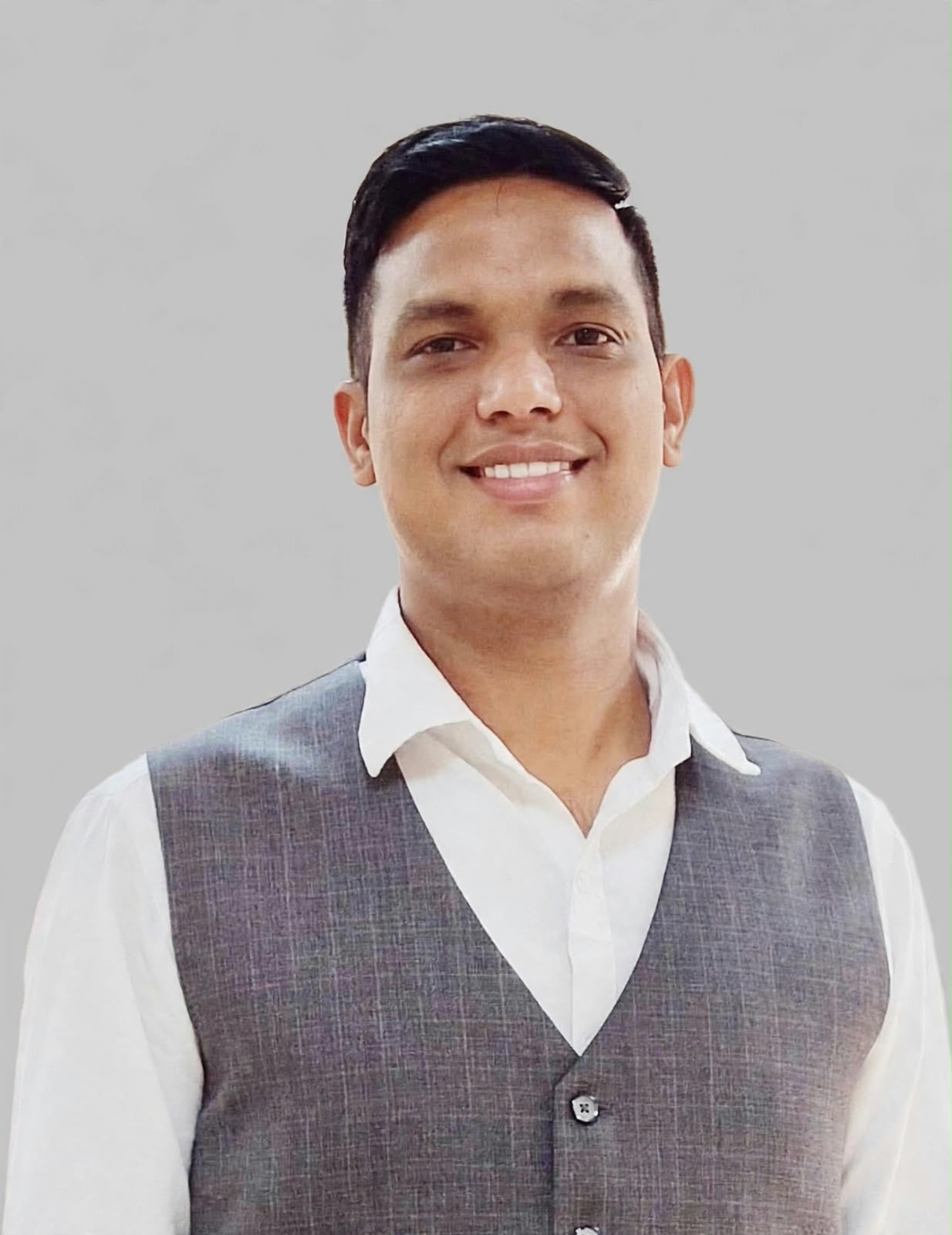
By Prisita Das
At the helm of Swosti Institute of Management and Social Studies, Dr. Chinmay Ranjan Mohanty believes hospitality education must go beyond textbooks to cultivate professionals who combine technical expertise with empathy, discipline and a genuine spirit of service.
In an industry where first impressions can define an entire experience, hospitality is about far more than comfortable rooms, impeccable service or fine dining. It is about the human connection that makes a guest feel welcome. For Dr. Chinmay Ranjan Mohanty, Principal of Swosti Institute of Management and Social Studies (SIMSS), this understanding lies at the heart of hospitality education.
Associated with the Swosti Group since 2013, Dr. Mohanty has spent over a decade contributing to an educational ecosystem that connects classroom learning with practical exposure in the hotel industry. His approach is rooted in a simple yet powerful belief: hospitality is not merely a subject to be taught; it is a value to be cultivated.
“I did not join teaching just for a job. I joined it out of passion,” he reflects, recalling his journey with the Swosti Group under the guidance of its CMD, Dr. J. K. Mohanty. His experience in the industry revealed a persistent gap between the growing number of hotels and the availability of professionals equipped with the practical skills and service-oriented mindset the sector demands.
For him, addressing this gap begins in the classroom but cannot end there.
Education Beyond the Classroom
At SIMSS, the learning experience is designed to bridge the divide between theory and practice. The institution offers programmes in hotel management at diploma, bachelor’s and master’s levels, alongside a master’s programme in travel and tourism management and short-term skill development courses.
What distinguishes this approach is the opportunity for students to experience the professional environment while pursuing their education. With access to the group’s hotel properties and guidance from experienced industry professionals, students can observe and understand the expectations of real-world hospitality.
From restaurant and banquet management to front office operations, room service and housekeeping, the training encompasses the diverse functions that keep a hotel running. Food production, which Dr. Mohanty describes as a backbone of the industry, introduces students to a range of culinary traditions, including Indian, Chinese, Continental and Italian cuisines, as well as bakery.
Yet, technical proficiency is only one part of the equation. Communication, grooming, professional conduct, respect for guests and the ability to work with confidence are equally important.
The transformation he hopes to see is profound: a student entering the institution with limited exposure to the industry should leave prepared to perform in a professional environment. For Dr. Mohanty, witnessing that growth is among the most rewarding aspects of his work.
Odisha’s Hospitality Sector at an Inflection Point
As India’s tourism and hospitality landscape evolves, Odisha is emerging as a state with considerable potential. Its cultural heritage, coastline, religious destinations, natural attractions and growing tourism infrastructure offer opportunities to attract visitors with varied interests.
Dr. Mohanty believes the expansion of hospitality infrastructure can create a corresponding demand for trained professionals. The development of hotels, tourism facilities and allied services could open new avenues for employment, entrepreneurship and skill development across the state.
However, infrastructure alone cannot sustain growth. The industry also needs a workforce prepared to meet increasingly diverse guest expectations. This makes hospitality education an important link between tourism development and employment generation.
For Odisha to realise its potential, he argues, awareness must reach students and parents who may not yet recognise hospitality as a serious long-term career option. Through seminars and awareness programmes in schools and colleges, SIMSS seeks to introduce young people to the breadth of opportunities available in the sector.
Redefining the Perception of Hospitality Careers
One of the persistent challenges facing hospitality education is the perception that working in a hotel offers limited career progression. Dr. Mohanty challenges this assumption by pointing to the diversity of opportunities available to trained professionals.
Graduates can pursue careers in five-star hotels, airlines, cruise lines, event management, wedding planning and tourism organisations. Others may explore government tourism services, skill development, teaching or entrepreneurship by establishing cafés, restaurants and cloud kitchens.
Unlike career paths that may lead predominantly towards one specialised sector, hospitality education can equip students with transferable skills relevant to multiple industries. Communication, customer relations, operations, teamwork and service management remain valuable across professional environments.
Changing public perception, he believes, requires sustained engagement with communities, educational institutions and families. Students must understand that hospitality is a profession demanding knowledge, discipline, adaptability and leadership—not simply a job centred on serving guests.
Technology May Transform the Industry, but People Remain Central
Artificial intelligence is reshaping customer service, travel planning, booking systems and hotel operations. Yet Dr. Mohanty draws a distinction between improving efficiency and replacing the human element of hospitality.
In his view, technology can support promotion, streamline processes and enhance the guest experience, but it cannot fully replicate the warmth of a genuine welcome or the emotional intelligence required to understand an individual’s needs.
This perspective places an important responsibility on hospitality institutions: preparing students not only for the jobs that exist today but also for an industry increasingly influenced by digital tools. The future professional, therefore, must combine technological adaptability with interpersonal sensitivity.
Bridging the Skill Gap, Creating Opportunity
Despite the sector’s potential, Dr. Mohanty identifies several challenges that need attention. Limited awareness among students and parents, concerns about entry-level salaries in Odisha and the tendency of some students to seek opportunities outside the state remain significant considerations. He also points to the seasonal nature of tourism, emphasising the need to promote Odisha as a year-round destination.
His vision for SIMSS includes expanding skill development initiatives and exploring collaborations with organisations such as the National Skill Development Corporation. Short-term, focused training programmes could help make industry-oriented learning accessible to a wider group of learners, including those who may not have the financial means to pursue longer academic programmes.
Such initiatives could serve a dual purpose: opening pathways to employment for young people while helping the hospitality industry access a better-trained workforce.
Throughout his journey, Dr. Mohanty acknowledges the guidance of Dr. J. K. Mohanty as an important influence on his professional development. The opportunity to learn under experienced leadership, he suggests, is integral to building an institution that understands both educational responsibilities and industry realities.
A Career Built on Service
For aspiring hospitality professionals, Dr. Mohanty’s message is one of confidence and possibility. He encourages young people to look beyond conventional assumptions and explore the many directions in which a hospitality qualification can take them.
The larger vision is equally clear: an Odisha where hospitality is recognised as a respected profession, tourism growth is supported by skilled local talent, and educational institutions play an active role in connecting ambition with opportunity.
Ultimately, Dr. Chinmay Ranjan Mohanty’s philosophy returns to the essence of hospitality itself. Hotels may be built with architecture, amenities and infrastructure, but their reputation is shaped by the people who welcome, serve and care for their guests.
For him, the true measure of hospitality education is not simply the qualification a student earns, but the professional and the person that student becomes.
