
NCRTC showcases India’s first regional rail system, highlighting 4.5 crore passenger journeys, integrated transport infrastructure and the future of sustainable urban mobility.
By – Snigdha Mishra | The Interview Times
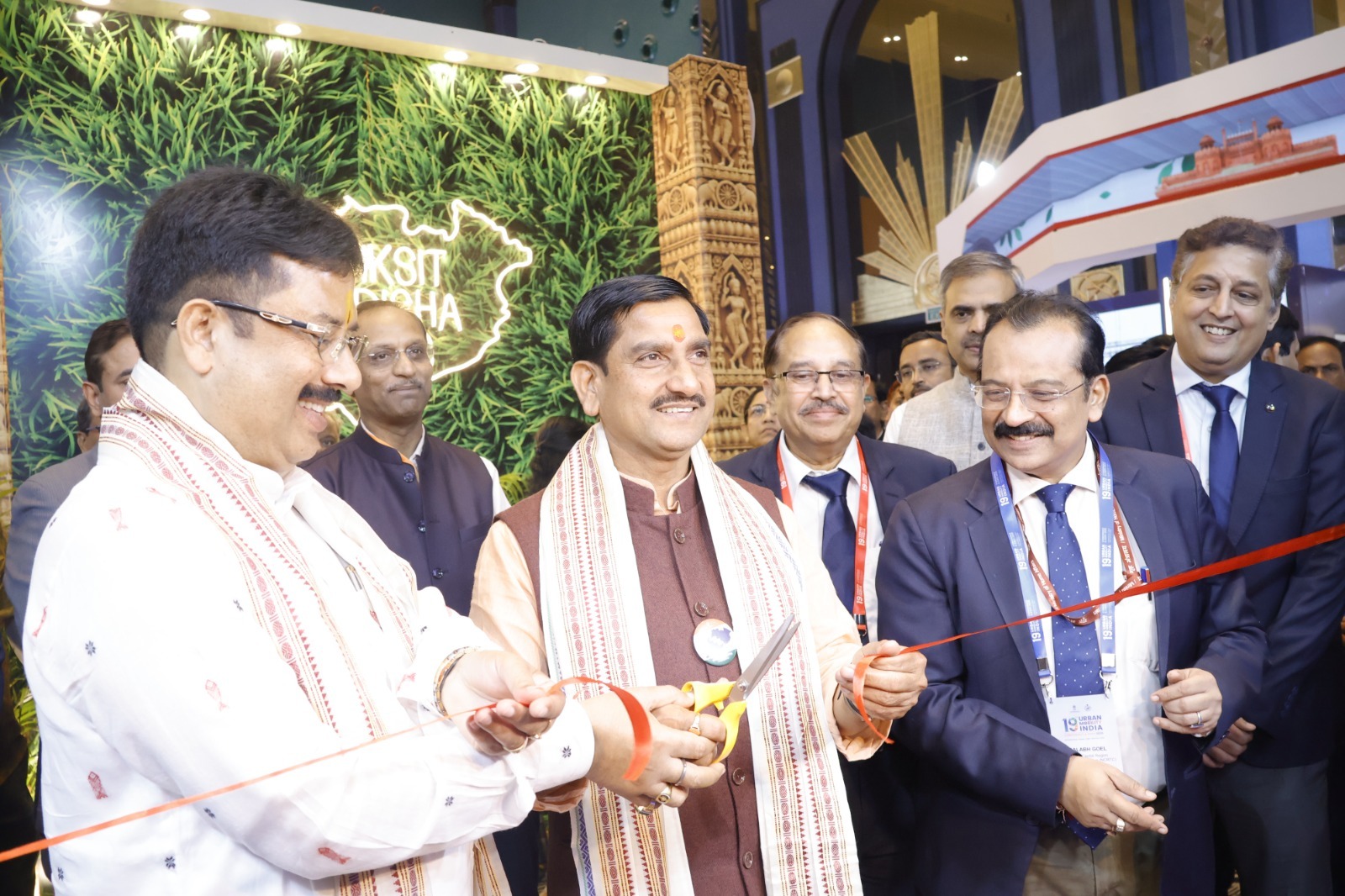
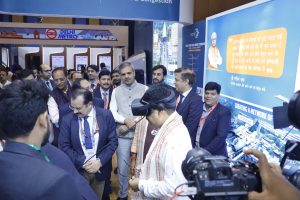
Bhubaneswar, October 23, 2026: The NCRTC Urban Mobility India 2026 exhibition opened in Bhubaneswar as Union Minister of State for Housing and Urban Affairs Shri Tokhan Sahu inaugurated the National Capital Region Transport Corporation’s (NCRTC) exhibition stall.
The inauguration took place during the 19th Urban Mobility India (UMI) Conference and Expo 2026, being held on October 23–24 in Bhubaneswar, Odisha.
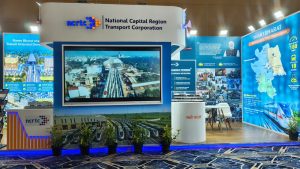
Through its exhibition, NCRTC is showcasing Namo Bharat, India’s first regional rail system. The display highlights modern rail technology, seamless transport integration and sustainable urban development.
The event also provides a platform to explore how regional rapid transit systems can transform connectivity between India’s growing cities.
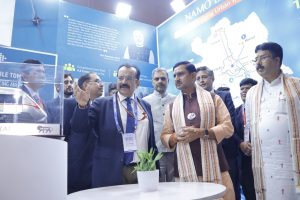
Union Minister Tokhan Sahu Visits NCRTC Exhibition
During the inauguration, Shri Tokhan Sahu was accompanied by several senior government officials and dignitaries.
Among them were Dr. Krushna Chandra Mahapatra, Odisha’s Minister for Housing and Urban Development and Public Enterprises, and Shri Satendra Singh, Secretary, Department of Urban Development, Ministry of Housing and Urban Affairs.
Shri Shalabh Goel, Managing Director of NCRTC, welcomed the dignitaries alongside the corporation’s senior management.
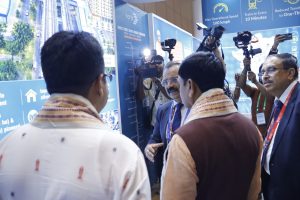
The NCRTC team presented the commuter-friendly features of Namo Bharat and explained how the regional rail system is transforming travel across the National Capital Region.
Namo Bharat Records Over 4.5 Crore Passenger Journeys
One of the major highlights of the NCRTC Urban Mobility India 2026 exhibition is the performance of the Namo Bharat regional rail system.
Since the launch of operations on its priority section in October 2023, Namo Bharat has improved regional connectivity along the Delhi–Ghaziabad–Meerut corridor.
According to NCRTC, the corridor has recorded more than 4.5 crore passenger journeys, with over one lakh commuters using the service daily.
The regional rail system aims to provide faster, safer and more comfortable journeys for passengers travelling between major urban centres.
Moreover, its modern infrastructure and passenger-focused services demonstrate the potential of high-speed regional connectivity in India.
An 82-Kilometre Regional Rail Corridor
The Delhi–Ghaziabad–Meerut Namo Bharat corridor extends across 82 kilometres and includes 15 stations.
The exhibition also highlights the integration of Meerut Metro services with Namo Bharat infrastructure.
This shared infrastructure approach can improve connectivity while supporting more efficient use of transport assets.
As a result, the project offers a model for integrating regional and local urban mobility systems.
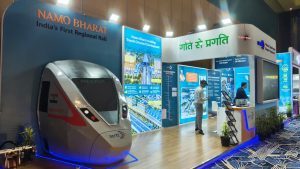
Nearly 2,900 Kilometres of Potential Namo Bharat Corridors Identified
The growing interest in Namo Bharat extends beyond the Delhi–Meerut region.
According to the information presented by NCRTC, nearly 2,900 kilometres of potential Namo Bharat corridors have been identified across major regional clusters in India.
These potential corridors could strengthen connectivity between expanding metropolitan areas and nearby economic centres.
The Economic Survey 2025–26 has also highlighted the importance of regional mobility networks in supporting the development of interconnected economic regions.
However, the identified corridors represent potential future development and should not be interpreted as projects already approved for construction.
NCRTC Highlights Transit-Oriented Development
Another important focus of the NCRTC Urban Mobility India 2026 exhibition is Transit-Oriented Development (TOD).
TOD connects transport infrastructure with planned residential, commercial and mixed-use development around transit stations.
Instead of developing railway stations in isolation, this approach encourages coordinated urban planning.
Consequently, residents may benefit from improved accessibility to workplaces, housing, public services and commercial areas.
Planned Development Around Namo Bharat Stations
NCRTC is highlighting proposed development opportunities around Duhai Namo Bharat station and Sarai Kale Khan.
The exhibition also features planned transit-oriented townships at Harnandipuram and New Meerut.
These proposals demonstrate how regional rail infrastructure can support sustainable urban expansion.
In addition, integrated transport and land-use planning can help create more accessible and liveable communities.
AR and VR Technologies Take Centre Stage
Visitors to the NCRTC exhibition are also getting an opportunity to explore how advanced digital technologies support regional rail infrastructure.
The corporation is demonstrating the use of Augmented Reality (AR) and Virtual Reality (VR) in the development and maintenance of the Namo Bharat system.
Interactive models, visual displays and technical presentations provide insights into the project’s infrastructure and operations.
These technologies can help engineers and transport professionals visualise infrastructure, improve planning and support maintenance activities.
Furthermore, they reflect the growing role of digital innovation in India’s transport sector.
Bhubaneswar Hosts Urban Mobility India 2026
The 19th Urban Mobility India Conference and Expo is being jointly organised by the Ministry of Housing and Urban Affairs, Government of India, and the Government of Odisha.
This year’s theme is “Urban Accessibility and Liveability in Digital Age.”
The conference focuses on improving urban accessibility, integrating transport networks and using emerging technologies to enhance the quality of city life.
It brings together policymakers, transport authorities, technology providers, industry representatives and urban development experts.
For Odisha, hosting the national conference creates an opportunity to engage with emerging transport technologies and sustainable urban planning practices.
What Namo Bharat Means for India’s Mobility Future
The NCRTC Urban Mobility India 2026 exhibition demonstrates how modern regional rail systems can contribute to India’s long-term infrastructure development.
Namo Bharat combines faster regional connectivity with integrated transport planning and commuter-focused services.
Meanwhile, the emphasis on transit-oriented development highlights the importance of linking mobility investments with housing, employment and urban growth.
As India’s cities expand, such integrated approaches could play an increasingly important role in creating connected and sustainable metropolitan regions.
The exhibition in Bhubaneswar reinforces a broader vision: India’s future mobility systems must not only move people faster but also make cities more accessible, efficient and liveable.
Source: NCRTC press information
