

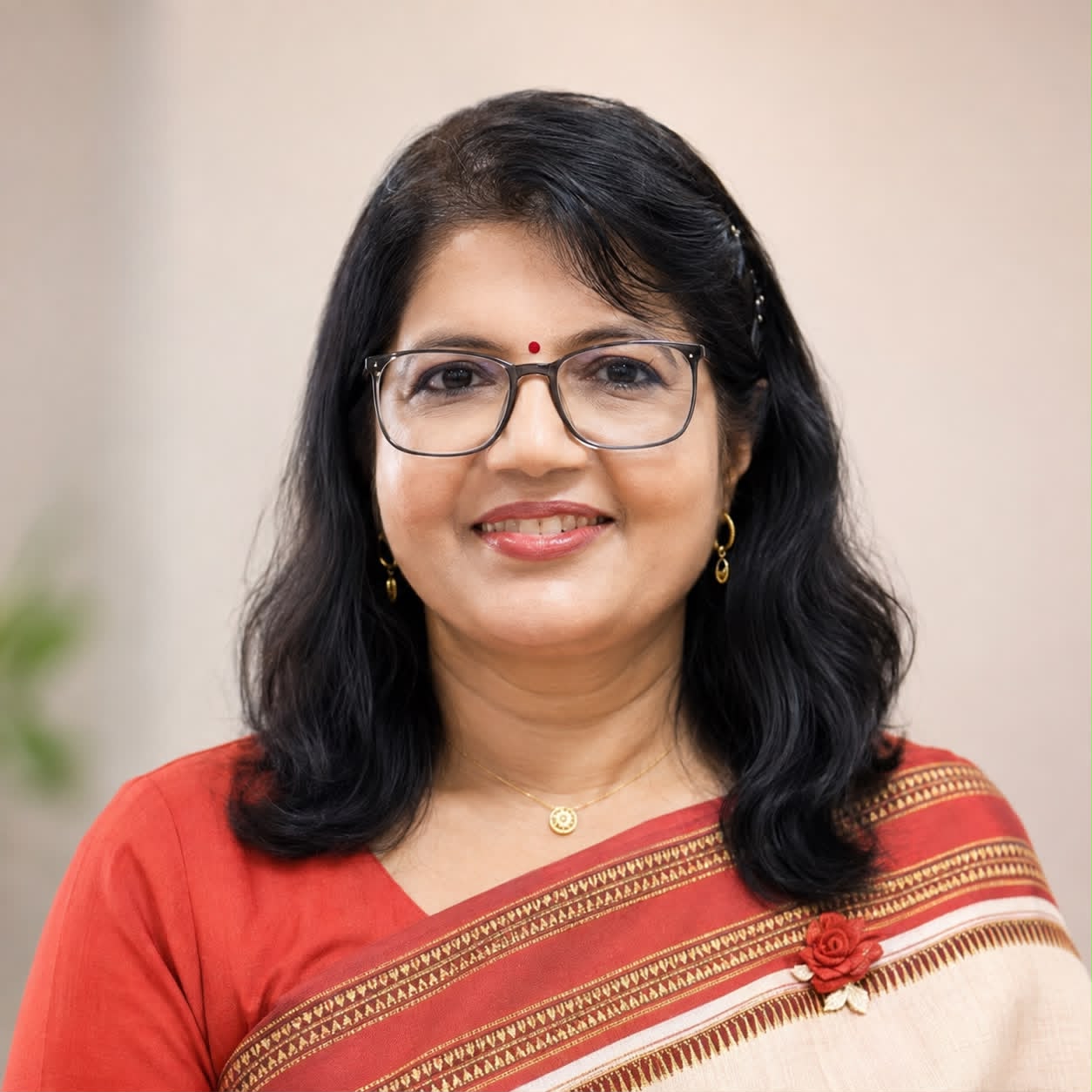
When Dr. Manisha Acharya started a WhatsApp group during the pandemic to help women entrepreneurs whose businesses were buckling under the crisis, she wasn’t building an institution—she was responding to an emergency. Members began helping each other find markets, access resources, and navigate funding in real time, and what started as information-sharing quickly outgrew its original purpose. The turning point, as she describes it, came when she recognised that these women didn’t need temporary crisis support; they needed a structured ecosystem that could walk with them through every stage of the entrepreneurial journey. That realisation crystallised into WEneurs Forum, founded on a philosophy of mentorship, incubation, acceleration, networks, markets, and capital delivered as a continuous system rather than scattered interventions. Registered in Bhubaneswar on August 12, 2021, WEneurs went on to become the first incubator and accelerator from Eastern India dedicated exclusively to women entrepreneurs, and remains, in Acharya’s words, the only exclusively women-focused incubator and accelerator operating in Odisha today.
Acharya brings roughly two decades of experience spanning innovation, incubation, startup mentoring, corporate roles, and life sciences research to this work. She holds an M.Sc and PhD along with a Chevening Fellowship from the University of Oxford, and has previously led incubators in both private and university systems, including CEO roles at Indigram Labs Foundation in New Delhi, CII Utkal at Utkal University, and KIIT TBI. Her stint at Indigram Labs, in particular, is where she first confronted the specific structural barriers facing women founders—an experience that shaped her conviction that women are not merely beneficiaries of entrepreneurship policy but its builders. She has also served as Project Director at Ernst & Young for the Startup Odisha Project, contributing directly to the policy architecture, funding networks, and international collaborations that now underpin the state’s startup ecosystem.
That dual vantage point—having shaped policy from within government-industry partnerships and now working hands-on with founders in Bhubaneswar—gives her assessment of Odisha’s startup landscape particular weight. She sees a state that has assembled the core ingredients for a thriving ecosystem: talent, institutions, technology, government backing, and an entrepreneurial culture that is visibly emerging. But she is equally clear-eyed about the gap that remains. The next challenge, she argues, is not creating more startups but converting them into scalable, investment-ready businesses, and for women founders specifically, that gap is sharper still. She wants to see stronger bridges built between Odisha’s universities, industries, investors, and startups so that innovation travels beyond institutional walls into commercially viable enterprises, paired with an ecosystem that supports women from a girl’s first entrepreneurial spark through to her building a high-growth company that creates jobs for others. If that continuum is built, she believes, Odisha can move from being a promising startup ecosystem to one of India’s leading innovation hubs.
On the question of what actually differentiates WEneurs from corporate, foundation-led, or university incubators, Acharya offers a nuanced answer rooted in structural realism rather than sentiment. Corporate and foundation incubators, she notes, prioritise scalability, investment readiness, and measurable outcomes; university incubators focus on translating research into viable ventures and helping founders cross over from academia into business. At WEneurs, there is an additional layer of complexity, since many of the women she works with are simultaneously managing entrepreneurship alongside family and social responsibilities, often with constrained access to networks and capital—circumstances that demand a more holistic style of mentoring. Her core operating principle is that incubation cannot follow a single formula: the job is to identify where a founder actually stands, understand the real barrier holding her back, and connect her with the precise mix of knowledge, mentors, markets, technology, capital, and confidence she needs next—whether she is a university researcher, a tech startup founder, or a micro-enterprise owner.
This granular, sector-specific thinking is most visible in her approach to deep-tech ventures, where she is candid that great technology does not automatically translate into a great business. Deep-tech founders, in her experience, often excel at innovation but face a steep climb when it comes to customer discovery, product-market fit, IP strategy, regulatory navigation, business modelling, and access to the right investors. At WEneurs, this is addressed through what she calls the “innovation-to-market bridge,” a framework aimed at strengthening both the venture and the entrepreneur simultaneously—helping founders understand their customers, build commercially viable propositions, protect their intellectual property, become investment-ready, and connect with industry partners. Because deep-tech ventures typically carry long gestation periods and government grants alone rarely cover the distance, WEneurs also runs a dedicated “Bridge to Connect” program that links startups directly with investors. Her guiding philosophy here is disarmingly simple: a scientist shouldn’t have to stop being a scientist in order to become an entrepreneur; instead, the ecosystem should be built around her so her innovation can travel successfully from lab to market.
That philosophy extends into her published work. Her earlier book, Seed to Sapling: The Incubator Way, has served as a reference text for stakeholders across the startup ecosystem, particularly those involved in incubation architecture. Her more recent book, Bharat Ki Beti: From Lab to Corner Office, profiles sixteen women entrepreneurs from STEM backgrounds, written with the explicit purpose of encouraging more people from research backgrounds to pursue entrepreneurship as a viable path.
Acharya’s contributions have been recognised through multiple channels—she is a recognised mentor with Startup India’s “Mentor on Road” initiative and with Google’s Level Up acceleration program, a certified Master Trainer by Innompics, and was named Best CEO in the Incubator category by the Indian Council of Food & Agriculture (ICFA). She also received the Miss Innovation Award at the 5th World Innompics Games in 2021. Most recently, she appeared as a panel speaker at the Purvoday Mind Conclave 2026 hosted by CSIR-IMMT in Bhubaneswar, discussing innovation and the evolving startup ecosystem—consistent with her continued positioning as one of Odisha’s most visible voices on entrepreneurship and inclusive economic growth.
For Acharya, the mission driving WEneurs Forum has never been confined by geography. While the organisation now works with women entrepreneurs across India, she describes the larger purpose behind building it from Odisha in unambiguous terms: to prove that women-led innovation from the East can create impact locally, nationally, and globally.