

For Odisha, the significance of a major investment announcement extends beyond its headline value. The bigger question is what it can build within the state: manufacturing capability, skilled employment, stronger local businesses and access to international markets.
Odisha’s latest investment outreach in the United Arab Emirates brings that question into focus.
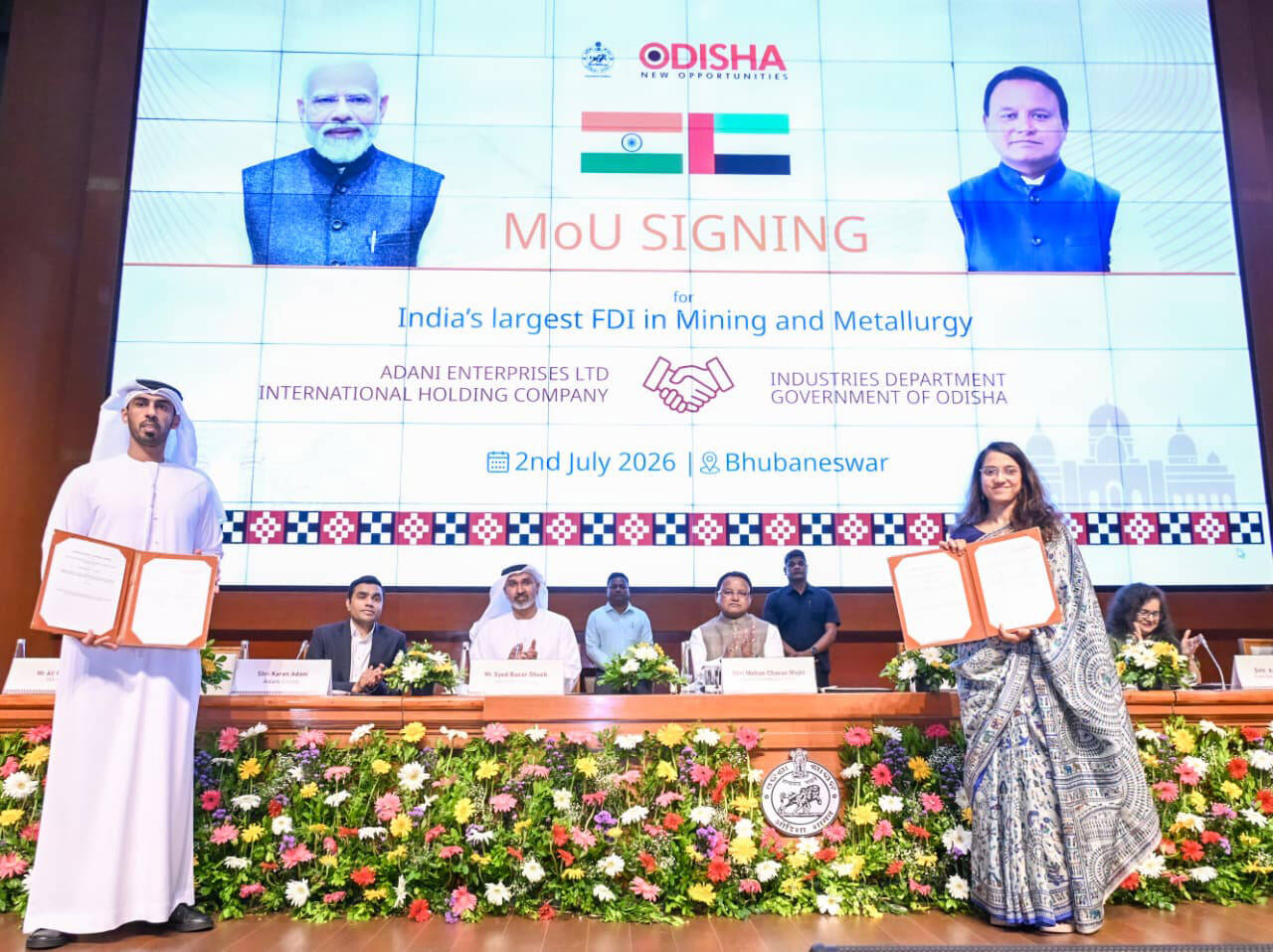
An agreement involving the state government, Abu Dhabi-based International Holding Company (IHC) and Adani Group envisages exploring 14 projects with proposed investments of approximately ₹2.1 lakh crore. The development marks an expansion of the partnership established through an earlier aluminium-project agreement. Investment outreach details.
A Broader Industrial Ambition
The proposed areas include downstream metals, critical minerals, rare earths, chemicals, renewable-energy equipment and industrial infrastructure. Healthcare, tourism, skills and sports infrastructure also feature in the wider discussions.
Taken together, these priorities suggest an ambition to develop connected industries around Odisha’s existing strengths. A manufacturing facility needs transport, reliable utilities, technical services and trained people. Building these connections can create opportunities for enterprises beyond the principal investor.
That is where the long-term value of an investment programme begins to emerge.
The Aluminium Project at Its Core
An important foundation is the ₹1.08 lakh crore greenfield aluminium project covered by the July 2026 agreement between Odisha, Adani Enterprises and IHC. Aluminium project announcement.
The proposed 50:50 venture envisages a refinery, smelter, captive power plant and downstream manufacturing park. Announced annual capacities include four million tonnes of alumina, two million tonnes of aluminium and one million tonnes of downstream products. Project structure and capacity.
The industrial logic is to connect stages of production rather than treat them as isolated activities. Processing materials and manufacturing finished or intermediate products within the state could help retain more economic value locally.
What the Employment Numbers Mean
The wider 14-project proposal has been associated with potential employment for approximately 8.68 lakh people. This is a projection linked to the proposed programme, rather than a count of jobs already created. Employment projection.
For young people, the practical questions concern which skills will be needed, when recruitment may begin and how local training institutions can prepare candidates.
Construction employment, operational roles and opportunities in supporting businesses develop at different stages. Converting investment interest into accessible careers will therefore require coordination between investors, training providers and the government.
Opportunities Beyond Large Companies
A project of this scale can potentially generate demand for maintenance, transport, fabrication, equipment supply and other services.
For local entrepreneurs, participation will depend on their ability to meet procurement requirements, maintain quality and deliver reliably. Supplier development and clear information about business opportunities would help smaller firms prepare.
The useful measure of success will be how widely the benefits extend across the state’s economy.
The Next Chapter Is Execution
These announcements remain proposals requiring further development and implementation. Their economic impact will depend on financing, project readiness, necessary approvals, infrastructure and responsible management of environmental and community concerns.
Odisha’s UAE outreach establishes an ambitious direction. The work ahead is to translate that ambition into productive assets and lasting opportunities.
As the 2nd CMD Roundtable 2026 approaches, its theme, “Beyond Business – Towards Nation Building,” provides a relevant setting for this discussion: how can major investments create enduring value for the people and businesses around them?
By Snigdha Mishra