

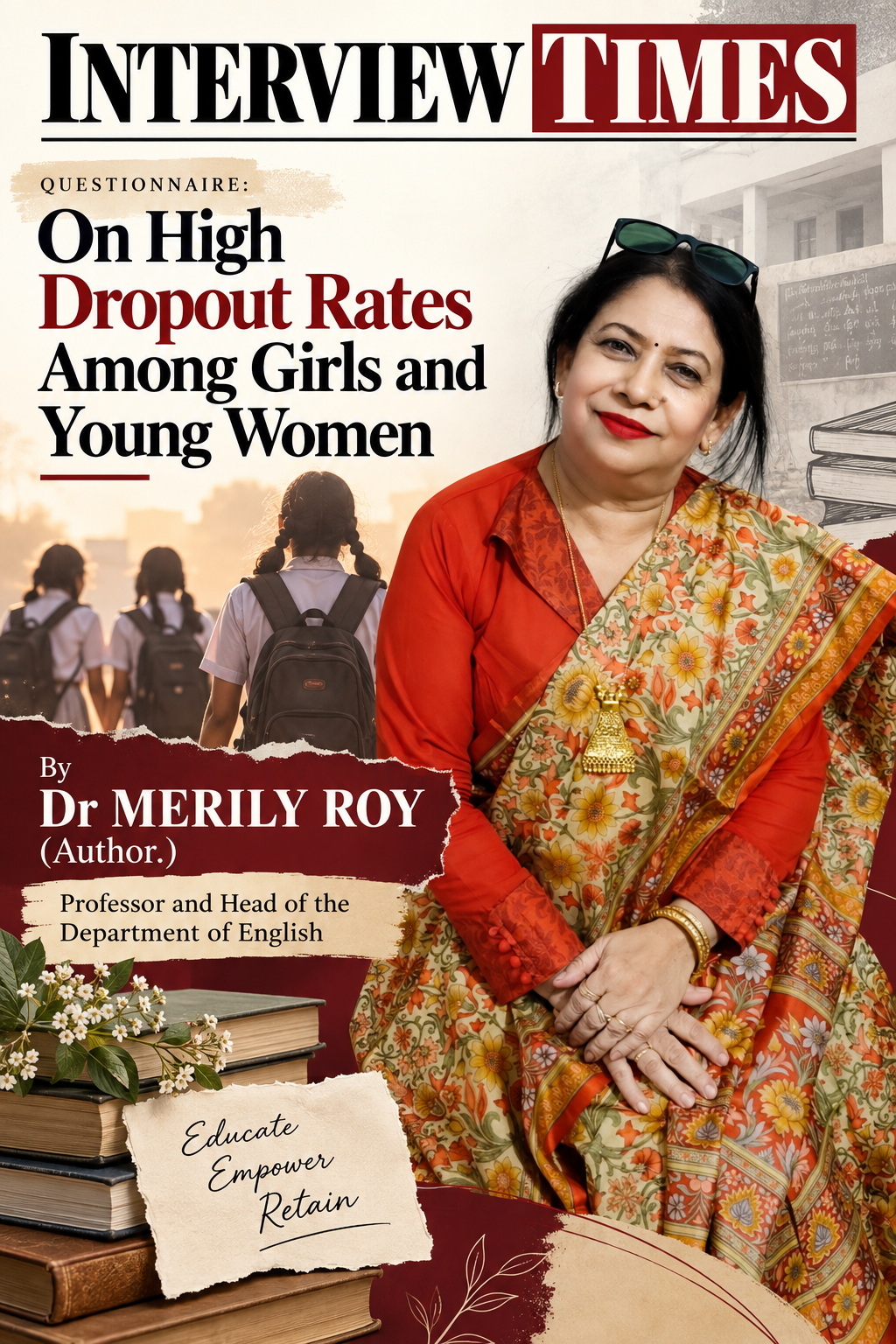
1. What, according to you, are the major reasons behind the high dropout rates in the education system, particularly among girls and young women?
Answer: The major reasons are multi-dimensional. The primary factors include financial constraints, where families prioritize boys’ education; patriarchal mindset that sees girls’ education as unnecessary; lack of safe transport and infrastructure like separate toilets in schools; long distance to secondary schools and colleges; lack of female teachers; and poor academic performance due to lack of support at home. These factors together create an environment where leaving education seems like the only option.
2. How do financial difficulties and family responsibilities influence a girl’s decision to discontinue her education?
Answer: Financial difficulties play a direct role. When a family has limited income, they often invest in the son’s education. Girls are seen as a financial burden, especially where dowry system exists. Simultaneously, girls are expected to handle household chores, take care of younger siblings, elderly parents, and work in farms or family businesses. The pressure of both earning and domestic responsibility leaves no time or energy for studies, forcing them to drop out.
3. Do you think social expectations, early marriage, safety concerns, or gender-based responsibilities contribute significantly to girls dropping out? Why?
Answer: Yes, they contribute very significantly. In many communities, social expectation is that a girl’s ultimate role is to be a wife and mother, not a professional. Early marriage is one of the biggest reasons – once married, in-laws often do not allow continuation of education. Safety concerns during travel to school/college, fear of eve-teasing and harassment, and lack of safe hostels force parents to stop their daughters’ education. Gender-based responsibilities like the belief that “girls should not stay out late for coaching/classes” also restrict them.
4. What are some of the positive and negative consequences of leaving education before completing school, college, or higher studies?
Answer:
Negative consequences: Financial dependency on husband/family for life, lack of confidence and decision-making power, limited employment opportunities restricted to low-paying jobs, early motherhood and health issues, inability to support children’s education, and increased vulnerability to domestic violence and exploitation.
Positive consequences (from family’s orthodox perspective): Though not truly positive for the girl, families perceive that she will learn household duties better, will get married earlier, and will save money on education fees. However, from the girl’s perspective, there are no long-term positive consequences.
5. How can education help women become financially independent, confident, and better equipped to make decisions about their own lives?
Answer: Education is the most powerful tool for empowerment. It gives women professional skills to get a job and earn their own income, which brings financial independence. It builds confidence, knowledge of rights, and awareness. An educated woman can make informed decisions about her health, marriage, children, and finances. She can stand against injustice, participate in family and community decisions, and become a role model for other girls, breaking the cycle of dependency.
6. What changes can schools, colleges, governments, families, and communities make to encourage girls to continue their education?
Answer:
– Schools/Colleges: Provide safe transport, separate toilets, sanitary pad facilities, female teachers, scholarships, and flexible timings.
– Government: Increase scholarships like Beti Bachao Beti Padhao, provide free bicycles, hostels, strict laws against child marriage, and awareness campaigns.
– Families: Change mindset to treat sons and daughters equally, share household work, and support daughters’ career dreams.
– Community: Stop stigmatizing educated girls, create safe environments, and celebrate girls who complete their education as role models.
7. As a woman, what message would you like to share with girls and young women who are considering leaving their education because of financial, social, or family challenges?
Answer: My message is: Please do not give up on your education. I understand your challenges are real and very difficult. But education is the only property no one can ever take away from you. It is your strength for life. Financial problems today can be solved with scholarships, government help, and part-time work, but if you leave education now, you may regret it for a lifetime. Talk to your teachers, a supportive elder, or a counselor. Your education is not just for a job, it is for your self-respect and freedom. You deserve to dream and to fulfill those dreams.
By Dr MERILY ROY( Author.) Professor andHead of the department of English