

Diversifying Sources. Stronger Energy Security
US emerges as a major supplier as India diversifies beyond traditional Gulf sources amid disruptions in West Asia
A SUPPLY CHAIN UNDER PRESSURE
India’s liquefied petroleum gas (LPG) supply chain is undergoing a significant shift in 2026. The country imports around 60% of its LPG consumption, and historically, nearly 90% of those imports came from the Middle East, leaving supplies highly exposed to disruptions around the Strait of Hormuz.
THE UNITED STATES MOVES TO THE FRONT
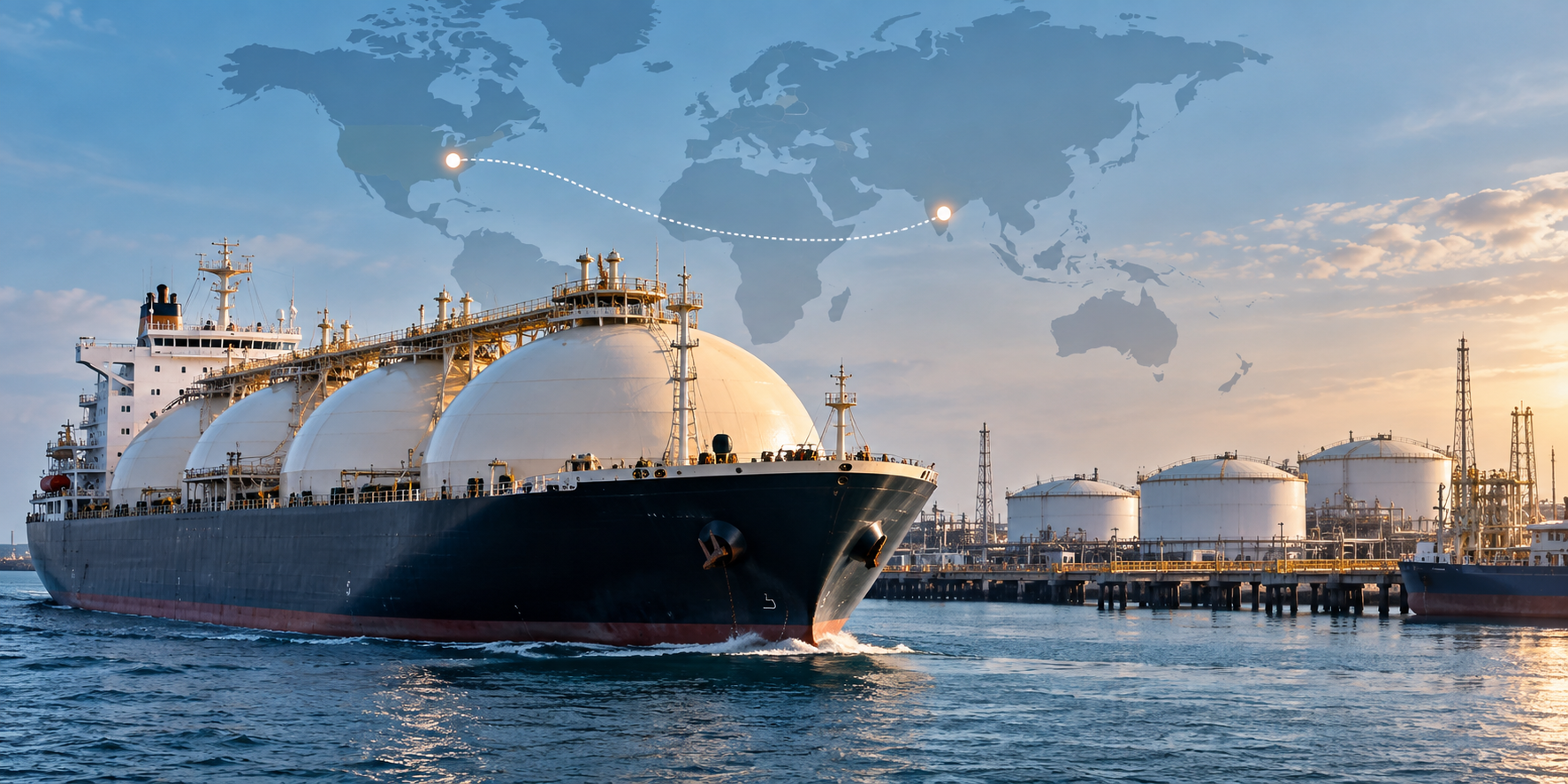
The United States has rapidly emerged as a major source of LPG for India. According to Kpler data cited by The Indian Express, US supplies accounted for 53% of India’s LPG imports between March and August 2026, compared with about 7.9% during the preceding September-February period. US LPG shipments during the six-month period rose to around 3.78 million tonnes.
GULF DOMINANCE TAKES A HIT
The shift has reduced the share of traditional suppliers such as the UAE and Qatar. The UAE’s share of India’s LPG imports fell to 13.4% during March-August, from 37.8% in the previous six months, while Qatar’s share declined to 5.7% from 21.1%. Overall LPG imports also fell sharply as disruptions affected shipping through the region.
A NEW LPG SUPPLY LANDSCAPE
India’s LPG sourcing strategy is therefore moving from heavy dependence on Gulf routes toward a more diversified international supply network. The US is playing a much larger role, while alternative suppliers and domestic production are helping provide additional flexibility. The evolving map reflects a broader effort to make India’s energy supply chain more resilient to geopolitical and shipping disruptions.
A STRATEGIC MOVE, NOT JUST A TEMPORARY FIX
India’s increased reliance on US LPG is supported by a structured agreement signed in 2025. Indian public-sector oil companies agreed to import approximately 2.2 million tonnes per annum of LPG from the US Gulf Coast for 2026, equivalent to close to 10% of India’s annual LPG imports.
MORE SUPPLIERS ENTER THE PICTURE
The changing supply map extends beyond the US. Indian buyers have also sourced LPG from countries including Argentina, Chile, France and the Netherlands, while Iran has re-entered the import basket. This broader sourcing strategy is reducing dependence on a small group of Gulf suppliers.
THE COST OF DIVERSIFICATION
Diversification brings greater flexibility, but it can also increase costs. Longer shipping distances from the US and other alternative suppliers can raise freight expenses and landed LPG prices, particularly when supplies need to be secured quickly through spot purchases.
INDIA’S DOMESTIC NETWORK REMAINS CRUCIAL
The scale of the domestic LPG market makes supply security especially important. Government data shows had around 327.75 million active domestic LPG connections as of September 1, 2026, highlighting the enormous consumer base that depends on the fuel.
A MORE RESILIENT FUTURE
With a wider supplier base, long-term agreements and a stronger domestic network, India is reshaping its LPG supply strategy to enhance energy security. While diversification may bring higher costs in the near term, it offers greater stability and reduces the risks of over-dependence on any single region.
KEY TAKEAWAY
India’s shifting LPG supply map reflects a clear strategy — reduce dependence on a few Gulf suppliers, strengthen ties with new partners like the US, and build a more resilient energy supply chain to meet the needs of its growing economy and consumers.