
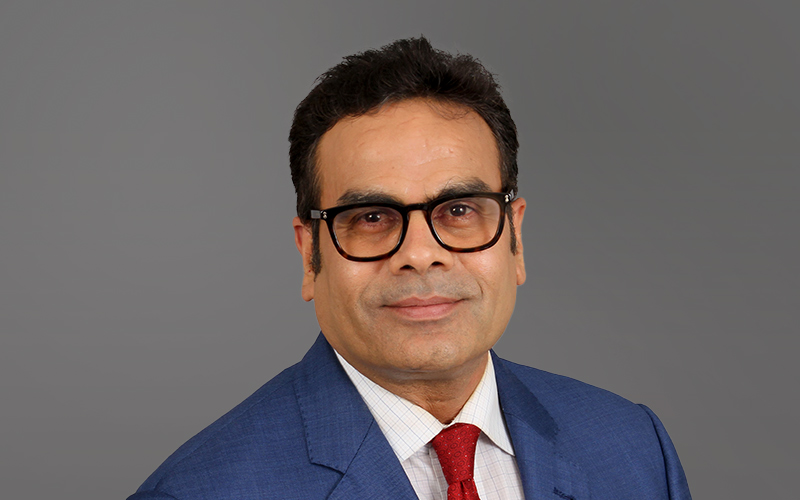
From three decades of institutional experience to the responsibility of shaping one of India’s most influential technology companies, the Infosys CEO Designate represents a leadership transition built on continuity, transformation and the changing future of global technology services.
By – Snigdha Mishra
Bengaluru | November 1, 2026 | The Interview Times
 In an industry where technological disruption often demands constant reinvention, leadership is measured not merely by the ability to anticipate change, but by the capacity to guide people and institutions through it.
For Ashiss Kumar Dash, that responsibility is entering an important new chapter.
After more than three decades with Infosys, Dash has been chosen to become the company’s next Managing Director and Chief Executive Officer, marking a significant leadership transition at one of India’s most recognised technology enterprises.
Announced on July 23, 2026, the decision positions Dash to succeed Salil Parekh on April 1, 2027, following the completion of Parekh’s second term. The appointment, recommended by the Board’s Nomination and Remuneration Committee, is proposed for five years and remains subject to shareholder approval.
The significance of this decision extends beyond a change in executive leadership.
At a time when artificial intelligence is reshaping business models, enterprise technology and the global IT services industry, Infosys has placed its confidence in a leader whose professional journey has been closely intertwined with the company’s own evolution.
For Dash, the appointment represents the culmination of years spent understanding customers, managing complex operations, developing talent and navigating technological transformation.
For Infosys, it represents a strategic choice: to prepare for the future through a leader who understands the institution from within.
Three Decades of Experience, One Defining Opportunity
The story of Ashiss Kumar Dash is rooted in the idea that leadership is built through experience rather than acquired through designation alone.
An alumnus of the Indian Institute of Technology, Kharagpur, Dash has spent over three decades at Infosys, progressing through responsibilities spanning client-facing businesses, technology delivery, global operations and enterprise transformation.
His professional development reflects the evolution of India’s IT services industry itself.
Over the years, the sector has moved from traditional technology outsourcing towards digital transformation, cloud-based solutions, intelligent automation and increasingly sophisticated artificial intelligence applications.
For senior leaders operating within this environment, success requires more than technological knowledge. It demands an understanding of customer expectations, international markets, commercial performance, organisational culture and the changing nature of work.
Dash’s career has brought together these different dimensions of business leadership.
Rather than being associated with a single functional specialisation, his experience covers the broader responsibilities involved in managing technology businesses at a global scale.
This diversity of exposure is particularly relevant as Infosys prepares for an era in which technological capability, business strategy and human expertise must operate in closer alignment.
From Global Operations to Enterprise Leadership
Before being named CEO Designate, Dash served as Executive Vice President and Global Head of Services, Utilities, Resources, Energy and Enterprise Sustainability.
His responsibilities have included overseeing a diverse portfolio serving major international enterprises across multiple industry verticals.
The portfolio’s scope has required an understanding of industries that are themselves experiencing significant transformation.
Energy companies are adapting to changing sustainability requirements. Utilities are modernising infrastructure and customer systems. Enterprises are reassessing operating models, investing in digital platforms and exploring new applications of artificial intelligence.
Leading technology services for such organisations involves far more than delivering software.
It requires the ability to connect business problems with technological solutions while managing teams, customer relationships, operational performance and long-term commercial objectives.
Infosys credits Dash with consistently delivering business performance, supporting complex client transformations and developing high-performing global teams.
These responsibilities have provided him with direct exposure to the challenges that will increasingly define the company’s future.
His appointment therefore reflects not only professional seniority, but also experience in areas central to the next phase of enterprise technology.
An Internal Appointment with Strategic Significance
Leadership succession at a company of Infosys’s scale is rarely a routine administrative decision.
It influences the confidence of employees, customers, investors and partners, while shaping expectations about future strategy.
In selecting Dash, the Infosys Board has opted for a leader with extensive knowledge of the organisation’s culture, operating model and client relationships.
The decision is particularly noteworthy because Dash has developed his career within the company rather than being recruited from an external organisation to lead it.
Internal succession can offer several advantages.
A leader who has worked across business functions and international markets may enter the chief executive role with a deeper understanding of institutional strengths, operational constraints and organisational expectations.
Such familiarity can support continuity during a period of technological uncertainty.
At the same time, internal leadership brings its own responsibility: preserving the strengths of an established institution without allowing familiarity to limit innovation.
For Dash, the challenge will be to demonstrate that institutional knowledge can serve as a foundation for meaningful transformation.
The task ahead is not simply to continue an existing strategy, but to ensure that Infosys remains competitive as the global technology services landscape changes.
The Salil Parekh Legacy and the Importance of Continuity
Dash’s forthcoming appointment also marks the approaching conclusion of a significant chapter under Salil Parekh, who has led Infosys since January 2018.
During Parekh’s tenure, the company strengthened its position in digital services, expanded its capabilities and developed a more defined approach to artificial intelligence-led transformation.
In the official succession announcement, Parekh highlighted the company’s growth from approximately $10 billion to more than $20 billion in revenue during his leadership.
That expansion provides an important backdrop to the transition.
Dash will inherit an enterprise with a substantial global customer base, an established international presence and a workforce operating across diverse technological and industry domains.
However, the competitive environment he will enter differs considerably from the one that existed when Parekh assumed leadership.
Artificial intelligence is creating new opportunities while simultaneously challenging traditional service delivery and pricing models.
Enterprise customers are seeking greater productivity, faster implementation and measurable business outcomes.
Against this background, the transition from Parekh to Dash has been designed to provide time for coordination and preparation before the scheduled handover.
The period leading to April 2027 will be important in maintaining organisational stability while preparing for the next phase of strategic execution.
Leading Infosys Through the Artificial Intelligence Transformation
Perhaps the most consequential responsibility awaiting Dash is the challenge of leading Infosys through the rapid expansion of artificial intelligence.
AI is no longer a peripheral technological development.
It is becoming an increasingly important influence on how businesses design products, manage information, serve customers and organise work.
For the IT services industry, this creates a fundamental shift.
Clients are moving beyond experimentation and increasingly evaluating how AI can deliver productivity improvements, cost efficiencies and competitive advantages.
Technology companies must therefore demonstrate not only the ability to develop and implement AI solutions, but also the capacity to integrate those solutions responsibly into complex business environments.
Infosys has already identified AI-led transformation as an important strategic priority.
Dash’s experience in enterprise transformation, operational management and customer-facing businesses could prove valuable in translating that strategy into measurable outcomes.
Yet the transition will require more than technological investment.
It will involve decisions about workforce capabilities, reskilling, service innovation, commercial models and the relationship between human expertise and intelligent systems.
For a company employing hundreds of thousands of professionals, the future of AI is also inseparable from the future of work.
Dash’s leadership will be tested by how effectively Infosys can develop new capabilities while sustaining the trust of its people and customers.
Sustainability, Energy and a Broader Understanding of Business
An important dimension of Dash’s professional experience is his work across energy, resources and enterprise sustainability.
These areas have become increasingly relevant as organisations respond to climate-related expectations, changing regulatory environments and the need for more efficient operations.
Technology plays a growing role in helping businesses measure resource consumption, modernise infrastructure, manage data and improve decision-making.
Through his responsibilities at Infosys, Dash has engaged with these wider questions of enterprise transformation.
He has also contributed to discussions on energy transition and sustainable development through international forums, including the World Economic Forum and the United Nations Global Investors for Sustainable Development Alliance.
This exposure adds another dimension to his leadership profile.
It reflects an understanding that technological progress cannot be viewed independently of economic, environmental and social priorities.
For a global technology company, this perspective may become increasingly valuable as customers seek solutions that combine operational performance with responsible business practices.
Education, Global Exposure and Leadership Development
Dash’s academic and professional development reflects a combination of technical education and international management exposure.
Following his education at IIT Kharagpur, he completed the Global Leadership Program at Stanford University and the Senior Executive Program at London Business School.
These experiences complement a career spent working across international markets and diverse business environments.
His professional responsibilities have also extended into corporate governance and educational initiatives.
Dash serves on the boards of Infosys Public Services and MRE Consulting LLC, both Infosys subsidiaries.
He is also a trustee of Infosys Foundation USA, which supports initiatives related to computer science education, maker learning and digital skills development.
These associations illustrate the breadth of his professional engagement beyond day-to-day business operations.
For a leader preparing to guide a global technology enterprise, exposure to governance, education and social development can contribute to a wider understanding of institutional responsibility.
The Human Dimension of Corporate Leadership
Leadership in the technology industry is frequently discussed through the language of revenue, strategy, innovation and market performance.
Yet large organisations ultimately depend on people.
Their success is shaped by employees who develop solutions, teams that maintain customer relationships and managers who translate strategic objectives into everyday decisions.
As Infosys prepares for its next leadership chapter, Dash will be responsible for guiding an organisation with more than 325,000 employees serving customers across international markets.
This responsibility makes organisational culture especially important.
Employees will look for clarity about the company’s direction, the opportunities emerging from technological change and the capabilities required to remain relevant.
Customers will expect continuity in service delivery alongside innovation.
Investors will assess whether strategic ambitions translate into sustainable performance.
For Dash, effective leadership will therefore require a balance between commercial priorities and the human realities of organisational transformation.
His record of working across different business functions and building global teams offers relevant experience, although the demands of the chief executive role will be broader still.
A Leadership Transition That Reflects India’s Global Technology Ambitions
Infosys occupies an important place in the story of India’s emergence as a global technology services centre.
Over several decades, Indian IT companies have developed international businesses, created large-scale employment opportunities and demonstrated the ability of Indian enterprises to compete in sophisticated global markets.
The next phase of this journey is likely to be shaped by artificial intelligence, advanced digital engineering, cybersecurity, cloud technologies and new models of enterprise transformation.
In this environment, leadership decisions at major Indian technology companies carry significance beyond individual organisations.
They influence how India’s technology industry positions itself within a rapidly changing global economy.
Dash’s appointment reflects the continued importance of leadership talent developed within India’s corporate institutions.
It also raises an important question for the industry: how can established technology companies preserve the experience that built their success while developing the agility required for the future?
The answer will depend on innovation, organisational learning and the ability to respond to changing customer expectations.
The Road to April 2027
The months ahead will be a period of preparation for Infosys and its CEO Designate.
Until the scheduled transition, Salil Parekh will continue to lead the company, while Dash works towards assuming the responsibilities of Managing Director and CEO.
The leadership change is expected to become effective on April 1, 2027, subject to the required shareholder approval.
Once in office, Dash will face a demanding agenda.
He will need to sustain customer confidence, strengthen the company’s competitive position, support its AI strategy and maintain a culture capable of adapting to technological change.
The wider industry will also be watching how Infosys responds to evolving demand, economic uncertainty and the growing influence of automation on technology services.
Success will not be determined by the announcement of a leadership transition.
It will be measured over time through strategic execution, organisational performance, customer outcomes and the company’s ability to create lasting value.
From Institutional Experience to the Responsibility of the Future
Ashiss Kumar Dash’s journey offers a compelling example of leadership developed through long-term institutional experience.
His forthcoming appointment brings together three defining elements: a career shaped by global technology transformation, a deep understanding of Infosys and an opportunity to lead during a period of profound industry change.
The Board’s decision signals confidence in the value of continuity, but the responsibility ahead will demand innovation.
For Dash, the next chapter will involve moving from leading major businesses within Infosys to guiding the direction of the enterprise as a whole.
For Infosys, it represents an opportunity to build on decades of achievement while adapting to a future increasingly shaped by artificial intelligence.
And for India’s technology industry, the transition serves as a reminder that the next generation of corporate leadership will be defined not only by technological vision, but also by judgment, adaptability and the ability to bring people along through change.
As Ashiss Kumar Dash prepares to take the helm in April 2027, the larger story is not simply about who will lead Infosys next. It is about how one of India’s most influential technology companies will navigate the next era of global transformation.
Because the future of technology will ultimately be shaped by the leadership that gives it direction.
