
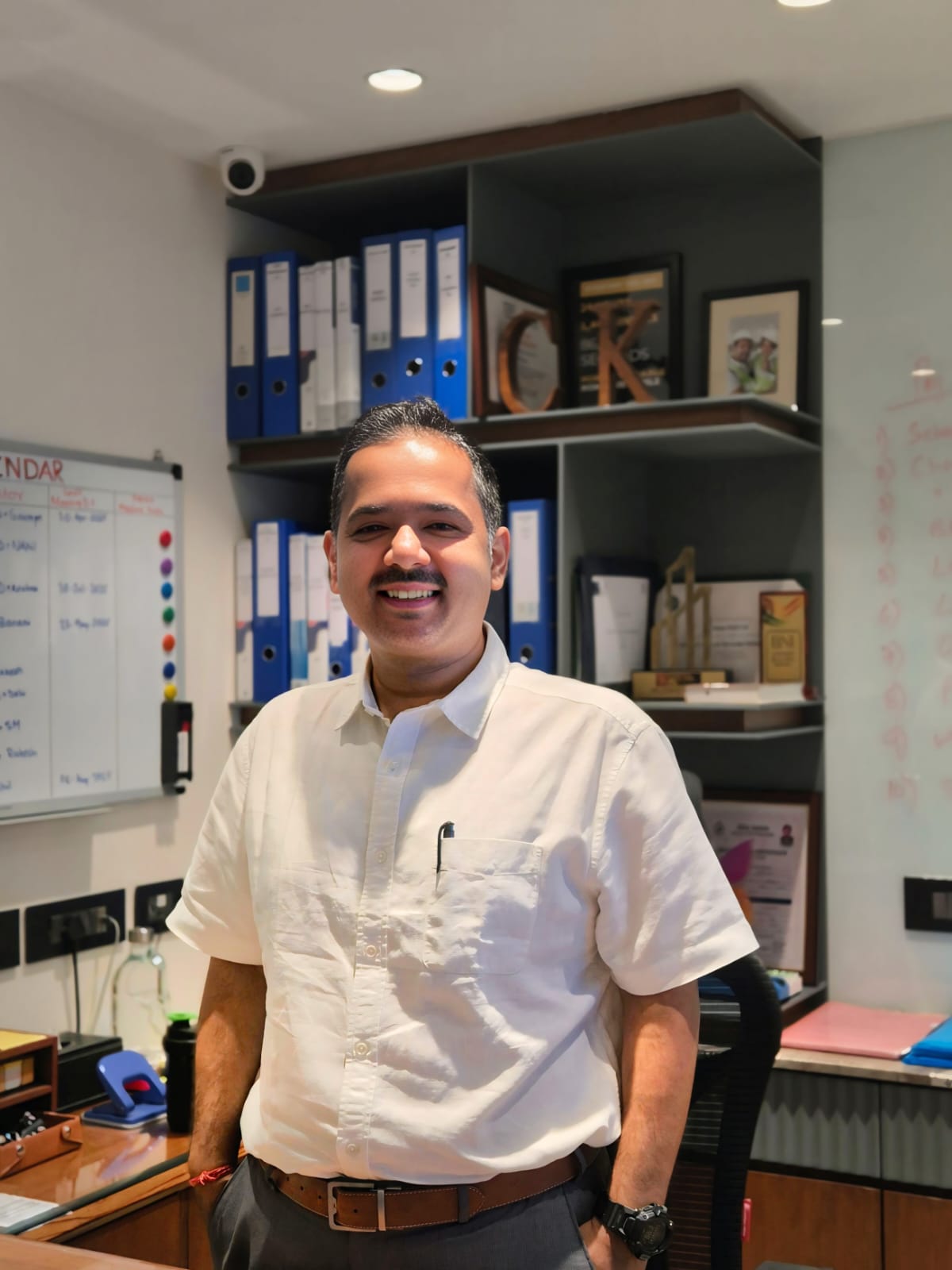
In a world where infrastructure shapes the destiny of nations, being a stalwart of building dreams is not just a profession, it is a responsibility that molds lives and futures. Few leaders embody this responsibility with as much clarity, compassion, and long-term purpose as Chirag Khaitan, Executive Director of SPD Construction. A founding director since 2010, he brings together global strategic insight and a grounded understanding of India’s human landscape, turning one of the country’s toughest industries into a vehicle for real social empowerment.
Raised in Singapore from the age of ten and academically shaped by the London School of Economics, INSEAD, and later the University of Oxford with a focus on AI, Mr. Khaitan returned to India in 2008 at a time when the nation was preparing for unprecedented infrastructural growth. The unexpected loss of his father shortly after his return became a turning point that anchored him to India. It strengthened his resolve to create something meaningful, a company that not only builds structures but transforms lives. He recalls that his vision from the very beginning was rooted in service: “The idea was to create something where people with no means get meaning to life.” For him, the real “India story” lies in the labourers, farmers, and job-dependent communities who form 90 percent of the country’s population, and SPD’s purpose is to create an ecosystem that offers both livelihood and dignity.

The company’s early years were marked by challenges that tested his commitment. Under the guidance of his uncle, Chairman Pawan Khaitan Ji, he transitioned from the comfort of an advanced nation to the rough terrain of Indian construction sites, ironically while being allergic to dust. Yet the decision to live on-site with labourers, learning their lives, struggles and aspirations firsthand, gave him a deep understanding that continues to shape SPD’s culture today. It was this human connection that cemented his belief that construction is not merely an industry of bricks and beams but of people and futures.
His leadership is defined by an unwavering belief in organisation over individuality. In a sector often driven by personal branding, he holds firm to a philosophy where the company’s mission outweighs individual ambition. SPD continues to grow on the strength of transparent tender processes, proven credentials and professional engineering expertise rather than aggressive marketing. He often challenges the misconception that construction is a high-profit sector, clarifying that EPC companies work on thin margins and survive through scale, operational discipline and long-term asset stability.

Much of SPD’s success today rests on the structured operational framework he has meticulously built. Every project is led by a Project Head who is counter-checked by fourteen Heads of Department across verticals such as quality, law, safety and operations, a system designed for scale and accountability.
He places immense belief in the potential of Gen Z, describing them as the “light for the future.” Their creativity, he believes, must be matched with discipline and grounded values, supported by strong mentorship so their ideas can flourish meaningfully within the industry.
When it comes to competition, his outlook is introspective rather than comparative. He believes the most significant competitor is one’s own previous performance, saying the real growth comes from being “one knot better than what we did yesterday.” Over time, this philosophy creates a powerful compounding effect that drives both personal and organisational excellence.
SPD’s differentiating strength lies in its ability to offer a comprehensive construction ecosystem, from design and EPC to MEP and HVAC, all under one umbrella, creating a seamless and efficient delivery model that few can match. As the company expands beyond its stronghold in Odisha and scales its Pan-India presence, its foundations remain rooted in the mission that shaped it, to build not just infrastructure but the very aspirations of the people who depend on it.
