
In India’s long march toward industrial self-reliance, few sectors are as strategically sensitive—and as politically consequential—as fertilizers. They sit at the intersection of food security, energy dependence, and geopolitical vulnerability.
And in the coal heartland of Odisha, a decisive shift is quietly taking shape.
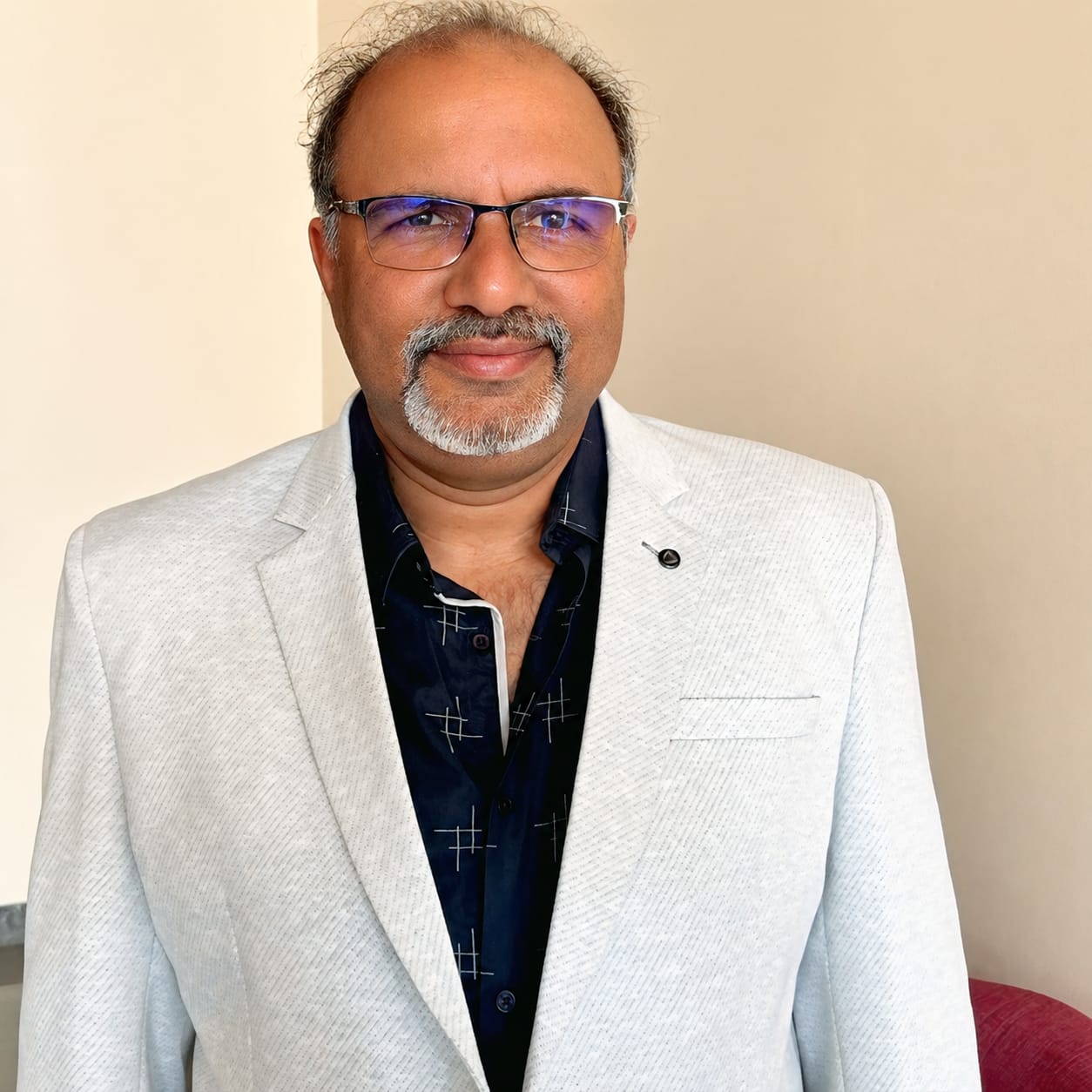
At the center of this transformation is Talcher Fertilizers Limited—a joint venture backed by some of India’s most powerful public sector enterprises—and led by a technocrat whose journey reflects the evolution of India’s fertilizer industry itself.
This is not merely a project.
This is a strategic recalibration of India’s fertilizer future.
A Leadership Built from the Ground Up
Vivek Srivastava represents a rare breed of leadership—one forged not in boardrooms, but on plant floors.
Beginning his career in 1991 at Rashtriya Chemicals & Fertilizers Limited, he worked across critical operations—urea, ammonia, heavy water plants, and large-scale industrial projects. Over three decades, he developed a deep operational instinct that now defines his leadership approach.
In 2023, he was deputed to lead TFL—a joint venture involving GAIL (India) Limited, Coal India Limited, and Fertilizer Corporation of India Limited.
But this is not a conventional MD role.
“This is not just a project—it is a full-fledged company. Every vertical—technical, financial, legal, HR—falls within our scope.”
In such a structure, leadership is less about authority and more about orchestration—aligning multiple stakeholders, systems, and timelines into a single execution narrative.
The Reality of the Fertilizer Sector: Efficiency Over Margins
The fertilizer industry operates under a controlled pricing regime, where profitability is not driven by market forces but by policy frameworks. This makes cost efficiency not just important—but existential.
Srivastava highlights three defining challenges:
- Sustaining optimum plant performance with limited resources
- Driving cost discipline in a regulated environment
- Embedding safety and environmental consciousness into operations
- “Cost consciousness is inherent to this sector. It is not optional.”
At the same time, the sector has undergone a transformation. Safety and environmental standards, once peripheral, are now central to operations—especially in high-risk industrial setups.
Why Talcher, Why Now?
Talcher’s selection is rooted in both history and strategy.
Decades ago, Fertilizer Corporation of India Limited operated a coal-based fertilizer plant here. While that venture did not succeed, it laid the groundwork for future revival.
When the Government of India initiated the revival of closed fertilizer units, Talcher re-emerged—not as a legacy project, but as a strategic necessity.
The reasoning is clear:
- India possesses abundant coal reserves across Odisha, Jharkhand, West Bengal, and Chhattisgarh.
- In contrast, natural gas—critical for conventional fertilizer production—is largely imported.
“Coal must be seen from the lens of national self-reliance, not just immediate cost economics.”
In an era marked by global supply disruptions, this shift becomes even more relevant.
Coal Gasification: A Strategic Technological Shift
At the core of TFL’s model is coal gasification—a process that converts coal into synthesis gas (syngas), by a process of partial oxidation in presence of oxygen & steam, primarily composed of carbon monoxide and hydrogen.
This syngas becomes a versatile input for producing:
- Ammonia and urea
- Methanol
- Synthetic fuels
- Industrial chemicals
Unlike direct combustion, gasification allows greater control, efficiency, environment compatibility and downstream flexibility.
TFL is deploying globally proven technology from Air Products, already operational at scale in international markets.
Short-Term Costs vs Long-Term Sovereignty
One of the most compelling insights from Srivastava Shrivastava is his framing of the cost debate.
While gas-based plants may at times appear more economical, especially when global gas prices soften, such comparisons are inherently short-term.
“Coal-based production should not be judged only on monetary benefits. It is about long-term independence.”
Coal provides India with a hedge against:
- Price volatility
- Supply disruptions
- Geopolitical uncertainties
In that sense, TFL is not competing with gas-based plants—it is complementing India’s energy strategy.
Execution: The Real Battlefield
Mega industrial projects in India are rarely constrained by vision. Execution is where the real test lies.
TFL encountered significant challenges in:
- Infrastructure alignment
- Regulatory approvals
- Railway and logistics integration
- Utility systems development
The response was proactive and systemic. Critical issues were escalated to the highest levels through institutional mechanisms, and coordinated efforts with the Government of Odisha ensured progress.
The commissioning target is set for December 2027—a milestone that will define the project’s success.
Beyond Manufacturing: Building an Industrial Ecosystem
TFL’s long-term vision extends far beyond fertilizer production.
The roadmap includes:
- Diversification into downstream chemicals such as acetic acid and formic acid
- Development of an integrated township with education and healthcare facilities
- Revival of Talcher as a regional industrial hub
“Our aim is to restore the legacy of FCIL Talcher—not just as a plant, but as a complete ecosystem.”
Community Integration: Development Before Profit
Even before commercial operations begin, TFL is embedding itself within the local ecosystem.
- Approximately 80% of contractual workforce is sourced locally
- Infrastructure development initiatives are underway
- Community engagement activities have begun
At the same time, strict adherence to labor compliance—EPF, ESIC, and statutory norms—ensures that growth is both inclusive and responsible.
Ethical Leadership in a PSU Framework
Operating within a public sector framework brings with it rigorous oversight—CAG audits, vigilance mechanisms, and structured procurement systems.
In this environment, leadership is defined by integrity.
“Ethical leadership means transparency, compliance, and adherence to systems.”
Every decision is documented, audited, and accountable.
Leadership Cycles, Institutional Continuity
TFL’s leadership model is rotational, with directors and leadership roles cycling among promoter organizations every three years.
Srivastava is approaching the end of his current tenure. Whether he continues or transitions will depend on stakeholder decisions.
But the project’s trajectory is larger than any one individual.
Conclusion: A Blueprint for Strategic Self-Reliance
Talcher Fertilizers Limited is not just another PSU project.
It represents:
- A shift from import dependence to resource utilization
- A move toward technological adaptation
- A blueprint for integrated industrial development
If executed as envisioned, Talcher could redefine how India approaches fertilizers—not merely as an agricultural input, but as a strategic national asset.
And in doing so, it may well restore a legacy—while building a future that is far more resilient, self-reliant, and sustainable.