
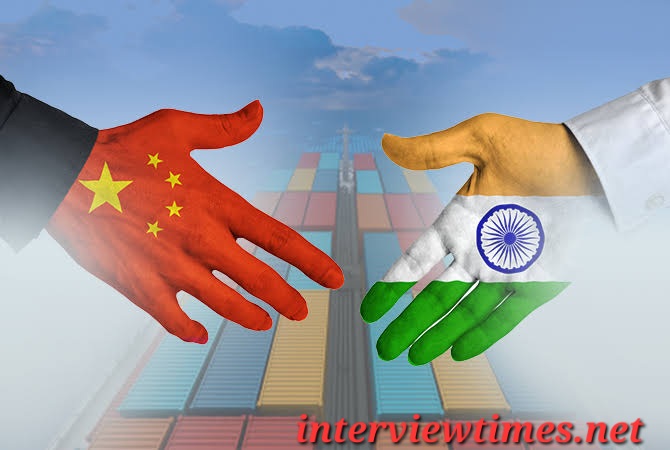
BHUBANESWAR: India’s trade dynamics with China have come under renewed scrutiny as the trade deficit between the two nations reached a record $99.2 billion for the fiscal year 2024–25. This growing gap underscores the mounting imbalance in bilateral trade and raises pressing questions about India’s economic strategy, industrial self-reliance, and geopolitical positioning.
The widening deficit is largely attributed to India’s increasing imports from China, particularly in high-tech sectors such as electronics, solar panels, and lithium-ion batteries. At the same time, India’s exports to China have declined sharply, dropping 14.5% year-on-year in March alone. This dual trend highlights India’s dependence on Chinese manufacturing capabilities, despite ongoing efforts to boost domestic production and diversify trade partnerships.
The structure of India’s imports from China reveals a deeper challenge. Over the past decade, China has emerged as a key supplier of critical goods that fuel India’s infrastructure, energy, and technology sectors. From telecommunications equipment to industrial machinery and renewable energy components, Indian industries rely heavily on Chinese supply chains. This dependency, while economically convenient, poses strategic vulnerabilities—especially in times of geopolitical friction.
Efforts by the Indian government to curb this dependency have been gradual. Initiatives like the Production-Linked Incentive (PLI) scheme aim to boost domestic manufacturing, while policy measures encourage import substitution and promote local sourcing. However, these efforts take time to bear fruit, and India’s industrial ecosystem still lacks the scale and efficiency to fully replace Chinese imports in the short term.
On the export front, India faces stiff competition. Despite having a diverse product base, India’s exports to China have not maintained momentum. Major categories such as iron ore, raw materials, and certain chemicals have seen declining demand in China due to its own economic rebalancing. With China prioritizing domestic consumption and high-tech growth, traditional export sectors are finding it harder to penetrate the market.
In addition, non-tariff barriers, regulatory complexities, and a lack of mutual trust continue to hamper the growth of Indian exports to China. The Indian government has raised concerns about market access issues and trade practices, but progress on these fronts remains limited. Diplomatic engagement has helped maintain a channel for dialogue, yet trade asymmetry persists.
The record trade deficit has also reignited concerns about economic sovereignty and national security. India’s policymakers are increasingly wary of allowing critical sectors to be overly reliant on a single foreign power. This concern is compounded by the border tensions that have strained India-China relations in recent years. Economic dependencies in such a context are viewed not just through the lens of commerce, but also national strategy.
In response, New Delhi is taking steps to monitor Chinese imports more closely. The Directorate General of Foreign Trade (DGFT) is reportedly considering measures to scrutinize low-cost imports that may be undercutting Indian manufacturers. There are also growing calls for stricter implementation of quality control norms and anti-dumping duties to level the playing field for domestic producers.
Furthermore, India is exploring alternate trade routes and alliances. Strengthening economic ties with Southeast Asia, the European Union, and the United States is a part of India’s broader de-risking strategy. By participating in regional trade agreements and forging bilateral pacts, India hopes to reduce its economic overexposure to China.
However, experts argue that reducing the trade deficit will require more than just defensive measures. India needs to boost its export competitiveness through investment in infrastructure, technology, and innovation. Creating globally competitive products and branding Indian goods effectively in international markets can help unlock new demand and rebalance trade flows.
The challenge, therefore, is not merely about cutting imports from China, but about building a resilient, export-oriented economy that can stand on its own in a highly interconnected world. The record trade deficit is a wake-up call—not just for policymakers, but for Indian industry as a whole. It signals the urgency to rethink supply chains, invest in value addition, and elevate the country’s position in global trade networks.
As India enters a crucial phase in its economic journey, its relationship with China remains both an opportunity and a risk. Navigating this complex equation will require strategic foresight, disciplined execution, and a renewed focus on long-term competitiveness. Only then can India hope to close the trade gap and assert its place as a self-reliant global economic power.
