
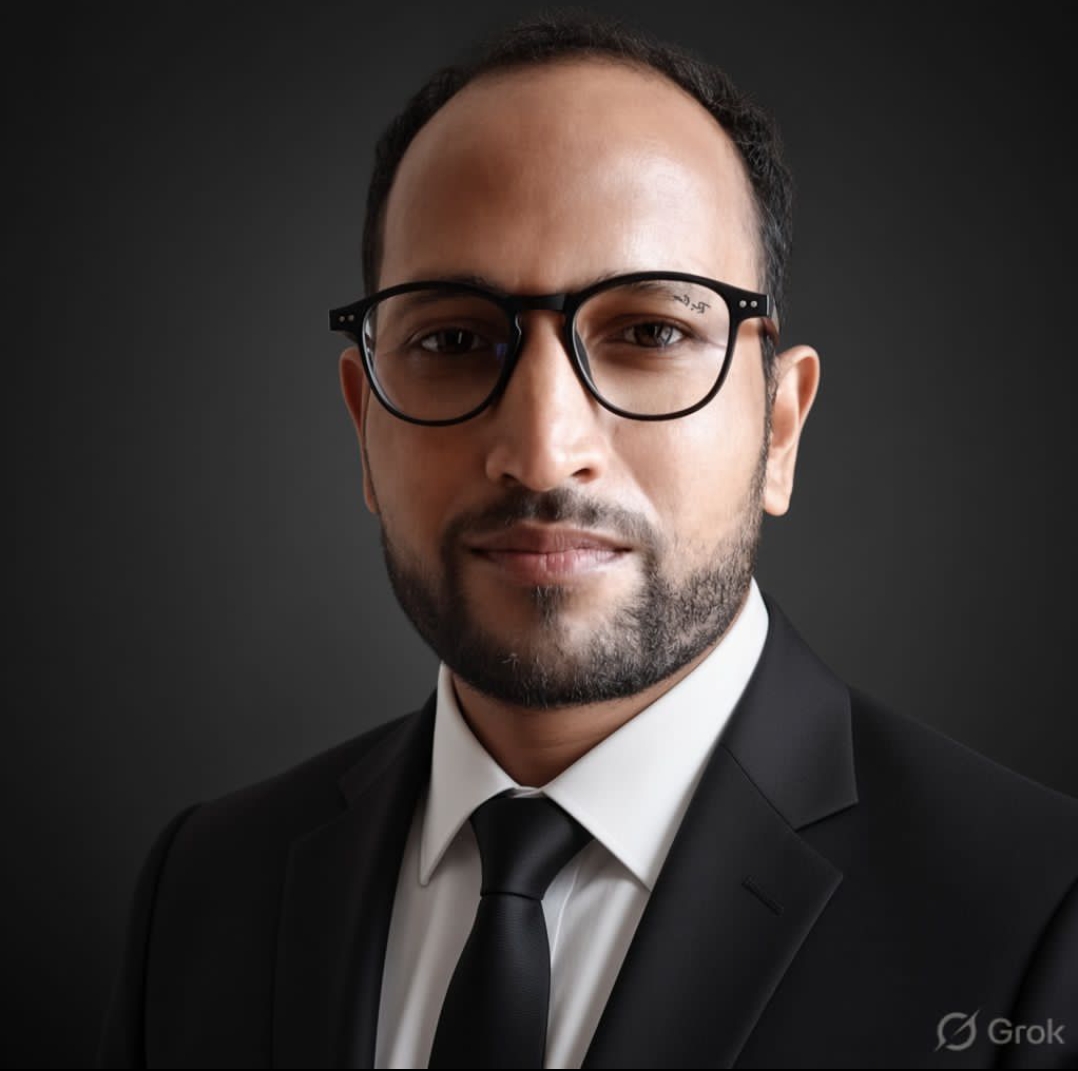
For S. Ramesh Kumar, Director of Stevin Shipping Pvt. Ltd., shipping is far more than the movement of cargo from one port to another. It is the infrastructure that connects economies, industries and everyday lives. His journey into international trade was driven by an appreciation of how deeply global supply chains influence the modern economy—and by the opportunity to work in an industry where every decision can have real-world consequences.
The dynamic nature of shipping, where market conditions, commodity cycles, regulations and operational challenges constantly intersect, became a natural fit for his strategic and problem-solving mindset. Over time, his experience across dry-bulk shipping, vessel chartering, cargo sourcing, mineral trading and port logistics has shaped a business philosophy rooted in precision, adaptability and long-term relationships.
Building Trust in a Traditional Industry
Establishing Stevin Shipping came with a fundamental challenge: earning credibility in an industry built on established relationships and institutional trust.
For a new entrant, gaining the confidence of cargo owners, charterers, shipowners, port authorities and financial institutions requires more than a compelling proposition. It requires consistent execution. Kumar’s approach was therefore centred on transparency, responsiveness and delivering reliably from the very first transaction.

At the same time, the company had to navigate freight-rate volatility, significant operational costs and an increasingly complex regulatory environment. The answer lay in remaining agile, embracing technology early and maintaining a client-first approach to problem-solving.
Lessons from the Dry-Bulk Market
Dry-bulk shipping operates in an environment where margins can be extremely sensitive to timing and efficiency. Port turnaround times, commodity demand, vessel availability and unexpected delays can quickly transform the economics of a voyage.
That reality has made operational precision central to Kumar’s approach.
A single day’s delay can significantly affect voyage profitability, making proactive problem-solving and continuous optimisation essential. His experience has reinforced a simple principle: long-term strategic success is ultimately built on flawless daily execution.
The Art of the Right Deal
For Kumar, successful chartering is not simply about negotiating the best freight rate. It is about balancing commercial opportunity with operational and financial risk.
Understanding vessel supply, port congestion, seasonal commodity demand and broader macroeconomic indicators provides the foundation for negotiation. Equally important is ensuring that a vessel’s specifications—from draft and gear capacity to cargo-hold configuration and fuel-consumption profile—are aligned with the cargo and destination requirements.
The best deal, therefore, is one that is commercially attractive and operationally executable.
Relationships That Survive Market Cycles
In a volatile industry, relationships cannot be built around individual transactions.
Kumar believes in treating shipowners, charterers and cargo owners as long-term collaborators. That means creating structures where value is shared and relationships remain strong through both market highs and downturns.
Understanding the specific pressures faced by each stakeholder is equally important. A shipowner may prioritise stable cash flow, while a cargo owner may be focused on meeting strict delivery deadlines. By addressing those needs rather than simply pursuing short-term gains, Stevin Shipping aims to become a partner whose value extends beyond a single fixture.
Integrity, reliability and execution form the foundation of that philosophy.
Leadership Under Pressure
Perhaps the most important entrepreneurial lesson shipping has taught Kumar is that volatility cannot be eliminated—it can only be managed.
Port congestion, regulatory changes, mechanical issues, geopolitical disruptions and weather-related delays are unavoidable variables in maritime operations. What distinguishes effective leadership, he believes, is the ability to respond decisively when those variables arise.
His philosophy is rooted in radical accountability: gather the facts quickly, make the decision, and focus on protecting the cargo, the client and the partner’s assets.
For him, operational friction is not necessarily a failure. It is a variable that must be managed with calmness, data and decisive action.
The Power of Partnerships
Shipping is inherently collaborative. Behind every successful voyage lies an interconnected ecosystem of shipowners, charterers, cargo owners, port authorities, customs brokers, agents, financial institutions and crew.
Internally, coordination between chartering, operations and technical teams is critical to keeping voyages efficient and profitable. Externally, institutional trust allows companies to respond more flexibly when markets become unpredictable.
In Kumar’s view, teamwork is not merely a corporate value in shipping—it is part of the industry’s infrastructure.
India’s Opportunity in Dry Bulk and Minerals
Kumar sees significant potential for India in the global dry-bulk and mineral trade.
The country’s expanding infrastructure, industrial growth, urban development and increasing participation in global supply chains are creating new opportunities across shipping, mineral trading and logistics.
As India’s role in international commerce expands, the demand for efficient movement of raw materials and commodities is likely to create opportunities for shipowners, traders and logistics companies capable of combining global reach with operational expertise.
Building the Stevin Shipping of Tomorrow
Looking ahead, Kumar’s ambition extends beyond building another freight operation.
His vision is to establish Stevin Shipping as a globally recognised, resilient maritime enterprise—one that connects important international trade lanes while retaining the agility and responsiveness that characterised its early years.
The next phase is equally focused on technology and sustainability. Kumar envisions a business where traditional maritime expertise meets digital integration, creating greater supply-chain transparency, operational efficiency and smarter decision-making.
Ultimately, he wants Stevin Shipping to demonstrate that commercial growth, technological innovation and responsible environmental stewardship can move forward together.
For a company operating in an industry shaped by unpredictable markets and constantly shifting global dynamics, the destination may never be completely fixed. But with strategic thinking, institutional trust and the ability to navigate uncertainty, Kumar believes Stevin Shipping can chart its own course—and play a meaningful role in India’s growing presence in global trade.
