
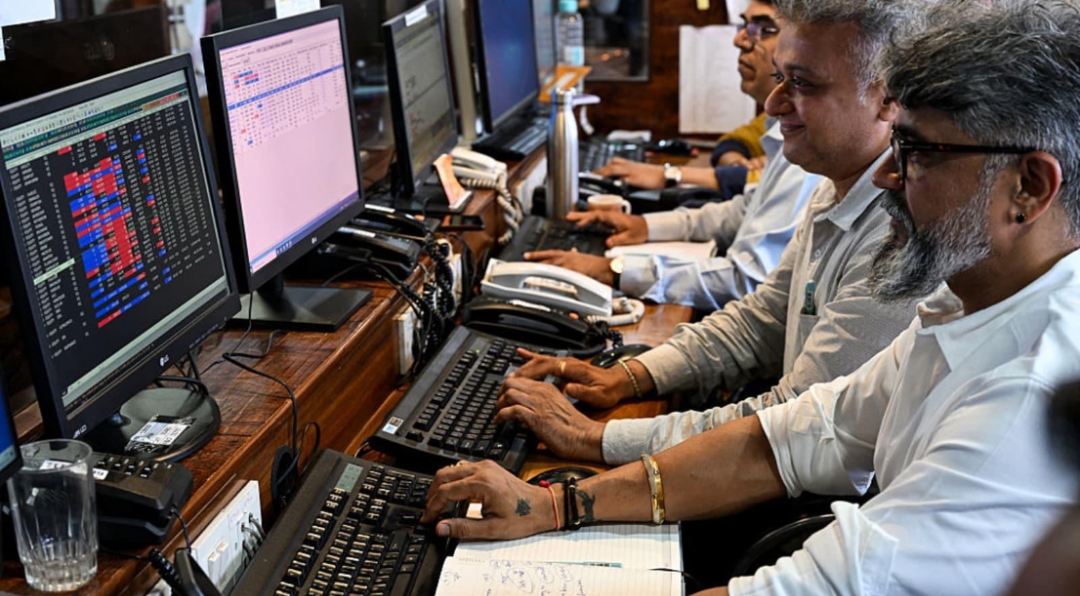
Mumbai: Indian equity markets ended their four-session losing streak on Friday, with the Sensex gaining 362.57 points, or 0.48%, to close at 76,515.43, while the Nifty 50 edged up 24 points to settle at 23,897.70.
The recovery, however, did little to erase the broader sense of caution gripping Dalal Street. Both benchmark indices surrendered a significant part of their intraday gains and finished near the day’s lows, signalling that investors remain reluctant to take aggressive positions amid rising crude oil prices, volatile global bond markets and geopolitical uncertainty.
The rebound came after four consecutive sessions of losses, but the week still ended on a weak note. The Nifty slipped about 1.2% for the week, while the Sensex lost around 1%, marking a fourth straight weekly decline for both indices—their longest such streak in about five months.
Crude Oil Remains the Biggest Cloud
The biggest concern for Indian investors continues to be the sharp rise in global crude oil prices.
Brent crude hovered around $96 a barrel on Friday and was headed for its strongest weekly gain since mid-July, as escalating tensions involving the United States and Iran raised fears of potential disruptions to energy supplies from the Middle East.
For India, a major oil importer, sustained high crude prices can quickly become a macroeconomic challenge. Higher oil costs can increase the country’s import bill, put pressure on the rupee and fuel inflation by raising transportation and input costs across industries.
That, in turn, could complicate the interest-rate outlook and weigh on corporate profitability—particularly in sectors sensitive to fuel and raw-material costs.
Bond Yields Add to Global Risk
The rise in crude has also fed into broader inflation concerns at a time when global bond markets remain under pressure.
Higher bond yields make borrowing more expensive and can reduce the attractiveness of equities, especially in emerging markets. Concerns over persistent inflation and the future path of global interest rates have therefore kept foreign investors cautious.
A recent easing in U.S. Treasury yields provided some support to global equities on Friday, helping Asian markets and Indian stocks rebound. But investors remain focused on upcoming U.S. economic data, which could influence expectations around future Federal Reserve policy.
Insurance, Metals and Reliance Lead the Recovery
Friday’s gains were supported by selective buying in heavyweight stocks and specific sectors.
Insurance counters were among the stronger performers, with SBI Life Insurance gaining nearly 4%. Tata Steel, HDFC Life Insurance and Reliance Industries also contributed to the benchmark recovery. Capital-market-linked stocks rallied after the Securities and Exchange Board of India announced a review of the methodology surrounding derivatives settlement and recent volatility linked to the Close Auction Session mechanism.
The market’s advance was also helped by domestic institutional buying. Foreign institutional investors, however, continued to sell Indian equities, while domestic institutional investors remained net buyers—a trend that highlights the contrasting forces currently shaping the market.
Strong Domestic Fundamentals Offer Some Support
The market’s cautious tone comes despite encouraging domestic indicators, including strong economic growth and robust GST collections.
These factors have provided an important cushion for Indian equities, even as external pressures intensify. The challenge for investors is that strong domestic fundamentals are currently competing with global risks that remain difficult to predict—from Middle East tensions to oil-price volatility and shifting expectations around global interest rates.
What Investors Will Watch Next
The immediate direction of Indian markets is likely to depend on whether crude oil prices continue to climb and how global bond yields respond to upcoming economic data.
A sustained move in Brent crude above current levels could renew concerns about India’s inflation and current-account outlook. At the same time, further increases in global yields could trigger renewed pressure on foreign capital flows into emerging markets.
Technically, the Nifty faces an important psychological barrier around the 24,000 level, while the 23,800 zone is being closely watched as a key support area.
For now, Friday’s rebound has brought an end to the immediate losing streak—but it has not yet delivered a decisive shift in market sentiment.
The message from Dalal Street is clear: the selling pressure may have paused, but with crude oil near multi-week highs and global bond markets still unsettled, investors are unlikely to let their guard down anytime soon.
