
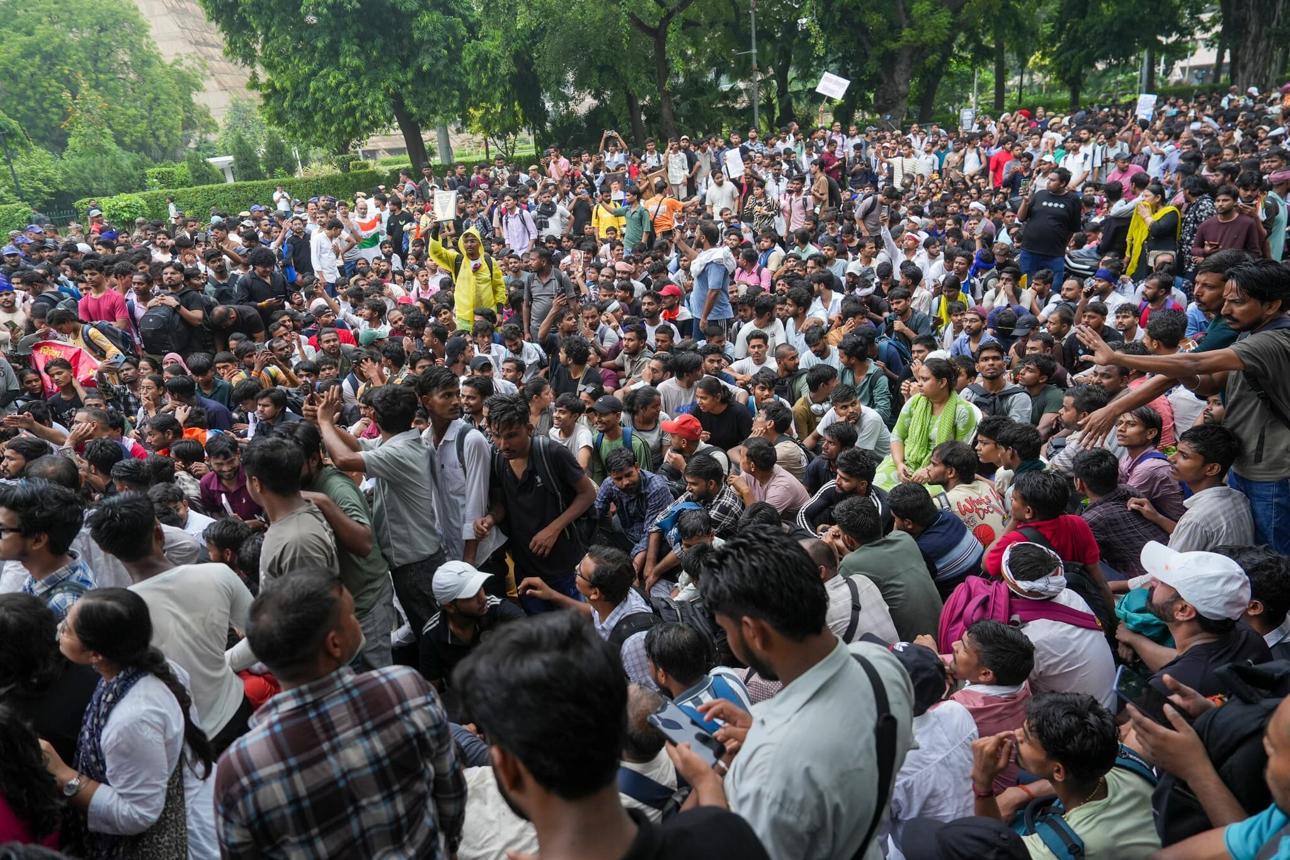
A major protest over India’s reservation system drew a large gathering at Jantar Mantar in New Delhi on Friday, August 21, with the issue continuing to generate political discussion on August 23.
The demonstration, being referred to as the “Reservation Hatao Andolan,” brought together protesters demanding substantial changes to the existing reservation framework. One of the principal demands raised by demonstrators was that economic circumstances should receive greater weight when determining eligibility for government assistance and reservation benefits. Protesters also called for the introduction of a creamy-layer criterion and periodic review of the reservation system.
According to reports, more than 50 protesters were detained by Delhi Police during the gathering. The detentions came amid questions surrounding permission for the demonstration and efforts by authorities to manage the large crowd at Jantar Mantar.
The protest also attracted prominent online voices, including YouTuber Ajeet Bharti, who argued that India’s development should not come at the expense of merit. Protesters called for greater transparency around reservation policy and, among other things, sought a government white paper explaining the existing system.
What are the protesters demanding?
Among the demands reported from the demonstration are:
- Greater emphasis on economic criteria rather than caste alone.
- Introduction or expansion of a creamy-layer criterion.
- Periodic review of reservation policies.
- Changes to the way benefits are distributed among different communities.
- Greater transparency around India’s reservation framework.
- Some groups have also raised demands concerning the SC/ST (Prevention of Atrocities) Act.
The movement has also prompted a political response. Union Minister Chirag Paswan said the government could engage with the protesters if they put forward their demands in a systematic manner. At the same time, he stressed that reservation cannot simply be abolished on demand and described it as a constitutional mechanism linked to social justice.
The development is significant because it comes at a time when questions surrounding caste-based reservation, merit, economic disadvantage and affirmative action remain highly sensitive political and social issues in India.
