

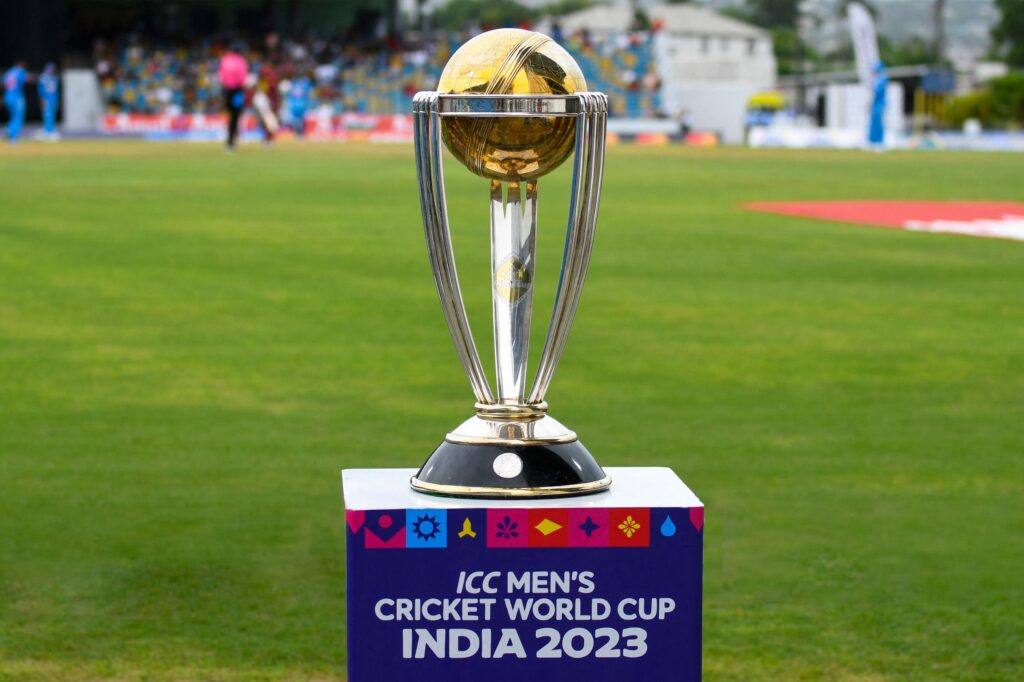
In the heart of India, the 2023 Cricket World Cup unfolds as a spectacular triumph. With every match, it breathes life into the game, delivering riveting encounters, nail-biting conclusions, and unforgettable displays of individual brilliance.
India has been a dominating force in this World Cup, triumphing in all five of their matches. Under the astute leadership of Captain Rohit Sharma, the team has set the stage on fire with electrifying starts. The cricketing maestro, Virat Kohli, has seemingly transported himself back to his 2016 form, proving to be the ultimate chaser. However, it’s not just their batting prowess that’s been turning heads. The likes of Jadeja, Bumrah, Shami, and Kuldeep have orchestrated a masterclass in bowling and fielding, solidifying India’s position as the standout team of the tournament thus far.
South Africa, despite a minor setback against the Netherlands, has emerged as a formidable presence in the tournament, securing victory in four out of their five matches. New Zealand, too, has exhibited its strength, with just one loss in five matches, notably falling to India. Meanwhile, the reigning champions, Australia, faced an initial stumble with two losses but have since recaptured their winning rhythm, triumphing in their last two matches. The competition is heating up, and the cricketing world eagerly awaits the unfolding drama.

In the World Cup narrative, Pakistan and England, the two cricketing giants, have struggled to find their footing, much to the disappointment of their fans. Defending champions, England, have managed just a solitary win in four matches and faced the unexpected sting of defeat at the hands of Afghanistan. Pakistan, too, has had a rocky road, with three losses in five games, including a surprising defeat to Afghanistan. Yet, the true revelation of this tournament has been Afghanistan, the underdogs who have displayed incredible spirit, notching up wins against England and Pakistan. As for the other two contenders, Netherlands and Bangladesh, they’ve each secured one victory out of their four matches. These developments raise the pivotal question: What lies in store for the future of 50-over cricket? The sport is in a state of flux, and the cricketing world awaits the next chapter in this intriguing journey.

The future of 50-overs cricket has become a focal point of discussion in recent times, with divided opinions on its relevance in an era dominated by T20 cricket. Some argue that this format is waning in popularity, while others maintain that it remains the pinnacle of the sport, brimming with potential.
Indeed, T20 cricket has witnessed a surge in popularity, captivating a broader, more casual fan base owing to its shorter duration. Nevertheless, 50-overs cricket boasts a sizable and fervent following, epitomized by the Cricket World Cup, which stands as the most-watched sporting spectacle globally. Notably, it continues to be a cherished event in cricket-loving nations like India.
What keeps 50-overs cricket in the limelight are its strategic intricacies and the room it provides for both batsmen to achieve monumental centuries and bowlers to claim five-wicket hauls. The International Cricket Council (ICC) has been proactive in revitalizing this format, introducing initiatives like the now-defunct ODI Super League to qualify teams for the World Cup based on bilateral series performance and the ODI Player of the Year award to laud outstanding players in this format. Although the number of ODI has been trimmed in recent years, efforts persist to ensure the enduring appeal of 50-overs cricket.
In the face of mounting challenges, the future of 50-overs cricket remains promising. The Cricket World Cup endures as the foremost event in the sport, cherished by an ardent global audience. The ICC’s continued commitment to enhancing the format’s appeal underscores its intent to keep 50-overs cricket an integral part of the cricketing landscape.

The future of 50-overs cricket is ripe for innovation, and several ideas are on the table to ensure its vitality:
Shortened Matches: The ICC could consider trimming ODI matches to 45 or even 40 overs, making the format more appealing to casual fans who seek faster-paced action.
Rule Revisions: Introducing new rules and regulations could infuse excitement and unpredictability. Ideas such as a novel powerplay over or allowing batsmen to retire not out twice in an innings might shake up the game.
Enhanced Presentation: Collaborating with broadcasters to revamp the presentation of 50-overs cricket could engage audiences further. This could encompass fresh camera angles, innovative graphics, and a vibrant commentary and analysis team.
These measures, if adopted by the ICC, hold the promise of reinvigorating 50-overs cricket for the future. It’s a format rich in tradition and history, and with the right adjustments, it can continue to offer fans a compelling and dynamic cricketing experience.
While the future of 50-overs cricket may hang in the balance, a ray of optimism persists. The Cricket World Cup, with its timeless allure, remains the epitome of cricketing prestige, consistently drawing a fervent global audience. Moreover, the International Cricket Council (ICC) is actively working to inject fresh allure into the format, enhancing its appeal for fans. In this ever-evolving landscape, 50-overs cricket, steeped in tradition, continues to shine as a beacon of hope.
