
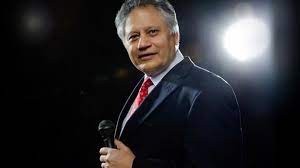
In a recent online talk and interview, we had the privilege of speaking with Shiv Khera, a well-known author and motivational speaker, who shared his views on a wide range of topics, from sports to politics and the media. Shiv Khera, a luminary in the realm of personal development, is an acclaimed author, motivational speaker, and activist. His life’s work embodies the indomitable spirit of human potential, inspiring millions to embrace their inherent greatness and strive for excellence. Khera’s profound insights on leadership, personal growth, and the pursuit of dreams have left an indelible mark on countless lives. He is a true champion of human potential, empowering individuals to transcend their perceived limitations and achieve extraordinary feats. The conversation was engaging, candid, and insightful.
Coffee with Shiv Khera by the Group Editor Dibyajit Sahu.
Dibyajit Sahu: So, are you a true sports enthusiast? Do you like cricket or football?
Shiv Khera: Mostly, I play football. I have been involved in martial arts and have achieved my green belt. I still have in mind to go for my black belt as well.
Dibyajit Sahu: Alright, suppose you are asked to choose one: Messi or Ronaldo?
Shiv Khera: Well, it depends. Which day is it? It doesn’t matter, Messi or Ronaldo. They’re both great players, aren’t they? I think my grandson likes Ronaldo, so I’ll go with Ronaldo.
Dibyajit Sahu: In cricket, India is hosting the International World Cup. Rohit Sharma or Virat Kohli, in terms of talent and performance?
Shiv Khera: I would go with Rohit Sharma because he is an all-rounder and covers many aspects of the game. So, I think I’ll go with Rohit Sharma.
Dibyajit Sahu: Okay, one liner for Modi.
Shiv Khera: I think he’s been the biggest blessing to India after almost 75 to 80 years.
Dibyajit Sahu: And for Rahul Gandhi?
Shiv Khera: I think he should pack up. He should be responsible if he’s heading the party. Over a period of time, he’s been the president of the party for almost 8-10 years now. Of course, he’s not there anymore, but he’s been running the party for the last 15-20 years. Literally, he and his mother. So yeah, 20 years is a long time to ruin a party.
Dibyajit Sahu: It’s a sad statement for Congress.
What message would you like to convey to Rahul Gandhi directly?
Shiv Khera: If he wants to become more popular and wise, my only advice is that he should put the country’s interest above his own.
Dibyajit Sahu: Print media or electronic media?
Shiv Khera: Well, I always enjoyed print media, but now, electronic media is very powerful. Electronic media includes TV and digital media. I like television media because you can hear and see.
Dibyajit Sahu: So, what’s your take on Test matches?
Shiv Khera: Well, you’re right that people have shifted away from test cricket to shorter formats like 50-50 and T20. Things have changed. I still prefer the 50-50 format; it’s a good, neutral balance. Test cricket is too long, and it rarely provides results. People want to see a winner and a loser.
Dibyajit Sahu: Alright. Traveling or reading?
Shiv Khera: I prefer reading because you’re a busy man, traveling from country to country. Traveling for vacations is nice, but reading is a constant source of knowledge.
Dibyajit Sahu: Crisis manager or top manager?
Shiv Khera: If I had to choose, I’d look at a top manager. A top manager avoids crises, while those who are not top managers create crises and then try to manage them.
Dibyajit Sahu: It’s a wonderful coffee with Shiv Khera..Really entertaining, insightful, revelling.
Enlightening Conversation between Shiv Khera and chairman Dr. Subhasis Das: Insights on the Indian Economy, Taxation, and Democracy.
Chairman: Good afternoon, Mr. Khera. I don’t know if you remember, but I had the privilege of taking one of your courses in 1996 when I was the manager of Pi Industry. You might not remember. In 34 years of experience, We developed the interview Times and I have been the chairman for the last four years.
Shiv Khera: It’s a pleasure to talk to you, Chairman. Great to hear about your experience.
Chairman: One of the key questions I wanted to discuss, after our coffee chat, is the viability of India becoming a $3 trillion economy. What are your thoughts?
Shiv Khera: It’s not only viable; in fact, I believe we should aim for a $5 trillion economy. It is very doable, provided we make some changes in our financial policies.
Chairman: You mentioned abolishing income tax. Is it feasible for a democratic country like India?
Shiv Khera: Absolutely, it’s feasible. Right now, the heavy tax burden is driving many Indians to become non-resident Indians (NRIs) to escape high taxes. I recommend implementing a 1% transactional tax on transactions over INR 5000, while eliminating GST, income tax, and various other taxes.
Chairman: But the government statistics show an annual 3.5% increment in income tax collections. How would the transaction tax work?
Shiv Khera: With a 1% transaction tax on all significant transactions, those who engage in frequent transactions will contribute more. The poor, with fewer transactions, will pay less or no tax. This system would be more effective than the current income tax structure.
Chairman: Do you believe demonetization was beneficial for India?
Shiv Khera: While it did help eliminate fake currency, it also created significant challenges for daily wage workers, who make up a large part of the Indian workforce. The sudden cash crunch affected them severely.
Chairman: Moving on to democracy, should political parties change every five years, or should some states, like Orissa or Madhya Pradesh, maintain a consistent party in power?
Shiv Khera: For a robust democracy, India should transition to a two-party system, like the United States and the United Kingdom. Additionally, we should treat “NOTA” (None of the Above) as a candidate. If “NOTA” wins, all candidates in that constituency should be disqualified for the upcoming election. This would help eliminate criminal elements from politics.
Chairman: You make a valid point, sir. This is indeed a significant issue.
Shiv Khera: If we don’t address these issues, we risk undermining the principles of democracy.
Chairman: Thank you, Mr. Khera, for your valuable insights. Is there any political plan in your future?
Shiv Khera: I am not part of any political party at the moment, and there are no plans for it in the future.
Chairman: Thank you for your time, Mr. Khera. We appreciate your thoughts on these important matters.
Shiv Khera on Writing, Literacy, and Priorities
Prisita: Good afternoon, sir. It’s lovely meeting you. So, sir, I’d like to start with some foundational questions. Your book, “You Can Win,” achieved global recognition. As budding writers, we often wonder about the key principles you follow before writing a book, especially one that connects with a diverse audience. What key principles guide your writing process and your ability to reach out to young and older readers alike?
Shiv Khera: Well, I firmly believe that everyone in this world can write a book, including you. Everyone has a story in life where they learn lessons and gain valuable insights. Every lesson carries a message, and sharing that message is like passing the torch to the next generation. In my case, I faced challenges and met exceptional individuals who guided me. Their influence transformed my life, and I felt compelled to share that message with others. My book became a bestseller not because of my identity, but because people related to it. I didn’t write from a reader’s perspective, thinking about what they wanted to hear. I wrote from my own feelings and convictions, and that’s what connected with people.
Prisita: That’s a powerful perspective, sir. Now, if we talk about digital literacy, which currently stands at around 77.7%, there are still individuals who lack access to digital resources. What would you say for those who are not digitally literate and cannot access the resources available to us today?
Shiv Khera: It’s essential to recognize that not everyone is digitally literate, and that’s perfectly fine. I, too, am not a tech-savvy person, and I rely on physical books. I’ve even attempted to use a Kindle, but it didn’t work well for me, so I returned to my trusty paperbacks. Reading, after all, is a personal choice. Some prefer the tactile experience of a physical book. What matters most is that reading, in any form, remains essential for learning and growth. It’s worth noting that, despite the digital age, many people prioritize entertainment over education. Reading a book is educational, but some may argue they don’t have the time for it, yet they can watch hours of television or movies. It all comes down to individual priorities.
Prisita: Absolutely, sir. Prioritizing education and personal growth through reading is a choice we all have. Thank you for your valuable insights.
Serious Talks with Shiv Khera: On Leadership, Governance, and Media Integrity
Our editor Dibyajit Sahu engaged in a thought-provoking conversation with acclaimed author and motivational speaker, Shiv Khera. The discussion encompasses a wide range of topics, from leadership and governance to media integrity and future aspirations. Here is a glimpse of their insightful exchange:
Dibyajit Sahu: Let’s engage in a serious discussion, sir. You’ve spent nearly four decades reshaping the landscape of top-level management in India and abroad. In the ’80s and ’90s, the world was quite different from the 21st century. How have you evolved as a person and a professional throughout these years?
Shiv Khera: Over the years, I’ve learned many lessons. At one point, I even headed a political party, but I realized that effective leadership requires physical, financial, mental, emotional, and spiritual strength. Without these elements, leadership is incomplete. In the past couple of decades, we’ve witnessed a significant shift from physical to virtual interactions. The recent COVID period accelerated the shift towards virtual meetings, but people are gradually returning to physical interactions. This shift back to reality is noteworthy.
Dibyajit Sahu: Indeed, sir, the return to physical interactions is an interesting observation. Speaking of political involvement, you had a stint with a political party. Looking back, do you see any mistakes from your side, or any decisions you would make differently?
Shiv Khera: If I could turn back time, I might make different decisions. The two main reasons I stepped down from the political party were its impact on my health and finances. In hindsight, I believe I could have sustained myself better and made different choices. However, we can’t dwell on “should haves” and “would haves.” We can only move forward.
Dibyajit Sahu: Your insights are appreciated, sir. Given your understanding of India’s evolving society, how do you envision the future of management and governance in the country? What changes do you foresee in government and corporate management?
Shiv Khera: India has seen positive changes, such as the abolition of Article 370 and the implementation of policies to combat hunger. However, much more can be done, particularly in the financial and political domains. We should also address the issue of illegal infiltrators in the country, which is akin to an invasion. There’s room for more positive changes. India is currently on a path to prosperity.
Dibyajit Sahu: Speaking of political leadership, India has entrusted the Modi government with two consecutive terms, spanning a decade. How confident are you in the government’s ability to lead the nation?
Shiv Khera: I believe the Modi government is currently the best choice for India. If the reins were handed to any other political entity, it could be detrimental to the nation. The opposition, when viewed collectively, presents a dangerous alternative. He is doing commendable work in the current system, and we need more capable individuals to step into the system.
Dibyajit Sahu: Transitioning to a regional context, Odisha’s Chief Minister, Naveen Patnaik, has been in power for five consecutive terms. What’s your take on his leadership?
Shiv Khera: While I don’t know much about him, the fact that he has been in power for 25 years suggests he must be doing something right. It’s rare for a leader to stay in for such a long duration without making a positive impact. He appears to be the right choice for Odisha.
Dibyajit Sahu: Lastly, sir, you are not only a renowned author but also an iconic brand manager, highly respected both in India and abroad. What lies ahead for Shiv Khera?
Shiv Khera: In the pipeline, I have a public interest litigation with the Supreme Court and the goal of making NOTA a law in our country. If I can achieve this during my lifetime, I would consider it a significant service to my nation. Bringing NOTA back is a top priority, and I hope to make it a reality.
An Insightful Conversation with Motivational Guru, Shiv Khera: From Startups to Staying Motivated
Megha: Good afternoon, sir. It’s truly an honor to meet you. We’ve heard a lot about your views on political systems and the Indian government. Today, I’d like to start by asking you about the startup ecosystem in India. What are your thoughts on it?
Shiv Khera: I think the environment is great for a startup in India. Though I still feel that corruption is badly there. I think you will have at least ten times more startups in India than what we already have right now. Whenever people start up, my only advice to them would be is start small but think big. I repeat start small, but think big. And why is that? Don’t start big do not start big start small. Why? Because when you start anything you are bound to make mistakes. And if you start big, your mistake will be big and you will not be able to recuperate again. But if you start small, your mistake will be small because mistakes will happen and you clean up after that. Then you start thinking right.
Megha: Your motivational speeches have inspired countless individuals. But, sir, how do you deal with situations when you find yourself demotivated?
Shiv Khera: Demotivation is something that can affect anyone, including me. To counter it, I invest one to two hours daily in watching motivational videos on YouTube. Just as our bodies require food every day, our minds need a daily dose of positive thoughts. Neglecting this need can lead to demotivation. Athletes lose stamina if they stop practicing, and the same principle applies to our minds. To stay motivated, it’s essential to feed our minds with positivity regularly.
Megha: That’s a valuable insight, sir. What do you do to re-energize yourself when you feel drained or tired?
Shiv Khera: As I mentioned earlier, I immerse myself in motivational content daily. I read a new motivational book each week, and I listen to one to two hours of motivational audio every day. These practices help me recharge and maintain my motivation.
Megha: It sounds like a remarkable routine. Lastly, what message do you have for the youth of India?
Shiv Khera: My message to the youth of India is that there is no competition like they often believe. Today, it’s easier than ever to succeed in life, regardless of your field. The reason is simple – there are very few people who are willing to do more than what they are paid for. If you are one of those who go the extra mile, you become your own competition. Success lies in giving more than what you receive. This principle has guided many successful individuals. Always strive to give more to your family, organization, customers, and society.
Megha: Thank you, sir, for that empowering message. Your wisdom is truly inspiring. Lastly, on behalf of our team, I would like to extend our heartfelt gratitude for your dedicated work and contributions to the people of India. You are a true legend, and your impact is lasting.
In closing, Team Interview Times offered a standing ovation in acknowledgment of Shiv Khera’s outstanding contribution to the world of motivation and self-improvement. Khera’s enduring message of giving more than you receive is a profound and timeless lesson that continues to resonate with people of all ages. It was an absolute privilege to engage in this conversation with the esteemed personality, Mr. Shiv Khera.
