Smita Mishra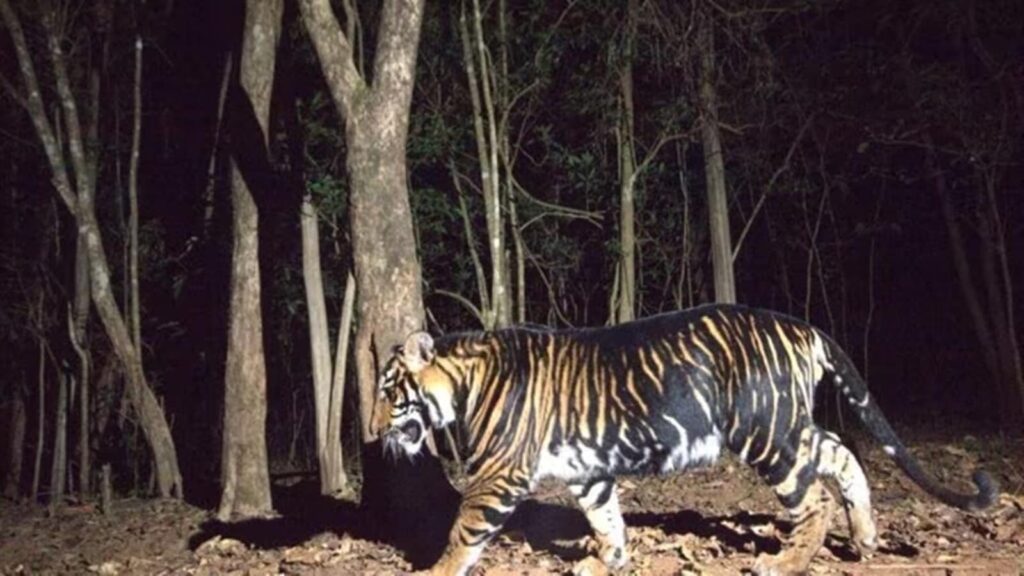
Deep within the lush forests of Odisha’s Similipal National Park, a rare and majestic sight has emerged, leaving wildlife enthusiasts and tourists in awe. A melanistic tiger cub, with its distinctive dark coat and stripes, has been spotted roaming the wilds of Similipal, showcasing the park’s unique biodiversity and genetic diversity among tigers.
As the sun rises over the rolling hills and dense forests of Similipal, the sounds of the wild begin to echo through the air. The chirping of birds, the rustling of leaves, and the distant roar of a tiger all blend together to create a symphony of natural beauty. It is here, in this pristine wilderness, that the rare melanistic tiger cub has made its home.
The sighting of the melanistic tiger cub is a testament to the park’s unique genetic diversity. Similipal is the only place in the world where melanistic Royal Bengal Tigers are found naturally. These majestic creatures are the result of a genetic mutation that causes their stripes to be much closer together, giving them a distinctive dark appearance.
As news of the sighting spread, wildlife enthusiasts and tourists flocked to social media to catch a glimpse of the rare cub. The photos, captured by tourist Anirban Pal, show the melanistic tiger cub roaming the forest floor, its dark coat glistening in the sunlight.
The sighting of the melanistic tiger cub is not only a rare treat for wildlife enthusiasts, but also a reminder of the importance of conservation efforts. Similipal National Park is home to a wide range of flora and fauna, including the endangered Royal Bengal Tiger. The park’s unique biodiversity is a result of its location, which spans across the Eastern Ghats and the Deccan Plateau.
Despite the challenges faced by conservationists, Similipal National Park remains a beacon of hope for wildlife enthusiasts. The park’s conservation efforts have been recognized globally, and it continues to be a model for sustainable forest management and wildlife conservation.
However, the threat of poaching remains a major concern for conservationists. In January, several people were arrested in connection with the poaching of a melanistic tiger from Similipal. The incident highlighted the need for increased surveillance and protection of the park’s unique genetic pool.
In response to the incident, the forest department has adopted several measures to protect the park’s wildlife. These include the use of AI cameras to detect poachers and preserve the unique genetic pool of Similpal.
As the sun sets over Similipal National Park, the sounds of the wild grow quieter, and the forest takes on a peaceful silence. It is here, in this tranquil wilderness, that the rare melanistic tiger cub roams free, a symbol of the park’s unique biodiversity and genetic diversity.
The sighting of the melanistic tiger cub is a reminder of the beauty and wonder of the natural world. It is a call to action, urging us to protect and preserve our planet’s unique biodiversity. As we gaze upon the majestic form of the melanistic tiger cub, we are reminded of the importance of conservation and the need to protect our planet’s precious wildlife.