
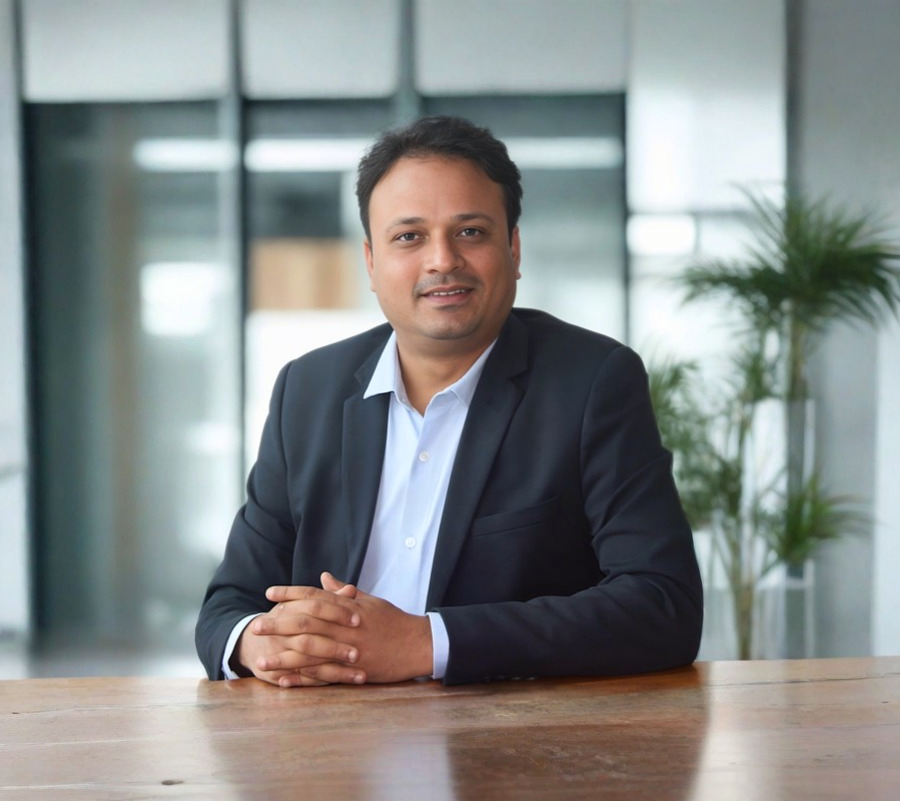

In India, infrastructure is often discussed in the language of concrete, tenders, pipelines, and policy. Yet the true purpose of infrastructure lies far beyond engineering drawings and project outlays. At its core, infrastructure is about dignity, accessibility, public health, and the quality of human life. It is about the child who no longer walks miles for water, the family that gains access to sanitation, and the city that evolves not merely in scale but in resilience. Few leaders in India’s urban infrastructure ecosystem understand this distinction as profoundly as Chinmay Tripathy.
Measured in speech yet expansive in vision, Chinmay Tripathy represents a rare breed of entrepreneur whose ambitions transcend conventional business metrics. He does not romanticize entrepreneurship, nor does he speak the language of disruption and aggressive valuation-building that dominates modern corporate narratives. Instead, his philosophy revolves around institution-building, long-term societal contribution, and nurturing people capable of carrying a vision forward. What he set out to build through Ecometrix Consultants Pvt. Ltd. was never merely a consultancy firm. It was an ecosystem of capability rooted in Odisha yet benchmarked against global standards.
The seeds of this journey were planted long before the company formally came into existence in 2015. Having worked extensively in infrastructure planning and development across different regions of India and in collaboration with international organizations, Tripathy had witnessed firsthand the structural challenges confronting Odisha. Despite the state’s growing aspirations and strategic importance, large infrastructure consulting assignments were still largely dependent on firms from outside the region. External agencies would arrive, deliver presentations, execute projects, and leave, while local talent remained underutilized and institutional continuity remained fragile.
Chinmay Tripathy recognized this gap not as a commercial opportunity alone, but as a regional necessity. He believed Odisha deserved world-class consulting capabilities developed from within the state itself.
What distinguishes his story is the absence of a dramatic turning point or cinematic entrepreneurial leap. He often reflects that the decision to start Ecometrix was never driven by a desire to build a corporate empire. Rather, it was the culmination of a silent dream that evolved over time.
During his years in large infrastructure consulting environments, he repeatedly noticed the dependence on external talent pools. That realization gradually crystallized into a larger purpose — to nurture local professionals, create enduring technical expertise within Odisha, and establish an institution capable of delivering sustained, high-quality services to the state and beyond.
The early years were anything but easy. Ecometrix lacked the financial muscle, market credentials, and experienced workforce that established firms enjoyed. The company entered an industry where trust and credibility are earned slowly and tested relentlessly. Yet what the organization possessed in abundance was conviction. Chinmay Tripathy and his team embraced challenges without romanticizing them. Every setback became a lesson learned through direct experience. Over time, the organization evolved, strengthened its systems, refined its processes, and developed the maturity required to navigate increasingly complex assignments.
At the heart of this evolution lies Tripathy’s unwavering belief that organizations do not truly grow through revenue alone. They grow through people. Since Ecometrix operates within the knowledge industry rather than manufacturing, its true capital resides in human capability. This understanding shaped the company’s culture from its inception. Instead of prioritizing aggressive commercial expansion, the organization chose to invest deeply in people development, mentorship, and long-term professional growth.
 The result of this philosophy is visible in the remarkable employee continuity the company has achieved. Even today, a significant number of employees who joined during the organization’s formative years continue to remain integral to its journey. In an era where attrition dominates professional services industries, such continuity is both rare and revealing.
Tripathy’s leadership philosophy revolves around what he calls the “Three Ps” — People, Purpose, and Performance. Unlike many corporate leaders who place numbers and quarterly growth at the center of leadership conversations, he views transformational leadership through a fundamentally human lens. According to him, people must first feel respected, valued, and empowered. Employees should not merely perform tasks; they should understand the larger purpose behind their responsibilities. Clarity of purpose, therefore, becomes essential to sustaining motivation and ownership within teams.
He strongly believes that ownership cannot be imposed through authority or hierarchy. Instead, it must emerge organically when individuals feel emotionally connected to their work and secure within their environment. This requires leaders to remove the fear of failure from organizational culture. Employees should feel encouraged to experiment, contribute, and even fail without fear of humiliation or exclusion. Such an approach fosters genuine accountability because people begin to identify themselves with the institution’s mission rather than viewing themselves as detached employees serving a corporate entity.
This philosophy of trust and empowerment has played a crucial role in Ecometrix’s ability to retain high-performing professionals. While compensation remains important, Tripathy believes long-term retention is driven by deeper factors — recognition, emotional connection, trust, meaningful work, and a clear growth trajectory.
Drawing from his own experience of spending over two decades within a single organization earlier in his career, he emphasizes that professionals remain loyal when they believe in the people they work with and the purpose they work for. Consequently, Ecometrix continuously invests in capacity building, learning opportunities, and leadership development while fostering an environment where employees feel heard and respected.
Beyond organizational culture, Chinmay Tripathy’s contribution to infrastructure development has been substantial in both scale and impact. Over the years, Ecometrix has worked on more than 300 assignments whose cumulative value runs into tens of thousands of crores.
However, Tripathy resists measuring infrastructure solely in terms of project size or engineering complexity. For him, infrastructure must ultimately improve public health, living conditions, and human dignity. Roads, water systems, drainage networks, and sanitation infrastructure are not ends in themselves; they are instruments for improving societal well-being.
One of the defining chapters of his professional journey emerged through involvement in Odisha’s large-scale Japanese International Cooperation Agency-supported sanitation improvement initiatives. The project, valued at over ₹4,000 crore, exposed him and his team to international standards of quality, precision, and systems-driven execution.
More importantly, the experience fundamentally reshaped his understanding of infrastructure implementation. He realized that large projects cannot succeed through engineering excellence alone. Stakeholder engagement — involving communities, local leadership, administrative systems, and public institutions — is equally critical to project success. Infrastructure must therefore be approached holistically, with sensitivity toward social realities and human behavior.
The lessons drawn from such projects later influenced Odisha’s transformative “Drink from Tap” initiative, which has received national recognition for redefining urban water accessibility. Traditionally, many Indian cities struggled with irregular supply, poor water quality, and dependence on household storage systems. Odisha sought to challenge this paradigm by envisioning continuous access to safe, directly drinkable water from household taps.
Remarkably, the initiative prioritized slum communities during its initial implementation phases. Tripathy recognized that vulnerable populations stood to benefit most profoundly from uninterrupted access to safe water because they lacked the alternatives available to wealthier households.
The initiative combined technological innovation with community engagement and real-time monitoring systems. Cities previously associated with severe water stress gradually transitioned toward more sustainable surface water supply systems. Odisha’s urban water management model began attracting national attention, with several practices eventually influencing broader policy frameworks and implementation guidelines across India.
Chinmay Tripathy’s global exposure has also significantly shaped his worldview. His long association with Japanese organizations instilled within him a deep respect for timeliness, humility, quality, and precision. Japanese leadership models, according to him, prioritize excellence and long-term sustainability over short-term financial gains.
Conversely, his exposure to American organizational cultures taught him the value of competitiveness, aggression in execution, and uncompromising performance standards. Yet despite their differences, both systems reinforced one universal truth: enduring organizations are built not around individuals, but around robust systems and processes.
Interestingly, Tripathy does not view India through a lens of inferiority when comparing it to developed nations. On the contrary, he believes India possesses extraordinary adaptive strength. Indian professionals learn rapidly, operate effectively under constraints, and navigate adversity with remarkable resilience.
While countries like Japan and the United States are focusing on rehabilitating existing infrastructure systems, India faces the simultaneous challenge and opportunity of building entirely new urban ecosystems at massive scale. In his view, this makes India one of the most exciting infrastructure landscapes in the world today.
Looking ahead, Chinmay Tripathy believes the coming decades will be defined by climate resilience, water security, sanitation, and sustainable urbanization. He argues that infrastructure planning can no longer remain reactive or short-term. Rapid urbanization, increasingly intense rainfall patterns, groundwater depletion, and climate-induced stress demand future-ready planning approaches supported by data, technology, and community participation. Sustainability, according to him, begins at the planning stage itself. Infrastructure must anticipate future realities rather than merely respond to present deficiencies.
What ultimately makes Chinmay Tripathy remarkable is the quiet seriousness with which he approaches nation-building. He does not seek celebrity status within the entrepreneurial ecosystem, nor does he indulge in exaggerated narratives of success. His leadership is grounded in humility, systems thinking, and human-centered development. In a corporate era increasingly obsessed with speed, optics, and scale, he represents something far more enduring — substance.
The cities transformed through his work may never carry his name. The pipelines, treatment systems, and urban plans may not publicly acknowledge the minds behind them. Yet millions of people will continue to benefit from cleaner water, improved sanitation, better planning, and more resilient urban infrastructure because leaders like Chinmay Tripathy chose to build institutions rather than merely businesses. In doing so, he has quietly positioned himself among the most thoughtful and impactful infrastructure leaders emerging from contemporary India.
Written by – Charan Singh
