
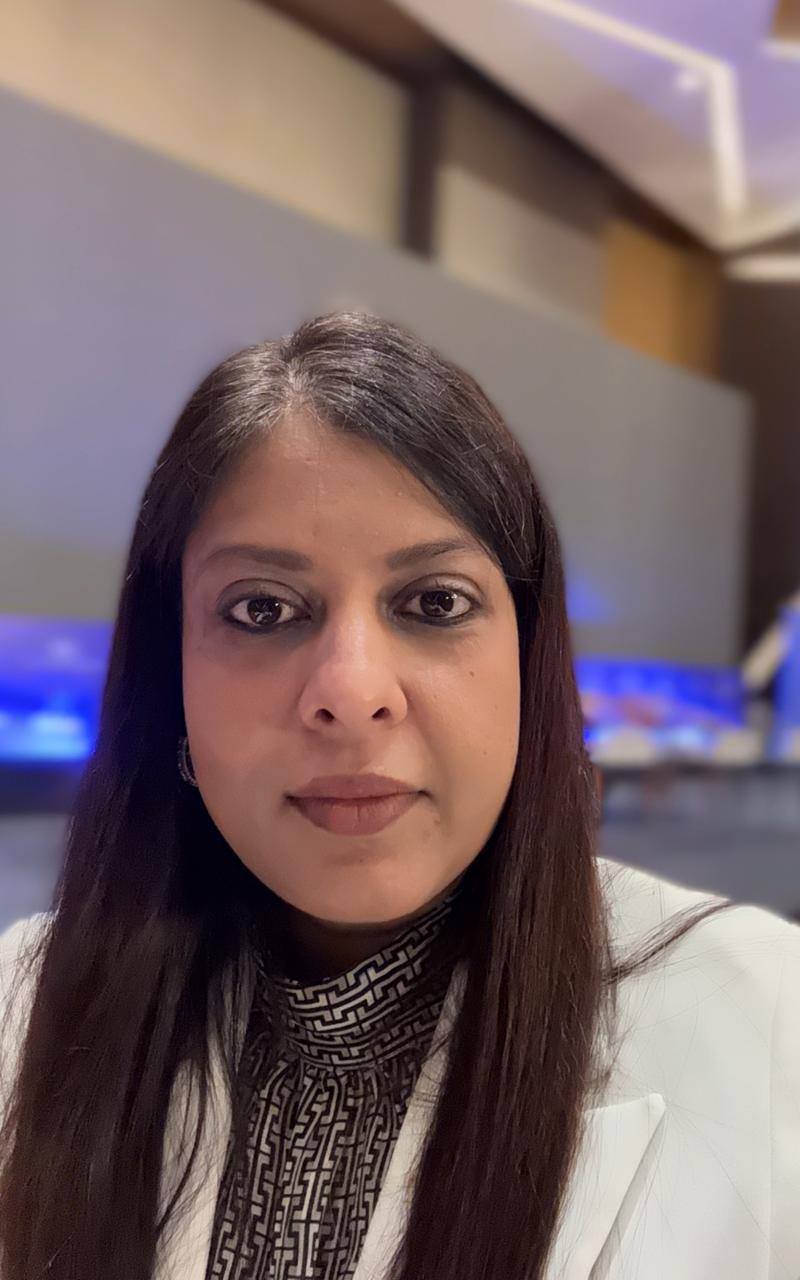
Encore Design Studio is a multidisciplinary interior design practice founded in 2022, with its primary base in Ahmedabad. Led by Founder and Principal Designer Rena Parikh, the studio is known for its thoughtful approach to spatial design—where aesthetics, efficiency, and ethics intersect.
A graduate of the School of Interior Design at CEPT University, Rena brings a strong academic foundation paired with international exposure. Her early professional experience at Eisenman Architects in New York deeply influenced her understanding of architectural theory, structure, and precision—elements that continue to inform Encore’s design language.
Within a short span, the studio has delivered over 40,000 sq. ft. of premium residential and commercial interiors. While its portfolio spans luxury homes and bespoke workspaces, Encore’s current focus lies in commercial interiors, where functional efficiency is seamlessly integrated with brand identity.
At the core of the studio’s practice is a Conscious Design philosophy—anchored in reduce-waste planning, financial transparency, and human-centric longevity. The guiding belief is simple yet intentional: to create spaces that feel as good to live in as they did to pay for.
By combining technical expertise with genuine empathy, Encore Design Studio ensures that every project becomes a long-term asset rather than a lifestyle or maintenance burden.
In Conversation with Rena Parikh
Founder & Principal Designer, Encore Design Studio
Question 1:Your journey from CEPT University to working with Eisenman Architects in New York is quite distinctive. How has this shaped your design sensibility today?
Answer It was a journey of two extremes that met in the middle to form my identity as a ‘Contextual Modernist.’ CEPT University gave me my roots—it taught me the humility of materials, the importance of climate, and the deep-seated traditions of Indian spaces. Then, New York and Eisenman Architects gave me my wings. Working within the avant-garde world of Deconstructivism taught me to deconstruct traditional boundaries and look at architecture as a series of intellectual layers. Today, my sensibility is a dialogue between those two worlds: I bring the sharp, disciplined precision of global design to the warm, soulful reality of the Indian context.
Question 2
You often speak about Conscious Design as a core philosophy. What does this mean in practice when a project moves from concept to execution?
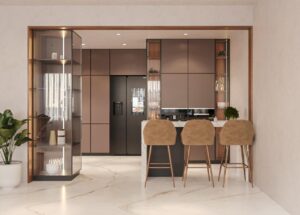
Answer Conscious Design is the bridge between intention and impact. In practice, it means moving away from ‘mindless consumption’ toward ‘mindful creation.’ From concept to execution, this manifests in two ways: Zero-waste planning and material integrity. We don’t just select a stone because it’s beautiful; we analyse its origin, its carbon footprint, and its longevity. During execution, it means managing the site with surgical precision to minimise waste. It’s about realising that every millimetre we design has a ripple effect on the environment and the inhabitant’s well-being. We aren’t just building a room; we are curating a conscience.
Question 3
Financial transparency is a rare but defining aspect of your work. Why was it important for you to institutionalise this within your practice?
Answer
In the interior design industry, trust is the most valuable material we work with—yet it’s often the most fragile. I institutionalised financial transparency because I believe that creative freedom shouldn’t come at the cost of the client’s peace of mind. By providing clear, data-backed costings and honest material lifespans, we eliminate the ‘hidden friction’ that often affects large projects. It transforms the relationship from a transaction into a partnership. When a client knows exactly where their investment is going, they can truly enjoy the creative process without the shadow of uncertainty.
Question 4
Encore Design Studio has increasingly focused on commercial interiors. What excites you most about designing workspaces today?
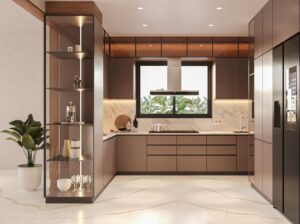
Answer:What excites me is the shift from ‘offices’ to ‘ecosystems.’ Today’s workspace is no longer just a place to sit; it’s a tool for cultural transformation. We are designing for ‘Spatial Branding’—where the office becomes a physical manifestation of a company’s soul. I love the challenge of balancing high-performance productivity and creating zones that allow for both intense collaboration and restorative quiet. In commercial design, you are essentially engineering a lifestyle for an entire community of people, and seeing that impact on collective energy is fulfilling.
Question 5
Your article ‘Beyond the Blueprint: Navigating the Intersection of AI and Creativity in Indian Interior Design’, published in Bombay Times, explores technology’s role in design. How do you see AI supporting—not replacing—creative intuition?
Answer
I view AI as the ultimate ‘Logic Pilot.’ It is unparalleled at handling the heavy lifting of data—optimizing project timelines, calculating structural loads, or predictive material analysis. However, AI lacks the ‘childhood intuition’ I often speak about—the ability to understand the feeling of a space or the subtle, unexpressed desires of a client. AI can generate a thousand layouts, but it cannot decide which one will make a person feel ‘at home.’ It sharpens our accuracy so that we, as designers, have more room to focus on the empathy and storytelling that make a space human.
Question 6
You actively educate clients on material lifespans and long-term value. How does this shift the client–designer relationship?
Answer:It shifts the conversation from ‘Price’ to ‘Value.’ When you educate a client on why a reclaimed teak table is superior to a trendy, mass-produced piece, you are giving them the power of foresight. This education builds a deeper level of respect. They stop seeing me as someone who just picks colours and start seeing me as a custodian of their legacy. We move away from the ‘instant gratification’ of trends and toward the ‘enduring excellence’ of quality. It makes the client an active participant in the sustainability of their own home.
Question 7
When you look back at a project years later, what tells you that the space has truly succeeded—for both the client and the designer?
Answer:The ultimate metric of success is the ‘Emotional Echo.’ For the client, it’s when I visit a home five years later and see that the materials have aged with grace and the layout still supports the natural rhythm of their life—it hasn’t become obsolete. For me as a designer, it’s about the ‘Pause.’ If I can walk into that space and still feel that measured stillness and sense of alignment we planned on day one, then I know we didn’t just design for the moment. We designed for the encore.
