

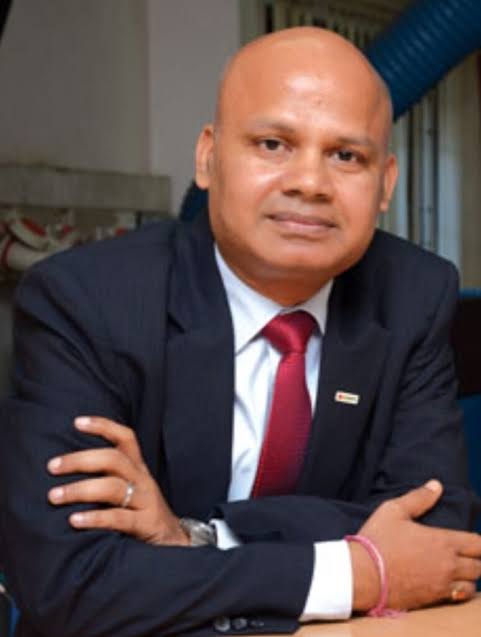
Every generation produces leaders who chase growth, and then there are those who redefine what growth truly means. Rashmi Ranjan Mohapatra belongs to the latter. His story is not merely about climbing the corporate ladder or leading prestigious institutions; it is about creating opportunities that empower thousands to climb their own. At a time when conversations around success often revolve around profits, valuations, and market dominance, Mohapatra has quietly built a career around something far more enduring—people. For over three decades, he has worked across industrial gases, welding technologies, advanced manufacturing, electric mobility, clean technologies, and sustainability, but the thread connecting every chapter of his journey has remained constant: the belief that skilled human capital is the strongest foundation any nation can build upon.
Today, as the CEO of the World Skill Center, Bhubaneswar, Mohapatra stands at the forefront of India’s skill revolution. Yet, to understand his vision, one must look beyond his current designation. His professional journey reflects an individual who has consistently chosen transformation over convention. Whether leading businesses, driving industrial innovation, or shaping national skill policies, he has never viewed leadership as the authority to direct people. Instead, he sees it as the responsibility to create systems that continue creating value long after individual tenures have ended. His philosophy is remarkably simple but profoundly relevant: institutions succeed when they invest in people, and nations prosper when they invest in skills.
Throughout his career, Mohapatra has witnessed industries evolve at an unprecedented pace. Automation has transformed manufacturing, sustainability has become a business necessity rather than an option, and emerging technologies have redefined the future of work. Yet amid these dramatic shifts, he has remained convinced that technology alone cannot build industries. Machines may improve productivity, but skilled individuals create innovation. This conviction has shaped every initiative he has championed, reinforcing the idea that India’s demographic advantage will translate into economic leadership only if its workforce is equipped with globally relevant skills.
His leadership within India’s skill ecosystem extends far beyond institutional management. As Chairman of the Welding Cluster at the Indian Institute of Welding and a National Core Committee Member of the National Skill Development Council under FICCI, Mohapatra has played a significant role in shaping conversations around vocational education and workforce development. At a time when technical professions often struggled for recognition, he consistently advocated for the dignity and importance of skilled trades. For him, vocational education has never been an alternative pathway—it is a powerful engine of national growth.
One initiative, in particular, reflects his ability to combine innovation with social transformation. The Best Female Welder Competition challenged one of manufacturing’s longest-standing stereotypes—that welding belonged exclusively to men. Rather than accepting existing norms, Mohapatra chose to question them. The competition created opportunities for women to showcase technical excellence in a field traditionally dominated by men, proving that skill has no gender. The impact has been extraordinary. Today, nearly 60,000 women welders contribute to India’s manufacturing sector, demonstrating not only professional competence but also inspiring countless young women to pursue careers once considered beyond their reach. Every woman who steps into a welding workshop today carries forward a larger story—one that speaks of confidence, independence, and the breaking of invisible barriers.
His commitment to dignity extends well beyond industrial training. Among his many contributions, Mohapatra played a pioneering role in introducing cleaning machines in India, an initiative that was never simply about replacing manual labour with technology. At its heart was a deeply human purpose—to restore dignity to sanitation workers whose contributions often go unnoticed despite being essential to society. Mechanisation meant safer working conditions, reduced health risks, and greater respect for an often-overlooked workforce. It was another reminder that true innovation is measured not merely by efficiency but by the positive difference it creates in people’s lives.
Equally transformative has been his contribution towards establishing 35 Centres of Excellence that have impacted more than one lakh students across the country. These centres represent much more than physical infrastructure. They embody a vision where education meets industry, where classrooms mirror real workplaces, and where learning is driven by practical competence rather than theoretical knowledge alone. Under Mohapatra’s leadership, skill development has become synonymous with confidence, employability, and global competitiveness. Every student trained through these centres represents another step towards building an India prepared for the industries of tomorrow.
At the World Skill Center, this philosophy has found its fullest expression. The institution has emerged as one of India’s most ambitious efforts to bridge the gap between education and employment by bringing international standards of technical training to young professionals. Mohapatra believes the future belongs to individuals who never stop learning. In a world where industries are constantly evolving through artificial intelligence, digital manufacturing, clean energy, and advanced technologies, adaptability has become the most valuable skill of all. Degrees may provide a beginning, but lifelong learning sustains careers. It is this mindset that he seeks to cultivate among every learner who walks through the doors of the World Skill Center.
Perhaps what makes Rashmi Ranjan Mohapatra’s leadership particularly compelling is that it is rooted equally in technical expertise and social responsibility. He understands that sustainable development cannot be achieved through economic growth alone. Growth must be inclusive. It must create opportunities for women, uplift marginalised communities, respect every profession, and prepare young people for a rapidly changing world. His decisions consistently reflect a long-term perspective, favouring institution-building over individual recognition and societal impact over short-term success.
In many ways, Mohapatra represents a new generation of Indian leadership—globally aware yet deeply rooted in local realities, technologically driven yet profoundly human in approach. His work reminds us that the future will not be shaped solely by innovation labs or corporate boardrooms but also by classrooms, workshops, training centres, and the millions of skilled hands that build industries every single day.
As India aspires to become a global manufacturing and innovation powerhouse, leaders like Rashmi Ranjan Mohapatra offer an important lesson: the country’s greatest resource is not its infrastructure, technology, or capital—it is its people. Investing in their skills is not merely an educational priority but a national imperative. Long after projects are completed and positions change, the lives transformed through education, opportunity, and dignity will remain the truest measure of his leadership. That is the legacy Rashmi Ranjan Mohapatra continues to build—one skilled individual, one empowered community, and one future-ready generation at a time.