

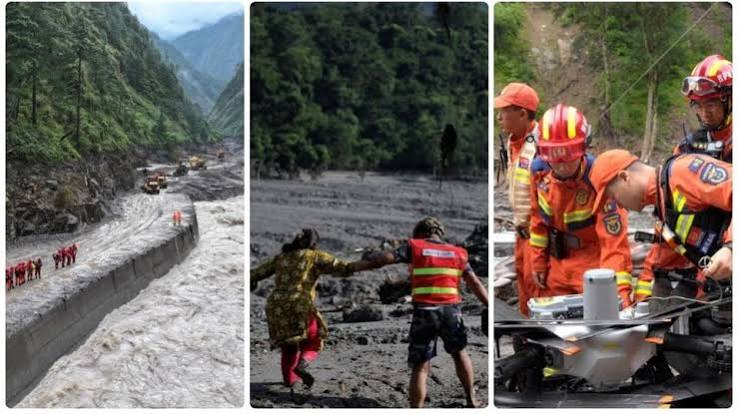
KATHMANDU, August 31, 2026: Rescue operations have intensified in Nepal following a catastrophic glacier-induced flood along the Nepal-Tibet border, with at least 903 people confirmed dead in Nepal and more than 4,200 still missing, according to the latest reports.
The disaster began after a glacier collapse unleashed a massive torrent of ice, rock, mud and debris through Himalayan valleys and river systems. The destruction has affected infrastructure, communities and hydropower installations across the region. More than 90,000 people are estimated to have been affected by the disaster.
A particularly urgent rescue effort is underway at hydropower projects where hundreds of workers are believed to be trapped inside blocked tunnels. Nepalese authorities are being supported by Indian and Chinese specialists, while large numbers of security personnel have been deployed to search devastated areas and clear debris. Reuters reported that approximately 933 hydropower workers are among those missing in Nepal.
On the Tibetan side, Chinese authorities have reported 16 deaths and 546 missing people in Gyirong County. Rescue operations have been severely complicated by unstable terrain, heavy debris, continuing bad weather and the threat of further landslides. Authorities have identified several high-risk areas where additional hazards remain possible.
The disaster has also raised serious questions about climate change and Himalayan disaster preparedness. Experts and officials have increasingly warned that rising temperatures and changing conditions in high-altitude regions could increase the likelihood of glacier instability and extreme flooding. Nepal had previously sought better data-sharing and early-warning cooperation relating to glacier movements and water levels.
The tragedy has a direct connection to India as Indian teams are assisting with specialist rescue and forensic work. The continuing presence of Indian citizens and travellers in the broader Himalayan region has also made the disaster a major concern in India.
The bigger concern
The destruction extends far beyond the immediate loss of life. Roads, bridges, homes and power infrastructure have been damaged, while the scale of the missing-persons crisis means that the final toll could remain uncertain for some time.